

Built for hard launches, lift-offs and repeated shifts
A performance clutch kit is the link between engine output and the gearbox, so the parts have to hold torque cleanly and release without fuss when the driver is flat through a section or short-shifting out of a tight corner. In motorsport use, a street-style clutch can feel pleasant for a while, then start slipping under heat, repeated starts and clutch-kick work. Our clutch kits are specified for cars that see circuit sessions, rally stages and club racing, where consistent bite matters more than soft road manners.
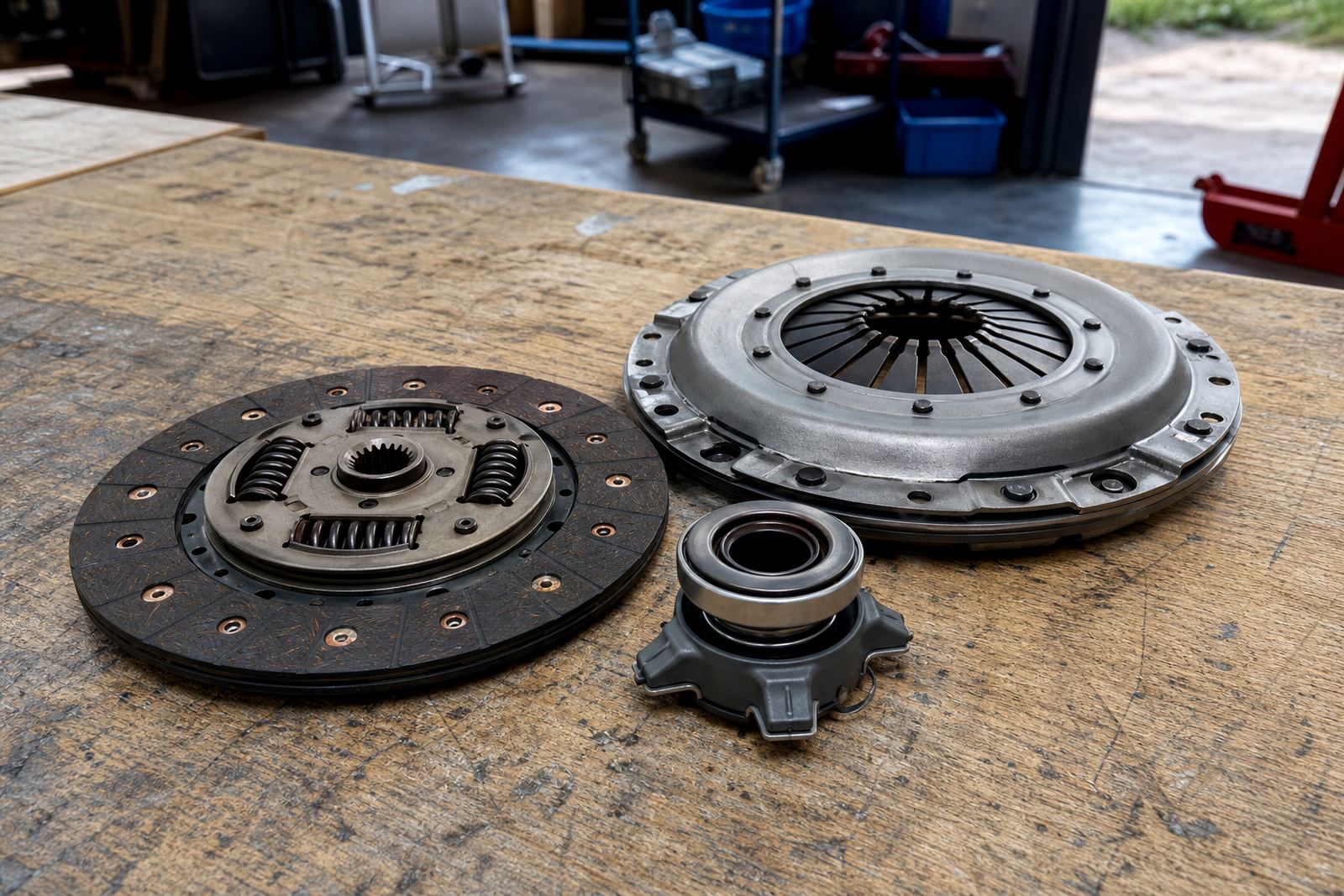
The usual kit includes a pressure plate, driven plate and release bearing, with some applications needing an alignment tool or a stronger flywheel contact surface. We also look at whether the car needs a sprung hub disc for drivability or a more aggressive puck style disc for firmer engagement. Torque rating, spline count and pedal effort all matter, because a clutch that is too harsh can make the car awkward in traffic lanes, pit exits or hairpin restarts.
Disc types, diameters and torque ranges that matter
Most motorsport clutch kits fall into a few common patterns, and the right one depends on engine output, gearbox type and how the car is driven. A single-plate organic disc gives smoother take-up and suits lower to medium torque builds. A sprung ceramic or puck-style disc gives a sharper bite for heavier torque, repeated heat cycles and harder standing starts. In some race builds, a twin-plate layout is used where packaging and torque demand call for more holding capacity in the same bellhousing space.
- Usual sizes run from 200 mm up to 240 mm, depending on the car
- Torque handling can range from moderate road-race levels to high-output turbo or V8 applications
- Pedal effort depends on pressure plate clamp load and release geometry
- Sprung hub discs help soften shock through the driveline on upshifts and launches
- Rigid hub discs suit harder race use where direct engagement is preferred
We check the match between disc friction material, pressure plate clamp force and the flywheel face. If those three items are out of step, the result is often shudder, slip or a pedal that feels heavier than the car really needs.
Where clutch kits fit in the South African motorsport week
These kits suit cars running regular track days at Kyalami, tarmac rally cars, hillclimb cars and club racers that see short, sharp sessions rather than long road miles. They also make sense on fast road builds that still need to behave in the paddock and on trailer ramps without grabbing too abruptly. For Gauteng cars that spend time in Midrand, Johannesburg, Pretoria and Centurion, the right spec can make the car easier to live with between events while still holding torque when the pace goes up.
In Durban and Cape Town, corrosion and heat both deserve attention. Coastal humidity can affect release hardware, inspection habits and general under-bonnet condition, so we look closely at fork wear, bearing condition and flywheel surface state. Rally cars spend more time in dust, water crossings and repeated clutch abuse, so the clutch selection has to allow for harsh use and uneven surface grip as well as clean tarmac starts.
- Track cars often benefit from a firmer engagement point and repeatable release
- Rally cars need heat tolerance and good bite when surfaces change suddenly
- Club racing cars usually need a balance of torque capacity and manageable pedal effort
- Fast road cars need clean take-up for pit lanes, loading and low-speed manoeuvres
Fitment notes from the workshop side
Clutch installation is not a parts swap to rush through. The gearbox should come out cleanly, the flywheel must be checked for cracks or heat marking, and the release system needs inspection before the new kit goes in. We look at the pilot bearing, release bearing, clutch fork or concentric slave arrangement, plus the hydraulic line if the car uses one. If the release travel is short or uneven, even a strong clutch can feel wrong from the first session.
Setup work may include pedal free play checks, clutch bleeding, release point verification and a test for any sign of drag. On race cars with short final drive ratios or close-ratio gearboxes, the clutch has to release properly so the next gear can go in cleanly under load. In a paddock setting, poor release shows up fast as graunching, noisy engagement or a car that wants to creep at the wrong time.
If the car is receiving other work on the same day, we can also look at clutch and shift setup alongside cooling, brakes or alignment checks. That helps catch issues that sit outside the clutch itself, like mount movement or a tired gearbox mount that makes the pedal feel inconsistent.
What to keep in good condition between events
A performance clutch lasts longer when the driver treats it as a precise control, not a footrest. Avoid unnecessary slipping in the pit lane, keep the release mechanism clean and inspect the bellhousing area for dust that may suggest wear. After hard events, check for pedal change, slip at higher gears and any smell that points to glazing or heat damage. If the car has a paddle-style disc or firmer pressure plate, the pedal may feel more direct, but it should still release cleanly.
We also advise checking the surrounding parts that affect clutch life. Engine mounts, gearbox mounts, rear main seal condition and hydraulic consistency all influence how the clutch behaves. A fresh kit can still disappoint if the flywheel surface is uneven or the hydraulic system is holding partial pressure. On cars used in salty coastal air, a wipe-down and inspection routine helps keep fasteners, clips and release hardware in better order.
- Inspect for slip under load in higher gears
- Watch for chatter, grab or shudder on take-off
- Check pedal free play and release point regularly
- Replace worn bearings and hydraulics with the kit, not later
- Keep the flywheel face within the maker’s surface finish limits
Which details let us choose the correct kit
When a clutch kit is being ordered, the useful details are the car model, engine code if available, gearbox type, flywheel type and the kind of racing the car does. We also need to know whether the build is naturally aspirated, turbocharged or running a much higher-than-standard torque figure, because that changes the clamp load and friction material choice. A car that sees sprint sessions may need a different feel from a rally car that launches hard on loose ground.
The more complete the brief, the cleaner the match. Tell us if the car uses a hydraulic release bearing, cable operation or a conventional fork setup, and whether the flywheel is standard, lightened or aftermarket. If the gearbox is already out, it helps to know the old disc diameter, spline count and any wear pattern on the pressure plate or flywheel face.
- Car model, engine code and gearbox type
- Disc diameter and spline count
- Flywheel type and release system
- Estimated torque level and event use
- Whether the car needs more bite or more drivability
- Any existing shudder, slip, noise or pedal change
Our contact form is the best place to send those details from Midrand, Johannesburg, Pretoria, Kyalami, Durban, Cape Town or Port Elizabeth, together with fitment notes and the kind of track or stage work the car sees.
Key facts
| Product type | Motorsport clutch kits for track, rally and club racing cars |
|---|---|
| Typical diameters | 200 mm, 215 mm, 228 mm, 240 mm |
| Common layouts | Single-plate, sprung hub, rigid hub, twin-plate |
| Use cases | Circuit racing, rally, hillclimb, club racing, fast road |
| Fitment checks | Flywheel condition, release travel, bearing wear, hydraulic or cable setup |
| Main selection factors | Torque capacity, pedal effort, drivability, gearbox and release type |