

Built for hard corners, kerbs and long stints
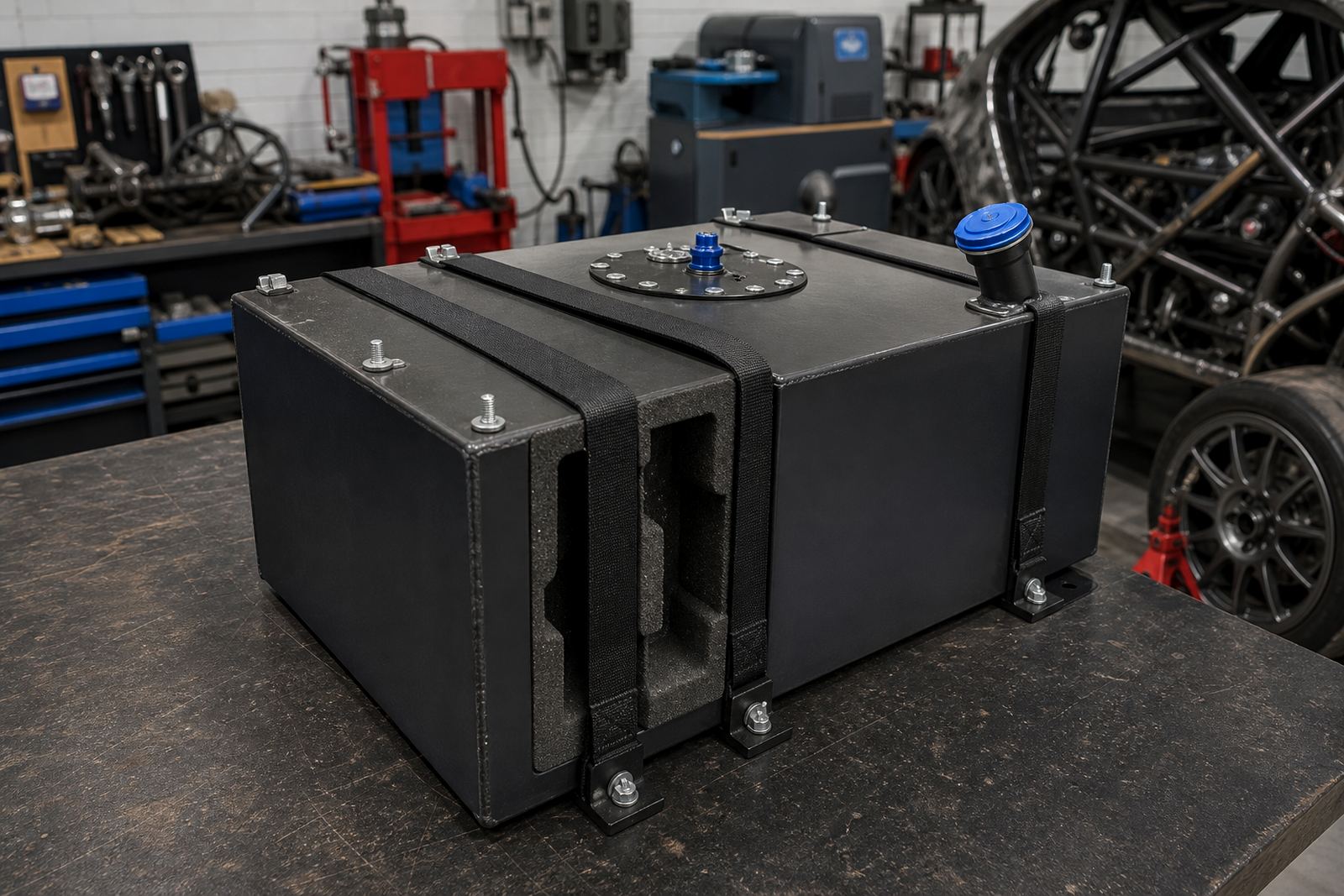
A fuel cell is a motorsport fuel container built around a bladder or safety can, with internal foam or baffling to slow fuel movement under braking, turn-in and acceleration. That matters in track cars, rally cars and club racers where fuel surge can uncover the pickup and upset the engine on a loaded corner or a rough stage.
In practical terms, the cell sits inside a protected housing and uses proper hose routing, venting and a secure mount. The aim is steadier fuel delivery and safer storage in the car, especially where the original tank shape limits seat position, suspension travel or exhaust routing.
- Useful in boot-mounted, rear bay or custom floor installations.
- Common in saloon cars, hatchbacks, coupe builds and rally shells.
- Works well where weight placement is being moved for balance.
- Needs careful hose sizing, vent routing and clamp support.
Sizes, shapes and hardware that change the fit
Fuel cells are usually selected by capacity, physical footprint and the way the filler, outlet and vent are arranged. Compact 20 to 30 litre cells suit tighter builds, while 40 to 60 litre units give more range for longer sessions or road to circuit use. Larger custom shapes can be made to suit a spare-wheel well, boot floor or rear seat area once the available space is measured properly.
There are top-fill and remote-fill layouts, single or twin outlet options, and different sender provisions for fuel level reading. Some builds use a low-profile rectangular can, while others need a shallower shape to clear roll cage tubes, rear axle movement or the boot lid structure.
- Capacity options often run from 20L through 60L and beyond.
- Filler neck position affects boot access and hose length.
- Outlet size must suit the fuel line and pump flow.
- Sender provision helps if the car keeps a dash gauge.
Where fuel cells make the most sense
Midrand and Kyalami cars often need a tidy install that works with safety gear, rear suspension upgrades and cage work. Rally cars need tougher mounting and a layout that keeps the cell secure over rough roads, while circuit cars often focus on weight balance and stable fuel delivery through fast direction changes.
They suit builds where the original tank sits too low, sits too far forward or interferes with a rear cage, exhaust or diffuser plan. In some club racing cars the cell also helps free up space for a relocated battery, spare wheel delete or a neater boot floor panel.
- Track cars that see long high-g left and right corners.
- Rally cars with rough surfaces and repeated fuel movement.
- Club racers that need a more practical tank shape.
- Builds where cage tubes change the original tank space.
Fitment work that needs proper measuring
Fuel cell installation is not a slap-in job. The mount must support the cell evenly, the filler path must be clear, and the vent line needs a safe route away from hot parts and moving suspension. A neat install also needs hose choice that suits petrol or the fuel blend being used, plus clamps and fittings that stay put under vibration.
On competition cars we also check access to the sender, the pump base and the top plate area. If the car uses a rear bulkhead or cage-mounted panel, the surrounding trim and metalwork should leave enough space for service access without pinching the lines.
- Check boot depth, width and the available filler route.
- Allow space for foam replacement and sender service.
- Use proper vent routing and secured hose paths.
- Plan around cage tubes, rear shocks and exhaust heat.
Care between events and during storage
A fuel cell lasts better when the top seal, vent line and fittings stay clean. After dusty rally use, mud or fuel residue should be wiped away so grime does not sit on the cap, flange or fasteners. If the car stands for a while, keep the fuel level sensible and inspect hoses for cracks, hardening or a petrol smell around the bay.
Foam inside the cell can age with time and fuel exposure, so a tired fill pack should be replaced before it starts breaking up. That matters where the car runs often, because foam debris can affect fuel pickup and service life inside the cell.
- Inspect clamps, hose ends and the cap seal regularly.
- Keep dirt away from filler and sender hardware.
- Replace tired foam before it starts shedding material.
- Look for chafe marks near brackets and bulkheads.
Fitting details for a fuel cell order
When you are choosing a fuel cell, the useful details are the available space, the intended motorsport use and the fuel system layout already in the car. It helps to know the target capacity, the filler position, whether a sender is needed, and if the cell must clear a roll cage, rear suspension parts or a custom boot floor.
For South African builds we also need to know where the car runs and how it is used, because rally and circuit cars do not place the same demands on the same shape. Midrand, Johannesburg, Pretoria, Durban, Cape Town and Port Elizabeth cars can all need a different packaging choice even when the same shell is used.
- Car model, year and current tank layout.
- Available space in millimetres for length, width and height.
- Capacity target in litres and preferred filler location.
- Fuel type, sender needs and outlet size.
Key facts
| Typical capacities | 20L, 30L, 40L, 50L and 60L options, with custom sizing available |
|---|---|
| Construction | Motorsport fuel bladder or safety can with internal foam or baffling |
| Common layouts | Top-fill, remote-fill, single outlet, twin outlet and sender-ready |
| Mounting use | Boot floor, rear bay, spare-wheel well or custom enclosure |
| Fitment needs | Secure brackets, vent routing, hose sizing and service access |
| Best suited for | Track cars, rally cars and club racing builds |