

What a rose joint does in a race car
A rose joint, also called a rod end, uses a spherical bearing inside a metal housing so the link can articulate while keeping the motion precise. In motorsport that matters on camber links, toe links, anti-roll bar drop links, gear linkage pieces, throttle linkages and many custom control rods.
Compared with standard rubber bushes, the joint gives a firmer response and less deflection under load. That helps when a car is braking hard into a corner, taking kerb strikes, or running a stiff suspension package where small changes in wheel movement matter. The trade-off is that a rose joint needs proper mounting, regular inspection and the right alignment work after fitment.
For race use, the housing is usually metal with a male or female threaded shank, and the ball can be PTFE lined or plain bearing style depending on application. The choice of thread, bore and misalignment is what makes the part useful or troublesome, so the dimensions must match the job and not just the car model.
Sizes, threads and movement ranges that matter
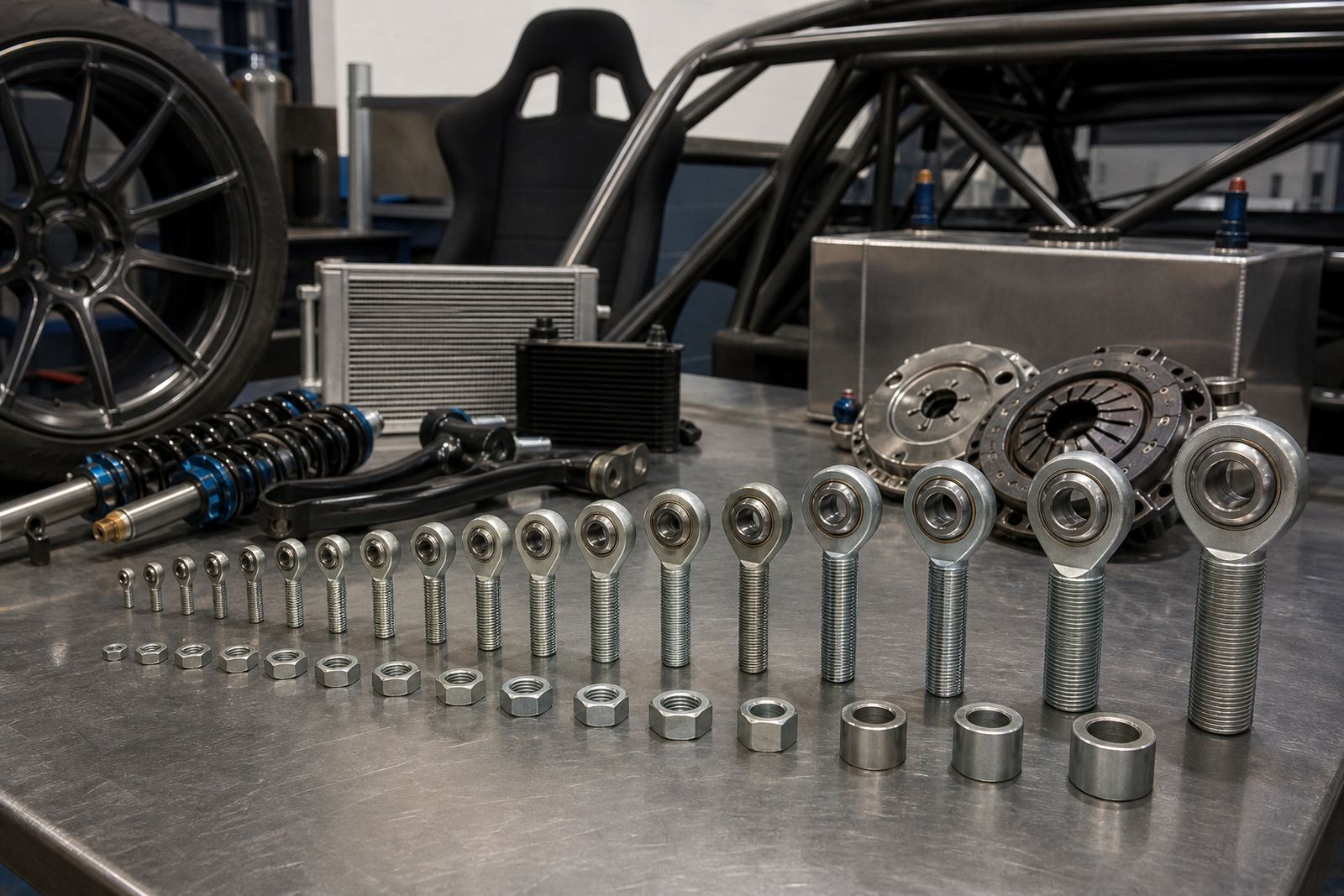
Rose joints come in a range of bore sizes and thread sizes to suit small linkage jobs through to heavy suspension arms. Common thread formats in motorsport are metric and imperial, with both left and right hand threads used where quick adjustment is needed on a link rod or turnbuckle section.
The important numbers are the bore diameter, thread pitch, shank length, ball width, and the misalignment angle available with or without spacers. A joint can look right in the hand and still foul the bracket if the housing width is wrong, or it can run out of angle before the suspension reaches full droop or compression.
- Bore and bolt size for the mounting point
- Male or female thread
- Thread direction, left hand or right hand
- Overall length and usable shank length
- Misalignment needed at full suspension travel
- Seal type and bearing style for the intended use
For cars used on rougher rally stages, a joint with more articulation and good protection from grit is often a better fit than a very stiff race-only part. For circuit work, a tighter and more direct joint is often preferred where the setup window is narrow and the driver wants cleaner feedback through the steering and chassis.
Where these joints suit the car best
Rose joints suit applications where a solid, repeatable link is more useful than a compliant rubber mount. That includes adjustable suspension arms, toe links, anti-roll bar links, steering rack mounts on some custom builds, pedal box linkages, selector rods and fuel system control linkages on race-prepped vehicles.
On track cars, they are often used where alignment changes must stay stable under braking and cornering. In rally cars, the link may need extra movement and more tolerance for dirt and vibration, so the surrounding hardware and a regular inspection routine matter as much as the joint itself.
- Track cars with adjustable geometry
- Rally cars exposed to dust, water and debris
- Club racing builds with custom arms or brackets
- Steering and linkage rods needing precise travel
- Suspension pieces that need easy corner weight and alignment changes
Where a car sees South African roads between events, coastal humidity and road grime can shorten the life of exposed joints if they are left dirty and dry. Midrand, Johannesburg and Pretoria cars usually need the same basic care as Kyalami or Durban machines, though the amount of grit and washdown a car sees can vary a lot between garages and events.
Fitting notes from the workshop side
Correct installation starts with matching the bolt size, bracket width and alignment angle before anything is tightened. A rose joint should not be forced into a bracket that leaves it sitting at the edge of its travel, because that can create binding, notchiness or early wear in the bearing.
For suspension work, the link length must be set with the car at the right ride height and the alignment checked afterwards. If the joint is part of a camber arm or toe link, a small length change can alter the car in a way that shows up immediately on turn-in or during braking. A rose joint is only as good as the advice on how it is fitted.
Where a bracket is welded to a chassis or subframe, the heat affected area and bracket angle must be checked before final assembly. Use the correct spacers, washers and high grade fasteners, then torque the assembly to the specification that suits the bolt size and the joint design. A dry or over-tightened joint can feel fine in the pit area and still bind once the car is loaded on track.
Looking after joints between events
Inspection is part of the running cost with any exposed rod end. Check for play in the ball, scoring on the housing, torn seals, rust staining and any movement that feels loose when the car is on stands. If the joint starts to click under hand pressure, that is usually a sign to replace it before the wear moves into the bracket or the surrounding setup.
Cleaning should be gentle enough not to push grit deeper into the joint. Wipe off brake dust, mud and oil film after a session, especially on cars that see wet weather, gravel or coastal storage. A light protective treatment may help on external surfaces, but the bearing faces must stay compatible with the joint type.
- Wash off grit after rough events
- Check for play before alignment days
- Inspect spacers and bolts at the same time
- Replace any joint with notchiness or surface pitting
- Keep spares for critical steering or suspension links
On cars that run frequent setup changes, it helps to label the link lengths and record the installed positions. That makes it easier to return to a known baseline after a bracket change, a new damper setting or a different tyre package.
What to confirm when ordering rose joints
To match the right joint to the car, confirm the bore, thread, thread hand, shank length, housing width and the angle required at full movement. If the link is for a pair on one axle, check whether the left and right sides need mirrored threads so the adjustment range stays practical in the workshop.
It also helps to note the application. A steering link, camber arm, sway bar link and throttle linkage do not all need the same style of joint, even if the bolt size is similar. The environment matters too, because a circuit car with regular service intervals can tolerate a different maintenance pattern from a rally car that gets sprayed with dust and water.
When you send through the details, include the car model, the part location, the bolt diameter, the available space around the bracket and any existing measurements from the old hardware. That avoids guesswork and keeps the fitting session focused on the actual job instead of a generic part swap.
Key facts
| Product type | Motorsport rose joints and rod ends |
|---|---|
| Common bore sizes | 6, 8, 10, 12, 14 or 16 mm |
| Thread options | Metric and imperial, male or female, left hand or right hand |
| Body material | Metal housing with spherical bearing |
| Typical uses | Suspension links, steering links, anti-roll bar links, shift and control rods |
| Fitment support | Workshop advice, setup checks and alignment planning |