
What adjustable top mounts do on a race car
Top mounts sit at the upper end of the strut and form the mounting point between the suspension and the body shell. On a race car, an adjustable mount lets the front end move through a wider alignment range than a fixed rubber mount, so camber and caster can be set for the circuit, tyre choice, and driving style. The change is felt most clearly in the steering and how the front tyres bite on entry.
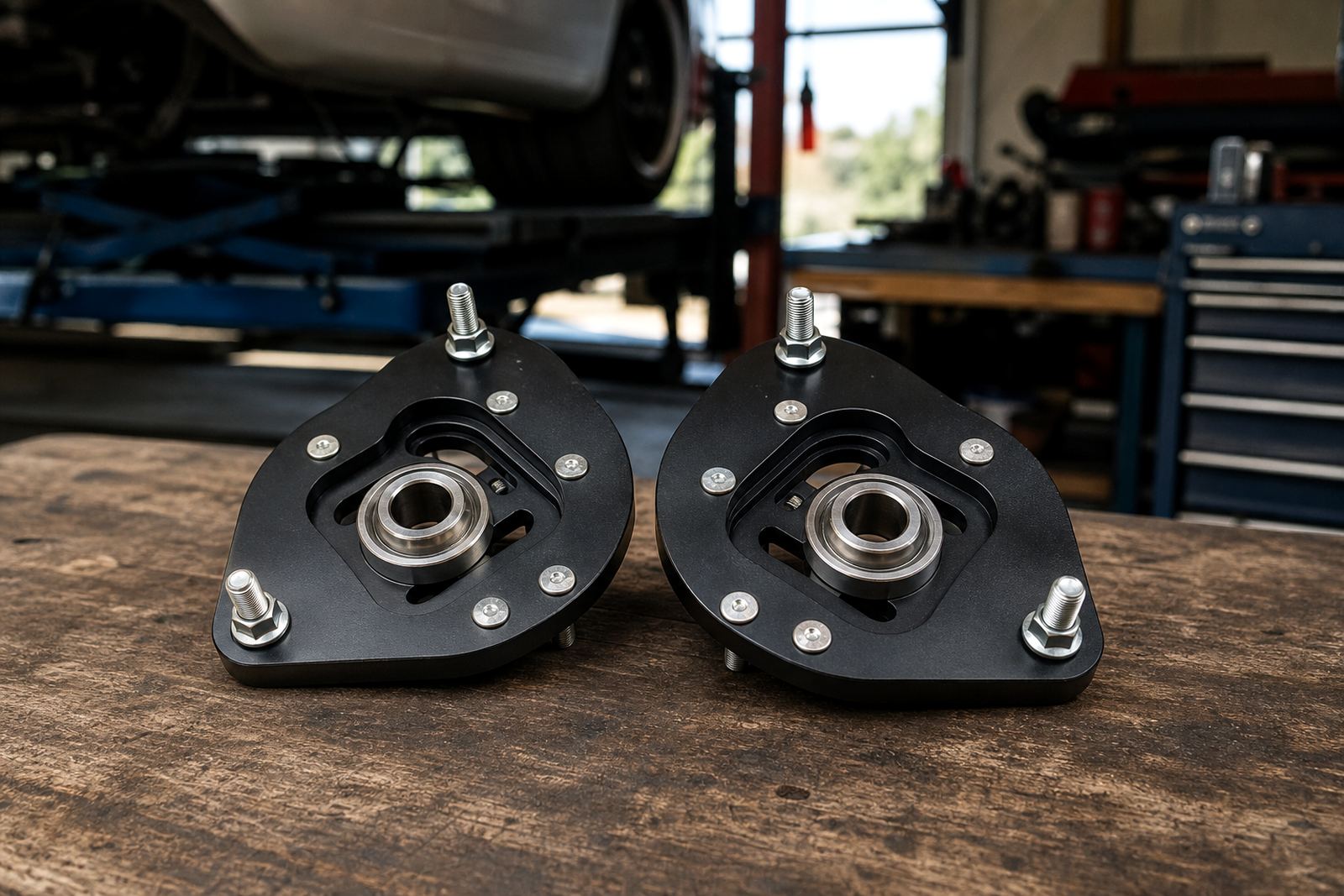
Most motorsport top mounts use a metal plate, a spherical bearing and a slotted or indexed adjustment system. That bearing keeps the strut moving freely while reducing the squirm that comes from soft factory rubber. The result is a sharper front end and a more direct link between the damper and the chassis. On wet Kyalami sessions, tight rally stages or a club racer running mixed tyres, that extra control matters.
These parts work alongside coilovers, alignment settings and corner weighting. They are not a stand-alone fix, but they do give the setup team more room to correct a car that wants too much understeer or shows uneven inside shoulder wear. A good mount also keeps repeat settings more consistent when the car is stripped, serviced or transported to another venue.
Fitment styles, sizes and adjustment ranges
Top mounts are normally selected by strut top pattern, shaft diameter and the amount of adjustment the shell allows. Some cars use a direct top plate that bolts into the original turret area, while others need a conversion plate or a mount matched to a coilover damper shaft. The key point is to match the mount to the actual suspension hardware, not only to the car model.
- Camber adjustment for front end grip and tyre wear control
- Caster adjustment for steering feel and straight-line stability
- Fixed or slotted plate styles, depending on the chassis layout
- Ball joint or spherical bearing centres for low-friction movement
- Stud or bolt-through body mounting patterns
- Different shaft sizes for matched coilover assemblies
Typical adjustment movement depends on the design, with many race mounts giving around 1.5 to 3.0 degrees of camber change at the wheel and moderate caster correction through the plate position. The exact usable range changes with strut angle, wheel offset and arch clearance. On some cars there is enough room for a neat setup without bodywork changes, while others need checking for bonnet, turret or inner arch contact before the car goes to the alignment rack.
Where these mounts suit the best
Adjustable top mounts suit front strut cars used for circuit racing, time attack, rally, endurance events and serious club motorsport. They are common where the front suspension needs more negative camber than the factory mount can provide. If the car sees rougher roads between events, a mount with a quality bearing and a neat tower plate helps keep movement controlled when the suspension is loaded hard over bumps and kerbs.
For front wheel drive cars, the mounts often help recover steering sharpness after lower springs or coilovers have been fitted. Rear drive cars use them too, especially when the driver wants a more settled front end under braking and cleaner turn-in on faster corners. In rally use, the mount has to cope with dust, vibration and repeated impacts, so the bearing condition and hardware choice matter more than appearance.
These mounts are also useful when brake package changes or tyre upgrades alter the car balance. A wider front tyre or more aggressive pad can change the way the car loads into the corner. With a proper mount in place, the setup team has more freedom to tune the car back into the window it needs.
Fitting, alignment and setup work around the mount
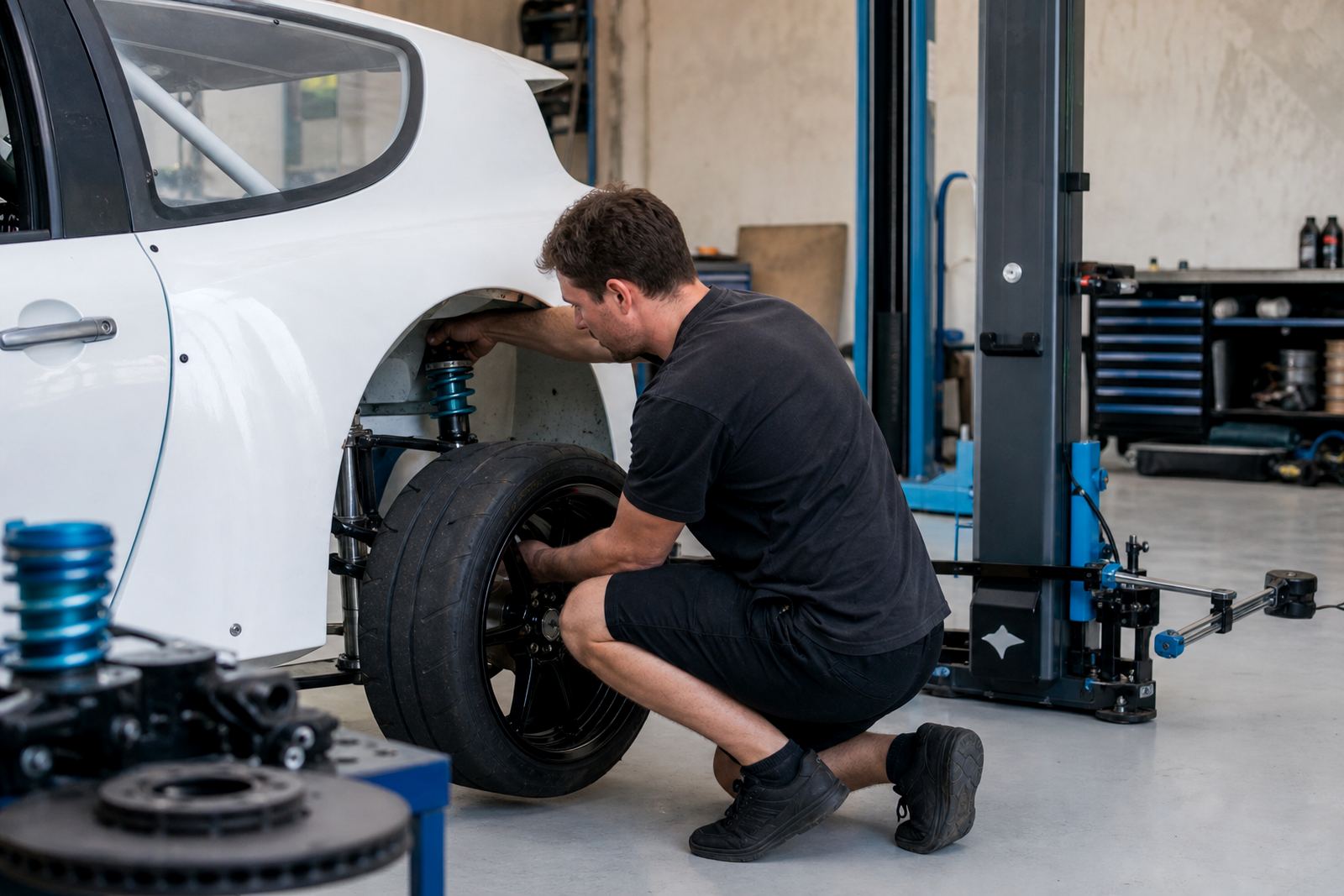
Top mounts are best fitted with the suspension out of the car, or at least with enough access to inspect the turret area properly. The upper plate has to sit square and the fasteners should be torqued to the correct spec for the chassis and damper hardware. If the mount is installed with a bearing that is misaligned or pinched, the steering feel can go heavy and the mount will not move cleanly through its range.
After fitment, the car should go through a proper alignment check. Camber, caster and toe need to be set together, not one by one. A change at the top mount often shifts the front toe, and sometimes the steering wheel centre has to be reset. On cars that use corner weighting, it makes sense to do the mount work before final balance checks so the setup is based on the final hardware.
- Check turret clearance at full bump and full steering lock
- Inspect damper shaft length and top nut engagement
- Confirm bearing orientation and plate marking before tightening
- Recheck alignment after the first heat cycle or test session
- Look for contact marks on the strut tower and surrounding paint
At the Midrand base, our workshop team can pair top mount fitment with coilover setup, alignment checks and corner weighting so the front end is measured as one system. That approach is useful for cars heading to Kyalami, Zwartkops, Killarney or a rally test day where the driver wants the notes to match the way the car really behaves.
Keeping the bearings clean and the settings honest
Top mounts work best when the bearing stays smooth and the hardware stays tight. After track running, wipe off dust, rubber grime and brake debris from the upper plate. Mud and fine grit can work into the bearing area on rally cars, so a quick inspection after each event is worth doing. If there is any notchiness, clunking or visible play, the mount should be checked before the next session.
Threaded fasteners and lock nuts should be checked during regular service work, especially after suspension changes or transport on rough roads. A small amount of movement at the top of the strut can throw off camber settings and create strange wear on the inside or outside shoulder of the tyre. It can also make the steering feel vague under braking into a fast corner.
Keep an eye on paint cracking around the turret, too. That can point to repeated load at the mount point or a shell that needs a closer look. If the car is used in wet coastal conditions, especially around Durban or Port Elizabeth, the mount hardware and exposed metal should be protected from corrosion where possible. A clean mount is easier to inspect, and easier to trust when the car is pushed hard.
Ordering details that help the right part land in the workshop
When asking for top mounts, the most useful details are the car model, year, front suspension type, strut shaft size and whether the car is running factory dampers or coilovers. It also helps to know the current wheel and tyre size, the target use and whether the car needs more camber, more caster, or both. If the shell has already been modified, photos of the turret area and top of the strut save time in the setup process.
- Which car it is
- Front suspension type and strut shaft diameter
- Current damper or coilover brand and thread size, if known
- Desired use, such as circuit, rally or club racing
- Current wheel offset and tyre size
- Any arch, bonnet or turret clearance limits
Some customers only need a fresh pair of mounts for a straightforward camber gain, while others need a full front end conversation around brake clearance, steering angle and alignment range. Our contact form is the place to send those details through, and the team in Midrand can match the mount choice to the rest of the suspension package. RaceHouse works with drivers across Johannesburg, Pretoria, Centurion, Kyalami, Durban, Cape Town and Port Elizabeth, with fitting advice and setup days for cars that need the front end measured properly.
Key facts
| Product type | Adjustable front top mount for motorsport strut suspension |
|---|---|
| Adjustment | Camber and, on selected designs, caster correction |
| Construction | Machined metal plate with spherical bearing centre |
| Mount patterns | Vehicle-specific and conversion fitments |
| Common uses | Track, rally, club racing and fast-road setup work |
| Related services | Alignment Checks, Corner Weighting, Coilover Setup, Track Setup Days |