

Cooling That Stays Composed Under Load
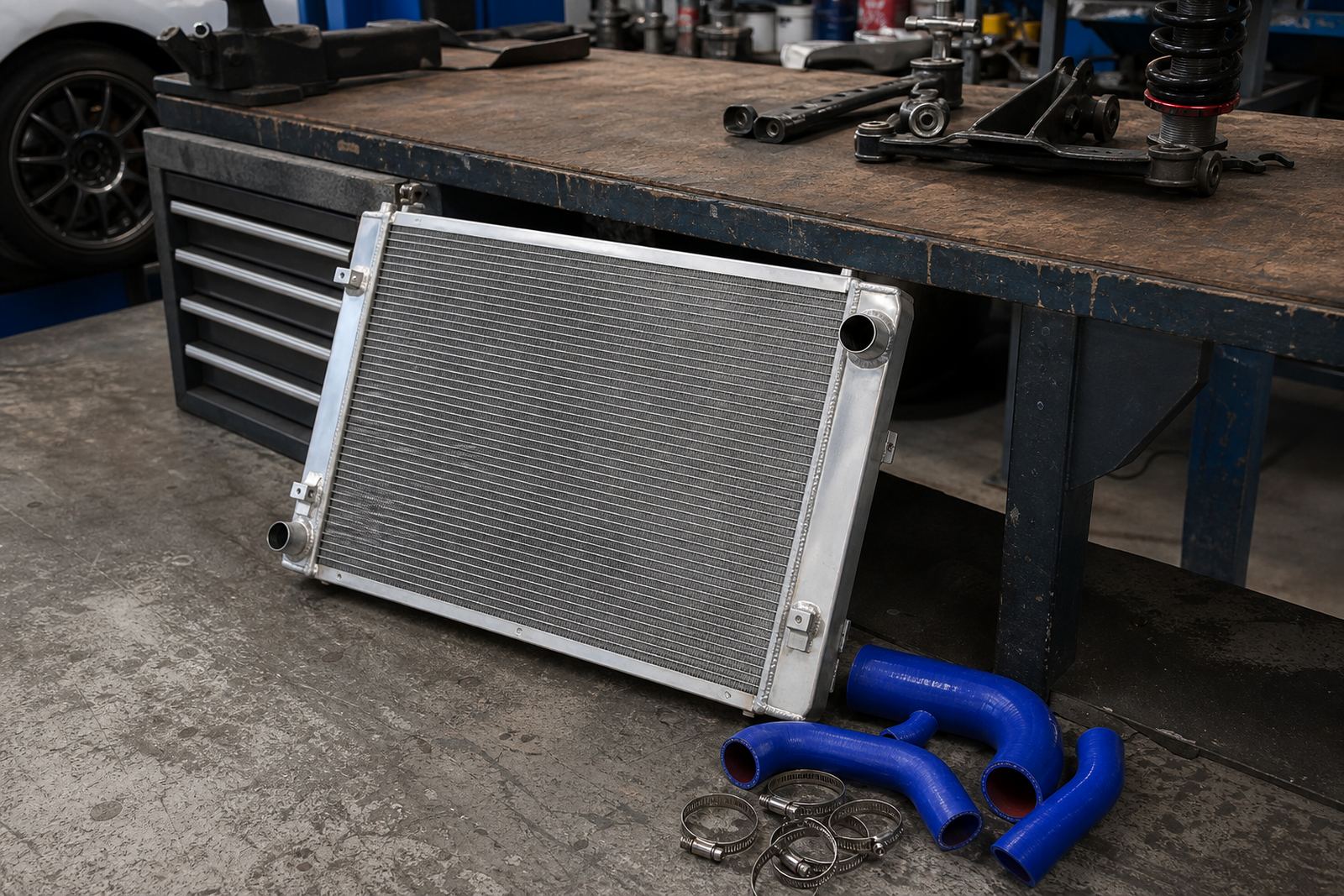
A motorsport radiator is built to move more heat out of the cooling system than a standard road unit, with a core and tank layout that suits repeated high rpm use. In racing, the aim is not only lower temperatures, but more stable temperatures lap after lap, especially when a car sits in traffic at Kyalami, climbs into a long hill section, or works hard in Durban heat.
For many builds, the right radiator starts with core thickness, fin density and overall frontal area. A thicker core can help, but it also needs sensible airflow and enough space behind the grille, fan shroud or ducting. On some cars a slim high-efficiency radiator gives cleaner packaging, while on others a larger twin-pass style or heavier-duty aluminium core makes more sense for the car's cooling load.
- Suitable for circuit cars, time attack builds, rally cars and club racers
- Available in common motorsport aluminium constructions with welded end tanks
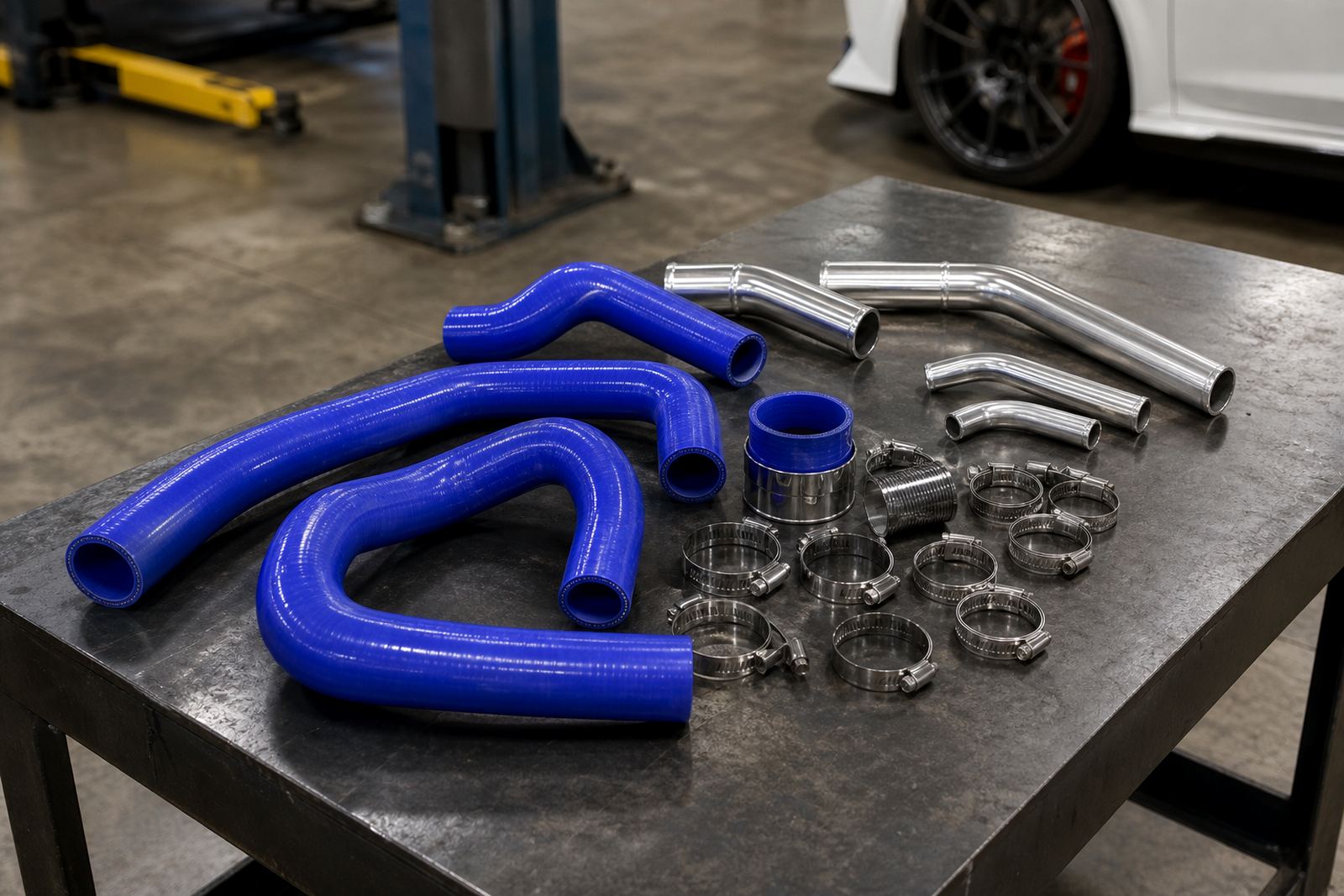
- Can be paired with coolant hoses, caps, brackets and ducting pieces
Dimensions, Core Style And Fitment Choices
Radiators are never a one-size-fits-all choice. The best unit depends on the chassis, the engine package and the space between the front panel and the fan assembly. We check overall width, height, core thickness and inlet and outlet positions so the radiator suits the pipe run without awkward bends or rubbing against bodywork.
Some builds need a direct replacement size. Others need a custom-fit core with altered mounts, hose neck positions or a different cap location. If a car uses a front-mount oil cooler, intercooler or extra ducting, clearance becomes part of the sizing decision. For cars running gravel or stage work, stone protection and mount strength matter as much as raw cooling area.
- Common options include single-pass and dual-pass layouts
- Inlet and outlet sizes can vary to suit hose routing
- Core thickness may be chosen for space, airflow and heat rejection balance
- Mount points and brackets should stop the radiator from moving under vibration
Where These Radiators Earn Their Keep
Track cars see sustained heat from high rpm and long throttle periods. Rally cars face low-speed airflow, dust and sudden temperature swings. Club racers often need a practical upgrade that keeps coolant temperatures steadier without overcomplicating the build. A radiator upgrade can help in all three settings when the original unit is near its limit.
Midrand, Johannesburg and Pretoria cars often face mixed driving before they get to the circuit, then spend race days in hot pits and repeated sessions. Durban brings humidity and warm ambient conditions that expose weak cooling quickly. Cape Town and Port Elizabeth drivers may see cooler air, but long runs, traffic and spirited use still punish an average cooling package.
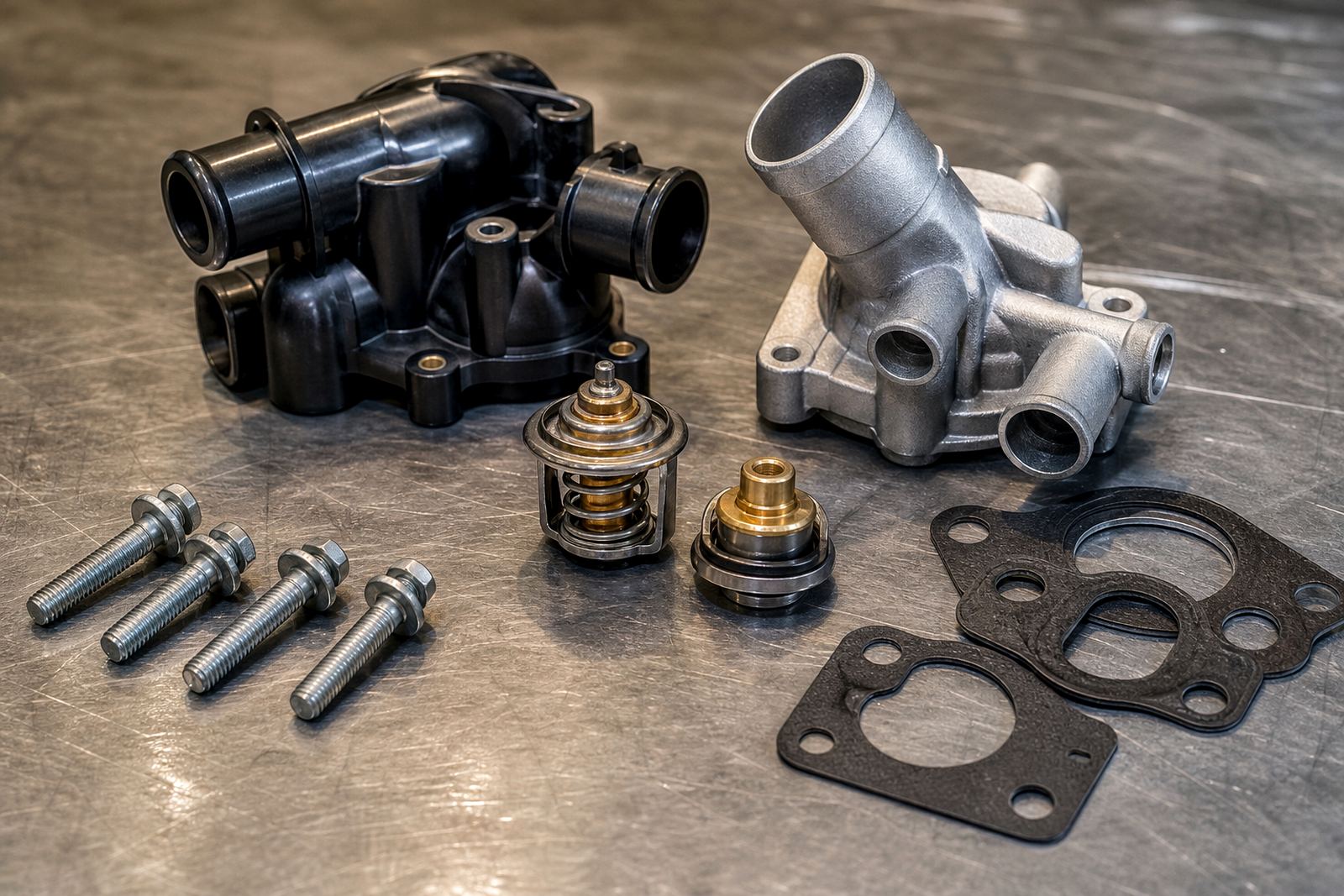
On turbocharged engines, rotary engines and high-compression naturally aspirated builds, cooling headroom becomes even more important. A radiator is part of a wider system, so we also look at thermostat choice, cap pressure, hose condition and whether the fan control strategy matches the car's real use.
Fitting Notes From The Workshop Side
Radiator fitment is usually more than loosening a few clamps and dropping in a new core. The mounting needs to hold the unit securely while leaving space for engine movement and suspension travel. We check hose length, fan clearance, bonnet clearance and the path of the bleed points. On some cars the top panel, ducting or shroud needs minor adjustment to make the airflow work properly.
For motorsport use, the installation should also support easier maintenance. A clean fill and bleed point, sound hose clamps and proper bracket placement all help when the car is stripped between sessions. If the car runs a front splitter or sealed ducting, the radiator should sit where incoming air is directed through the core instead of spilling around it.
We can advise on radiator fitment as part of a cooling system check, especially where the car already shows heat creep, overflow loss or uneven warm-up. For some packages, radiator work is best planned alongside oil cooling and brake cooling so the whole front end is working together.
- Check hose routing for kinks, rubbing and tight bends
- Confirm fan and shroud clearance before final tightening
- Bleed the system properly to avoid trapped air pockets
- Inspect mounts after the first few heat cycles
Care, Service And Race-Weekend Checks
Cooling gear lasts longer when it is kept clean and inspected often. Mud, rubber build-up and bent fins all reduce airflow through the core. On rally cars, dirt and stone damage can add another layer of wear, so the radiator face should be checked after rough events and washed with care rather than blasted flat-out at close range.
Coolant condition matters too. Old coolant can lose corrosion protection and leave deposits inside the system, while poor mix ratios can affect boiling point and winter protection. The radiator cap should seal properly, because a weak cap can let the system vent too early. Hoses, clips and expansion bottles need the same attention, especially on cars that run hard in hot weather or spend time on trailer loading ramps and paddocks.
- Inspect fins for blockage and straighten light damage where possible
- Check for wet spots at tanks, seams and hose necks
- Watch for coolant staining around the cap and bleed points
- Refresh coolant at sensible service intervals for race use
Order info that saves time at the bench
To match the correct radiator, it helps to confirm the chassis, engine type and current cooling layout. Some cars use a standard inlet on one side and outlet on the other, while others need swapped positions to suit the pipe run. We also need the space available, the intended use and any front-end parts already fitted that may affect airflow or clearance.
When you send through the details, include the make and model, the engine conversion if there is one, the size of the existing radiator, and whether the car runs a mechanical fan or electric fan setup. It also helps to know if the car is for circuit, rally or mixed use, because that changes the balance between outright cooling area and packaging. If the car already shows overheating at idle, on long pulls or after repeated laps, mention that as well.
Our team in Midrand supplies motorsport parts and performance upgrades across Johannesburg, Pretoria, Kyalami, Centurion, Durban, Cape Town and Port Elizabeth, with fitting advice from people who work around race cars every week. Radiators are only one part of the cooling picture, but they carry a lot of the load when the car is asked to keep its temper on a hot day.
- Chassis and engine combination
- Core width, height and thickness available in the bay
- Inlet and outlet positions and hose sizes
- Fan type, shroud space and mounting style
- Track, rally or club racing use
- Any oil cooler, ducting or intercooler already in place
Key facts
| Core material | Aluminium motorsport construction with welded tanks |
|---|---|
| Core styles | Single-pass and dual-pass options |
| Fitment points | Width, height, thickness, inlet and outlet position |
| Common use | Track, rally, club racing and performance road builds |
| Related checks | Coolant cap, hoses, fan clearance and ducting |
| Service support | Fitting advice, cooling system checks and setup days |