

Hose kits built for motorsport routing
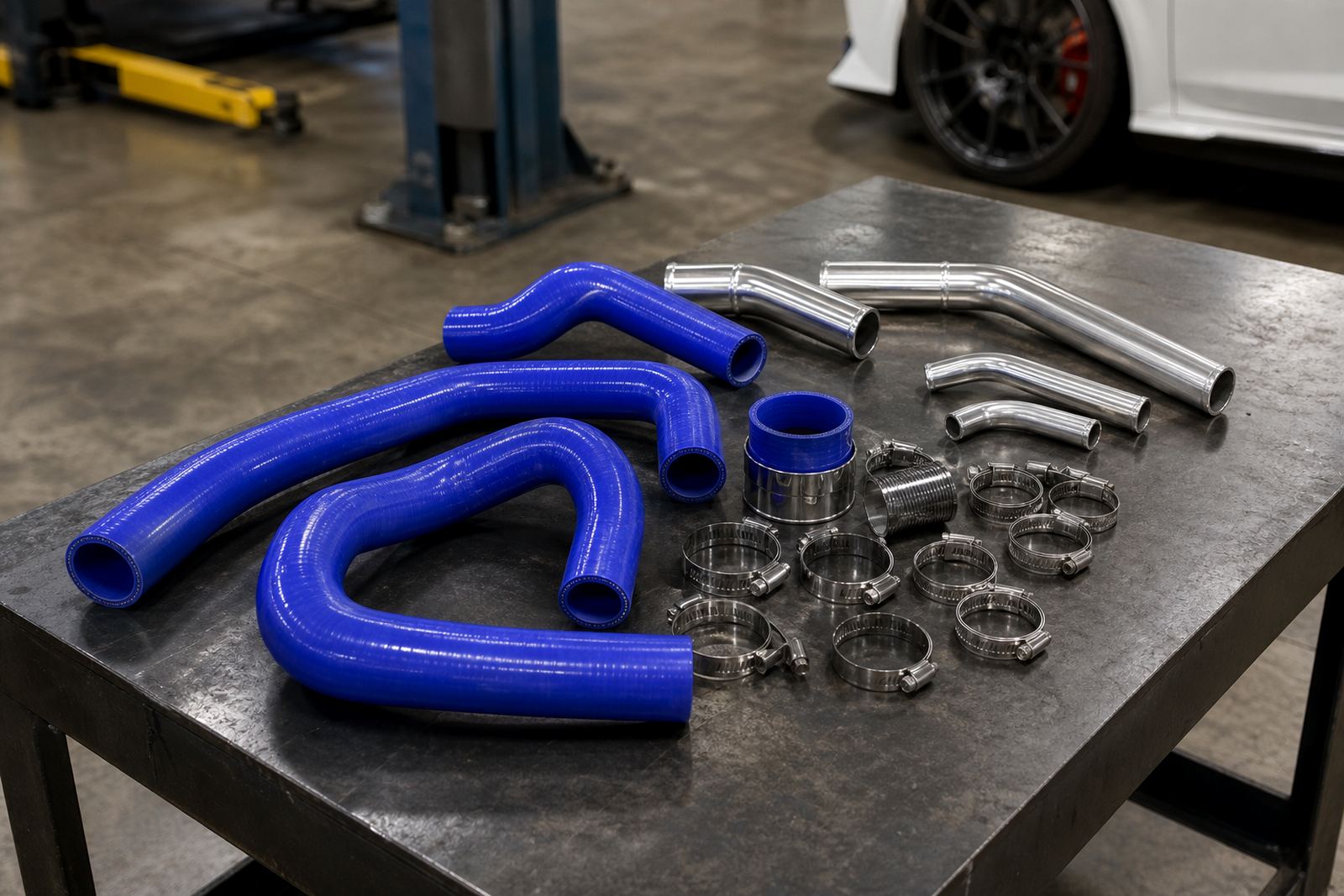
Our coolant hose kits are put together for performance cars that spend time under sustained load. The aim is secure routing, steady flow and a tidy install around radiators, thermostat housings, water pumps and remote expansion tanks. The hose material is chosen for heat resistance and pressure stability, with enough flexibility to route neatly around tight engine bays without kinking.
These kits suit track cars that run repeated heat cycles, rally cars that see rough surfaces and long stages, and club racers that still need a dependable cooling system under race pace. The bends matter just as much as the bore, because a hose that looks fine in the paddock can flatten out once the engine bay warms and the car is pushed hard.
- Heat-resistant hose for coolant circulation in motorsport use
- Formed bends or cut-to-length sections for cleaner routing
- Suitable for radiator, engine and tank connections
- Built to work with secure clamps and proper fitting ends
Sizes, bends and connection points that matter
Coolant hose kits are usually selected by internal diameter, overall length and the number of bends needed. Common sizes include 19, 25, 32 or 38 mm bore, though the right fit depends on the engine, radiator necks and any joiners already in the system. Some cars need straight sections with stainless joiners, while others work better with pre-formed elbows that keep flow smooth through a tight bay.
When a car has an upgraded radiator, oil cooler lines nearby or a custom header tank layout, the hose kit needs to follow the real route rather than a generic pattern. A good fit avoids chafe on fan shrouds, bonnet supports and intercooler pipework. It also helps keep the hose clear of exhaust heat, which matters on turbo cars and on older chassis where the bay runs crowded.
- Internal diameter matched to the vehicle’s hose stubs
- Length selected for direct routing with little strain
- Option for straight, elbow or reduced sections
- Works with hose joiners, clamps and take-offs where needed
Where these hoses suit best
These hoses suit cars that see long running periods at speed, repeated heat soak and aggressive cornering. On a circuit car, the cooling system has to hold together through the full stint without loose routing or rubbing points. In rally use, the extra movement from rough roads makes secure clamp placement and good hose support even more important.
They also suit upgraded road-to-track cars where the factory hose has become soft, stained or too close to nearby components. Midrand workshop bays see plenty of cars that have had engine swaps, radiator changes or header tank changes, and the coolant hose path often needs a proper rethink. If the system has been modified, the hose choice should be checked against every connection point before anything is cut or clamped down.
- Track cars with higher coolant temperatures and regular heat cycling
- Rally cars that need secure hoses under vibration and movement
- Club racers with upgraded cooling parts and tighter engine bays
- Performance road cars used for occasional sessions at Kyalami or Midrand area testing
Fitting notes from a motorsport workshop
Coolant hose fitment starts well before a hose is pushed onto a neck and clamped. The hose should be routed with a natural curve, not twisted against itself, and it should sit clear of sharp brackets and moving belts. Where a hose passes close to heat sources, extra sleeve protection or a revised route may be worth adding before the car goes back out.
We look at the full cooling path during fitting advice, especially where the car has a high-mounted radiator, remote reservoir or custom engine bay layout. Clamps need to be placed on clean, round surfaces, and the hose ends should seat fully before the clamp is tightened. A hose that is too short will pull under load, while one that is too long can kink and trap air after bleeding. That is where careful measurement saves time later.
- Measure the route with the bonnet closed where possible
- Check clearance to pulleys, fan blades and exhaust parts
- Use correct clamp position on a clean sealing surface
- Bleed the cooling system after any hose change or coolant refresh
Care for hose life between events
Coolant hoses last longer when the system is kept clean and the car is inspected regularly. Look for swelling near the clamps, soft spots on the inside bend, rubbing at contact points and crusty residue around a joint. On motorsport cars, these signs can show up faster because the system sees higher temperatures and more frequent load changes than a normal road car.
After wet events or long runs, it helps to check the hose path while the bay is still warm enough to spot fresh seepage. Keep the clamps clean and replace any that have lost tension or started to mark the hose unevenly. If coolant has been mixed with road grime or old sealant, the inside of the hose can pick up debris so the full system should be flushed when the car is serviced.
- Inspect after heat cycles, long stages and wet meetings
- Watch for softening, cracking, rubbing or clamp marks
- Flush the system when coolant looks dirty or contaminated
- Replace tired clips and damaged joiners at the same time
Details to confirm before you order
To supply the right coolant hose kit, we need the vehicle make and model, engine type, radiator layout and the exact connection points being used. It helps to know whether the car has a standard thermostat housing, a custom tank, an upgraded radiator or a relocated cooler. A clear photo of the engine bay and the old hose route can save guesswork, especially on swapped or heavily modified cars.
Please also confirm the hose diameter, the approximate lengths required, the number of bends, and whether you need straight hose, formed elbows or a mixed kit with joiners. If the car runs on track, rally or club racing duty, mention the event type and any nearby heat sources or clearance concerns. That makes it easier to match the hose to the way the car is actually used.
- Vehicle model, engine code and cooling layout
- Hose bore, length and bend count
- Radiator, tank and thermostat connection sizes
- Any custom parts, swaps or tight clearance points
Key facts
| Product type | Motorsport coolant hose kits |
|---|---|
| Typical bore sizes | 19, 25, 32 or 38 mm bore |
| Material focus | Heat-resistant coolant hose with stable flex |
| Use case | Track, rally and club racing cooling systems |
| Fitment support | Routing advice and installation guidance in Midrand |
| Common pairings | Radiators, header tanks, water outlets and hose joiners |