

Seat hardware that holds position under load
Seat mounts are the link between the shell and the chassis, so the parts have to stay square when the car loads up through a fast bend, kerb strike or heavy braking zone. In motorsport work, a mount is not only about strength, it is also about getting the driver low enough, close enough to the wheel and clear enough of the cage, door bar and tunnel.
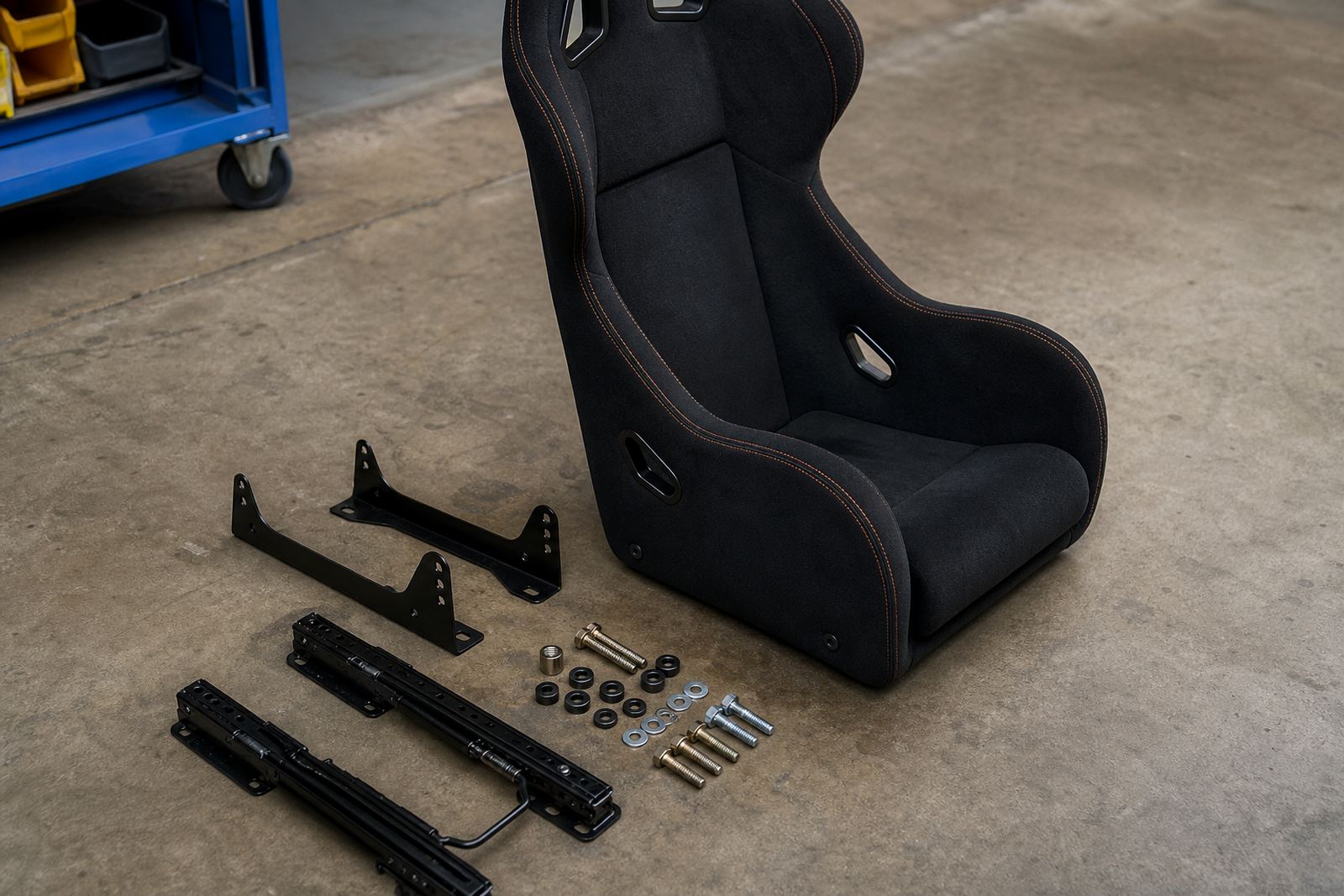
We supply seat rails and side mount hardware for fixed-back competition seats, plus adaptor plates and spacers where the shell, floor brackets or seat base need a different hole pattern. The usual setup uses steel side mounts with slotted holes for fine adjustment, while lower profile rails suit cars that need more room above the floor or seat crossmember.
Common options include 2-bolt and 4-bolt seat patterns, left and right handed side brackets, and slotted rails for fore and aft movement. In older club cars, a simple low base can work well; in tighter shells like hatchbacks and saloons, a side mount with stepped plates often gives better helmet clearance and better reach to the pedals.
Bracket shapes, hole patterns and fit notes
Seat mount size starts with the seat itself. Side mount shells usually use a standard pair of vertical brackets, but the exact hole spacing still varies by seat width, shell curvature and shoulder cut-out shape. A proper fit keeps the seat base flat, the side mounts parallel and the fixing bolts in full contact with the bracket faces.
- Off-the-shelf brackets for fixed-back shells
- Seat rails with adjustable fore and aft travel
- Adaptor plates for mixed hole patterns
- Spacer packs for height and tilt changes
- High tensile fixing bolts, washers and nyloc nuts
- Low profile bases for cars with limited head room
For rally cars and track cars with a roll cage, the seat often needs to sit a little lower and slightly more upright than a road car seat. That keeps the driver planted through rough surfaces and gives the belts a clean path across the shoulders and pelvis. If the shell has a deep side bolster or tall shoulder wings, the mount must leave enough room for the body to slide in and out without rubbing the cage or tunnel trim.
Where these mounts suit best
Seat mounts suit cars that see repeated hard cornering, frequent driver changes and proper safety gear. They are used in club racing, track days, sprints, rally stages and circuit cars where the driver needs a repeatable position from session to session. A fixed shell and correct hardware make it easier to keep steering reach, pedal travel and sight line consistent.
These parts work well in saloons, hatchbacks, coupés and purpose-built race cars. In a compact cabin, the bracket choice can decide whether the driver can sit low enough under the roof lining or helmet opening. In a wider car, the mount needs to place the seat centred to the steering wheel and pedals, not just centred to the cabin floor.
When the belt anchors, harness bar and steering column all sit at fixed points, the seat mount should be checked in relation to those parts rather than fitted by eye only. A small shift in base height or tilt can change how the lap belt sits and how steady the upper body feels under braking.
Fitting points that matter in a race shell
Seat mount fitting needs more than just tightening bolts. The base must sit on a sound mounting surface, the rails should not twist under load, and the seat should clear the floor hump, sill and cage tubes without fouling. In a motorsport build, a loose or uneven bracket can create movement that is felt straight away through the hips and lower back.
During fitment, we look at bolt grade, bracket thickness, the width of the seat base and the angle of the shell against the backrest. We also check whether the driver needs extra rake, because a small rear tilt can help on a long stint while too much tilt can put weight off the hips and pull the helmet position too high.
- Check floor condition before drilling or bolting
- Match bracket length to the seat base width
- Keep fasteners accessible for inspection
- Leave room for harness buckle movement
- Confirm clearance for cage legs and door bars
For cars used on both road and circuit, the mount should still let the driver enter and exit without catching on the seat frame. That matters in the wet, in night events and in workshop testing where repeated entry can loosen a rushed fit over time.
Care, inspection and long service life
Seat mounts live in a harsh area of the car. Vibration, helmet knocks, repeated driver changes and dust from transport all work on the fixings. Steel brackets can last well if the holes stay round, the paint is intact and the bolts are checked for movement after the first few heat cycles. In coastal conditions, a little surface rust can start around bolt heads and cut edges if the hardware is left exposed.
Keep the rails clear of grit and dry brake dust. If the seat slides, clean the runners so the adjusters move without sticking. If the seat is fixed, inspect the bracket faces for stretching around the holes, especially after a hard off or a kerb hit. Any bending, elongation or cracked coating is a sign to remove the part and measure it properly before it goes back in.
When a car is stored between events, loosen nothing and leave the mount as fitted, but do check torque, spacer position and bolt condition before the next outing. A proper seat position gives the driver a stable feel, and it should stay that way without constant fiddling in the paddock.
Ordering details for the right mount on the first fit
When you send through your seat mount request, the useful details are the seat make or shell type, base width, side mount hole pattern, car model and whether the car runs with a cage, harnesses or door bars. Send the exact shell model if you have it, because brackets and spacers are matched to the cabin from that.
It also helps to note whether you need fixed positioning or sliding adjustment, and whether the seat must sit higher, lower, more upright or further back than the original road seat position. If the car is used for rally, circuit or club work, say which discipline it sees most often because that affects how much access and movement the driver needs.
RaceHouse supplies motorsport seat mounts from our Midrand base and supports drivers across Johannesburg, Pretoria, Kyalami, Centurion, Durban, Cape Town and Port Elizabeth. For fitment support or a parts list that matches your cabin layout, use our contact form and include the seat, shell and car details with any current measurements.
- Seat type and shell width
- Car model and year range
- Side mount or base mount preference
- Fixed or sliding position need
- Cage, harness and buckle clearance notes
- Desired seat height and backrest angle
Key facts
| Product type | Seat rails, side mounts, adaptor plates and fixing hardware |
|---|---|
| Material | Steel bracketry with high tensile fasteners |
| Fitment pattern | Common 2-bolt and 4-bolt motorsport seat layouts |
| Adjustment | Fore and aft movement, height shims and tilt spacing |
| Use case | Track, rally and club racing cars |
| Support | Fitting advice and setup-day guidance from our Midrand team |