

What an anti-roll bar changes on the car
An anti-roll bar links the left and right side of an axle and resists body roll as the car loads up in a corner. In practical terms, it helps shift balance toward more front grip, more rear rotation, or a steadier middle ground, depending on where the bar is fitted and how stiff it is set.
For circuit use, a bar can sharpen turn-in and reduce the slow, leaning feel that makes a car lazy through direction changes. On rally and mixed surface cars, the right choice is usually more measured, because too much bar can lift an inside wheel and unsettle traction over broken ground. The part works with springs, dampers, bushes and tyre choice, so it should be treated as one piece of the setup, not a stand-alone fix.
- Controls chassis roll during cornering load
- Helps fine tune understeer and oversteer
- Works with spring rate and damper settings
- Useful on both front and rear axles
Bar diameters, blade settings and fitment styles
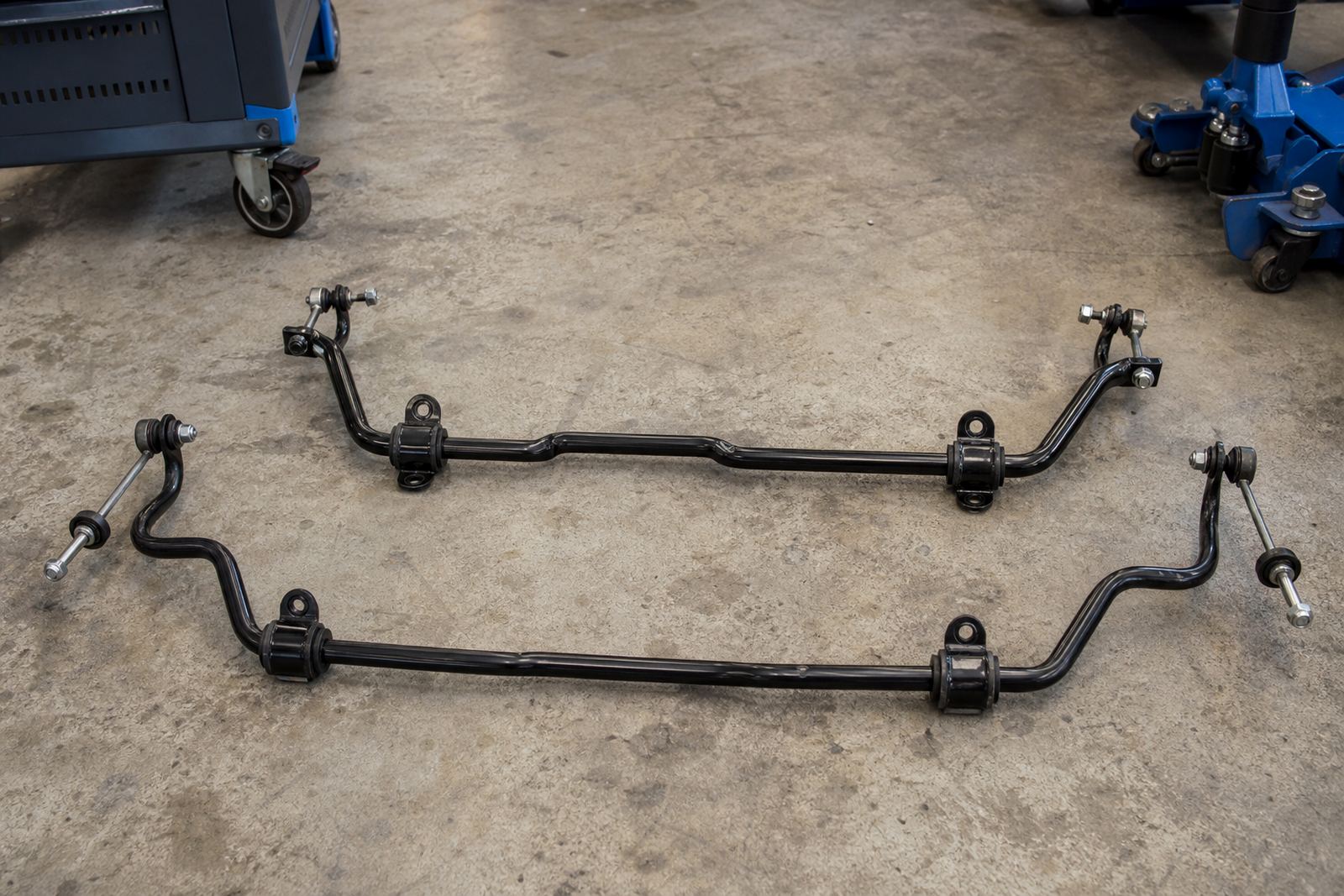
Anti-roll bars are usually specified by diameter, arm length and the number of adjustment holes or blade positions. Common motorsport diameters sit roughly in the 16 mm to 40 mm range, although the correct size depends on vehicle mass, track width, tyre grip and how much load the suspension can take. Thicker bars resist roll more strongly, while a lighter bar with adjustment holes gives finer control for test days and changing conditions.
Some cars use a solid bar, others use a tubular bar to save mass while keeping stiffness where it matters. Mounting style matters too, because chassis-mounted bars, drop link lengths and bracket spacing all affect how freely the bar moves through travel. If the bar sits too tight in the mounts, or the drop links are mismatched, the car can pick up stiffness that was never intended.
- Solid or tubular construction
- Fixed or multi-position adjustment
- Front or rear application
- Drop link length and bracket position
- Clamp-on or chassis-mounted hardware
Where anti-roll bars earn their place
Track cars often use anti-roll bars to reduce lean through fast sweepers and to help the car change direction cleanly into a tight bend. Rally cars may use them more cautiously, especially where gravel, kerbs and uneven surfaces can make an over-stiff bar work against traction. Club racing cars usually sit somewhere in the middle, where a sensible bar choice can tidy the platform without making the car nervous over bumps.
We also see them used when a car has already had brake upgrades, coilovers, bushes or alignment work and still needs a better balance at speed. If the front washes wide on entry, or the rear feels too eager on lift-off, the bar position and stiffness can be part of the answer. The best result normally comes from a full setup check rather than guessing at one change only.
- Circuit cars needing faster rotation
- Rally cars needing calmer weight transfer
- Club racers chasing cleaner balance
- Cars with mixed tyre and surface conditions
Fitting notes for a proper motorsport install
Correct fitment starts with the right bracket spacing, the right drop links and enough clearance at full lock and full droop. An anti-roll bar should move smoothly through its range, with no bind from bent links, seized bushes or poor chassis alignment. On a motorsport car, we check how the bar sits with the car at ride height, because a link set too short or too long can preload the system and distort the result.
For cars running lowered ride heights or stiffer spring packages, the bar can sometimes need a different hole position to keep the car honest through corners. If the vehicle uses rose jointed links, the ends should sit straight without side load. If the setup uses rubber or polyurethane bushes, they need to be matched to the load and checked for wear after hard weekends.
- Check full droop and steering lock clearance
- Set drop links at correct length
- Confirm no preload at ride height
- Inspect brackets, bushes and fasteners
Keeping the bar and links in working condition
Anti-roll bar hardware lives close to heat, spray and grit, so regular checks matter. Look at the link boots, joint play, bracket tightness and any signs of cracking around the mounting points. On cars that see kerbs, trailers and long hauls between events, even a small amount of looseness can turn into a noisy or inconsistent front end.
Surface rust on the bar itself is not always a problem, but damaged powder coat, flattened bushes or worn rod ends should not be ignored. If the car runs in wet conditions, clean the assembly after the event and recheck the fasteners before the next session. A bar that has been bumped on a curb or jack point can look fine and still sit slightly twisted, so a proper visual and hands-on inspection is worth doing.
Details to confirm before ordering
We need the car model, chassis code if you have it, axle position and whether the setup is for circuit, rally or mixed use. It also helps to know the current spring rates, wheel size, tyre choice and whether the car already has adjustable drop links or aftermarket suspension parts. If the car has had previous crash damage, a bent bracket or uneven ride height can change the bar choice.
When you send the details through our contact form, include photos of the axle area, the current bar if one is fitted and any notes on where the car feels soft or sharp on track. That makes it simpler to pair the part with the car instead of pushing a generic option onto a specific chassis. For motorsport work, the useful details are the ones that show how the car sits and loads up in motion.
- Vehicle model and chassis code
- Front or rear axle requirement
- Current suspension and spring package
- Use case: circuit, rally or club racing
- Bracket style, link type and clearance notes
Key facts
| Application | Anti-roll bar tuning for circuit, rally and club racing cars |
|---|---|
| Common diameters | About 16 mm to 40 mm, depending on chassis and use |
| Construction | Solid or tubular bar, with fixed or adjustable positions |
| Mounting | Chassis-mounted or clamp-style with drop links |
| Fitment focus | Front axle, rear axle, or matched balance across both ends |
| Service area | Midrand, Johannesburg, Pretoria, Kyalami, Centurion, Durban, Cape Town, Port Elizabeth |