

What braided brake lines do in a braking system
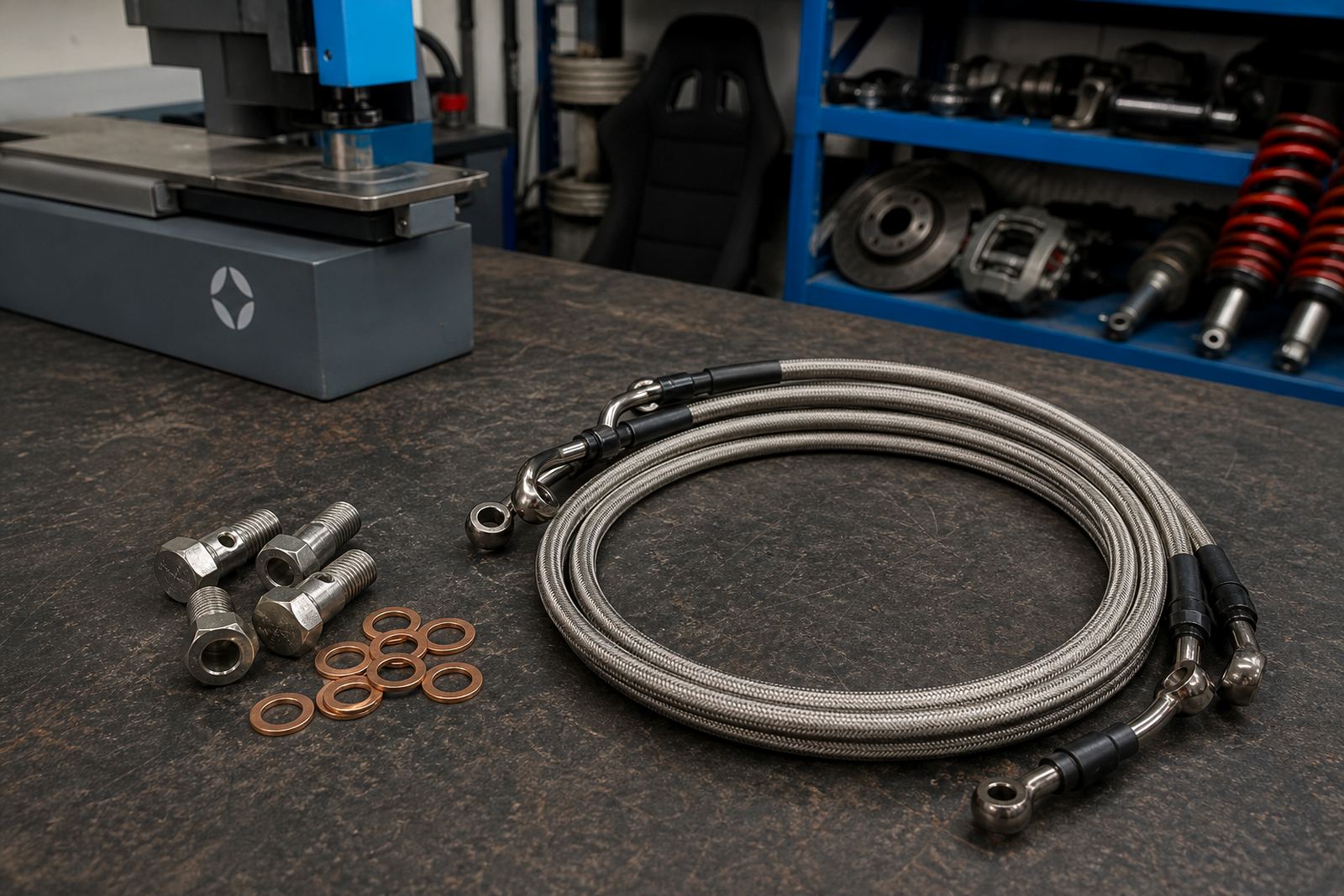
A braided brake line replaces the softer rubber hose section between the hard line and the brake caliper or wheel cylinder. The outer stainless braid helps resist hose expansion under pressure, so pedal movement feels firmer and more direct when the brakes are worked hard lap after lap or stage after stage.
That matters on cars that see repeated high temperature braking, especially where pad choice, fluid condition and caliper setup are already being pushed. The hose does not add braking power on its own, it helps the hydraulic system hold its shape when pressure rises.
- Common on track cars, rally cars and spirited road builds
- Useful with upgraded pads, higher boiling point fluid and bigger brakes
- Works with standard calipers and many performance brake kits
Sizes, end fittings and hose build options
Braided hoses are normally made to match the original routing on each corner, with lengths set for steering lock, suspension travel and body movement. The hose ends must suit the caliper thread, the chassis hard line connection and the way the brake pipe sits on the car.
Lengths, banjo angles and fixed fitting styles vary from car to car. On some setups, a straight fitting works neatly, while others need a 20 degree or 90 degree end to keep the hose clear of the wheel, upright or wishbone through full lock and bump travel.
- Made in vehicle specific lengths or measured to suit a custom build
- Available with straight, angled or banjo style ends where required
- Outer braid usually stainless steel, with an inner brake fluid compatible liner
Where the hose suits best on a motorsport car
These hoses suit cars that are already running harder compound pads, firmer suspension and more frequent brake heat cycles. They are a practical fit for circuit cars, hill climb cars, time attack builds, gravel cars and club racing saloons that need cleaner pedal feedback.
They also work well where the car sees mixed use and the driver wants more consistent pedal feel without moving straight into a full race brake package. In Gauteng heat, or on long sessions at Kyalami, the brake system can build temperature quickly and the hose becomes one part of the control picture.
- Track days and sprint racing
- Rally and gravel stage cars
- Club racers with upgraded pads and fluid
Fitment points that matter during installation
Good fitment is about more than swapping the hose. The line must sit clear of the tyre, spring, damper body and wheel rim at full lock, with enough slack for suspension movement but not so much that the hose rubs on bodywork or suspension arms.
Brake bleeding should follow once the hoses are installed, because any trapped air will spoil pedal feel no matter how good the hose is. If the car uses adjustable brake bias or a balance bar, that setting should be checked after the system is bled and the pedal is firm.
- Check clip positions and hose routing before final torque
- Bleed the full system with fresh brake fluid after fitment
- Inspect for tyre contact at full lock and full compression
Care, inspections and service life
Braided hoses live hard lives on race cars, so they need regular inspection. Look for braid wear, cracked outer sheathing, damaged end fittings and signs of chafing where the hose passes through clips or near the wheel.
Brake fluid should also be kept fresh, especially on cars that heat the system properly. A hose can only do its job if the fluid inside it stays in good condition and the calipers can move freely when the pedal is released.
- Inspect before events and after kerb heavy sessions
- Replace hoses that show fraying, corrosion or kinks
- Keep the system clean, dry and free of road debris
Details to confirm before ordering
The right hose depends on the exact car and the brake layout. The important details are the vehicle model, year where relevant, front or rear position, caliper type, hard line thread and whether the car uses standard suspension or a motorsport conversion.
It also helps to note whether the car has been lowered, runs wider wheels, or has altered steering lock, because those changes can affect hose length and angle. If the car is set up for gravel or circuit use, mention that too, since routing needs can differ.
- Car make, model and chassis code if available
- Front, rear or full set requirement
- Caliper connection style and thread detail
- Any suspension, wheel or lock changes
Key facts
| Product type | Braided brake hoses for motorsport braking systems |
|---|---|
| Construction | Stainless braided outer with brake fluid compatible inner liner |
| Common fitment | Front, rear or full car sets |
| End styles | Straight, angled or banjo style ends depending on application |
| Use cases | Track, rally, hill climb and club racing cars |
| Service needs | Regular inspection, fresh brake fluid and proper bleed after fitment |