

Mounts built for harder shifts and tighter driveline control
A gearbox mount is the connection point between the gearbox and the car’s chassis or crossmember. In motorsport use, the mount has to control movement under torque, curb strikes and repeated heat cycles, while still keeping the drivetrain aligned enough for clean engagement. When the mount is too soft or worn, the gearbox can twist more than it should, which often shows up as a vague shift, driveline knock or extra strain on shifter linkage and propshaft angles.
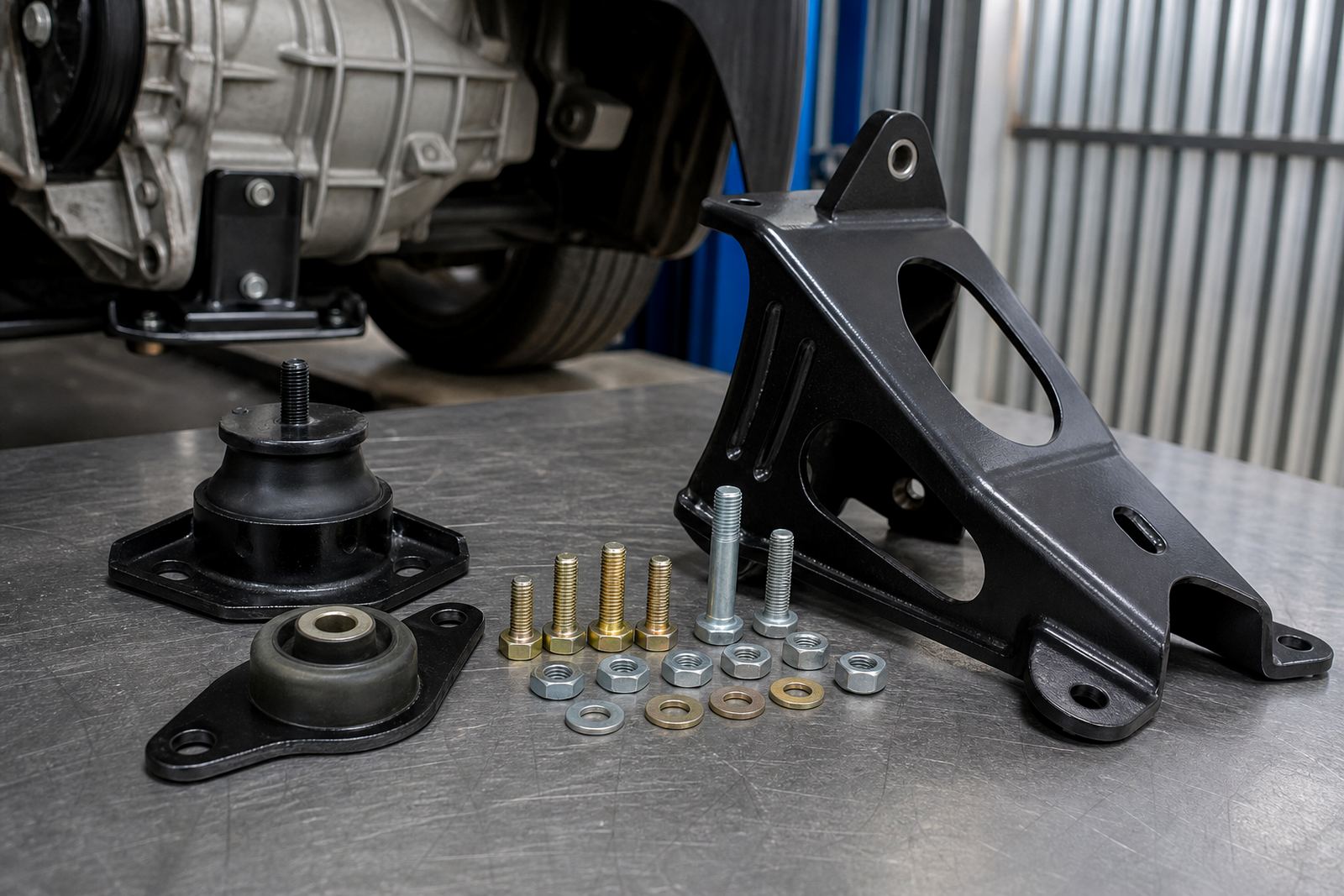
We supply upgraded gearbox mounts for track, rally and club racing cars where the standard rubber piece has become too soft for the job. Common options include firmer rubber mounts, polyurethane inserts and motorsport-style solid or near-solid mounts, depending on how much movement the car can live with. The right choice depends on the gearbox type, crossmember layout, engine torque and how much cabin vibration the driver will accept.
- Firmer location for the gearbox under load
- Less fore and aft movement during shifts
- Better consistency for linkage and selector alignment
- Useful on cars that see kerb use, standing starts or hard trail braking
Size, material and fitment details that matter
Gearbox mounts are never one size fits all. The shape of the bracket, bolt spacing, stud diameter and mount height all need to suit the vehicle. A mount that is too tall can change propshaft alignment or put extra angle into the tail housing, while one that is too low can leave the gearbox sitting where the exhaust, tunnel or crossmember do not like it. We check these details before any order is placed, because a small mismatch here can create a bigger fitment problem later.
Materials vary from moulded rubber to polyurethane and solid metal-bodied designs with bonded inserts. Rubber is usually kinder for road use and mixed duty, while firmer compounds are better where the gearbox must stay put under race load. Some cars use a single central mount, others use side mounts or a combined bracket arrangement. The mount height, bolt pattern and bush width should match the car’s transmission tunnel and crossmember layout, and the gearbox tail housing should sit square once installed.
- Bolt spacing and stud size
- Mount height and overall width
- Rubber, polyurethane or solid construction
- Crossmember style and bracket orientation
- Gearbox model and tail housing shape
Where gearbox mounts earn their keep
These mounts suit cars that need tighter driveline control through a wider working range. Track cars often benefit because repeated shifts and heat build-up can soften a tired mount quickly. Rally cars see sudden load changes, rough surfaces and sharp weight transfer, so the gearbox needs steadier support. Club racers may want a firmer mount to improve shift feel without moving into a setup that becomes tiring over a long day.
We often see mount upgrades paired with clutch work, shift improvements and alignment checks, because the gearbox does not work alone. If the engine mounts are already soft, or the rear axle bushings are loose, a gearbox mount upgrade will only solve part of the movement. On some builds the change is small but noticeable, on others the difference is clear through the whole shift path and under throttle pickup.
- Track cars that run repeated high-load shifts
- Rally cars that see rough stages and violent movement
- Club cars where cleaner gear engagement is the goal
- Builds with upgraded clutch, shifter or drivetrain parts
Installation points from the workshop floor
Fitting a gearbox mount can look straightforward, but the details matter. The gearbox should be supported correctly before the old mount is removed, then the new mount positioned so the tail housing sits at the right height and angle. On some cars the crossmember needs to be loosened, shifted or slotted to achieve the best fit. On others, the mount is part of a bracket stack that must be assembled in the correct order so the bush is not preloaded.
We also look at clearance around the tunnel, exhaust, shifter and propshaft. A mount that is too stiff for the car can pass more noise into the shell, and on certain setups it can move stress into the brackets around it. That is why fitment advice matters, especially on cars that are already running short shifters, solid diff bushes or a heavier clutch. During setup days we can check how the gearbox sits under the car and whether the mount is working with the rest of the driveline instead of fighting it.
- Support the gearbox before removing the old mount
- Check tail housing angle and crossmember position
- Watch tunnel, exhaust and shifter clearance
- Confirm the mount is not being twisted into place
Care, wear and the signs a mount is past its best
Mounts wear in different ways. Rubber may crack, separate or sag. Polyurethane can harden, deform or pick up stress marks where the sleeve moves in the bush. Solid mounts may be fine structurally but can loosen at the bolts or show wear in surrounding brackets if the car has been taking heavy knocks. Heat, oil mist and repeated vibration all shorten service life, especially where the gearbox area runs close to exhaust heat or the car sees long sessions on circuit.
If the driver starts feeling extra knock on throttle changes, a harsher shift engagement or movement at the shifter that was not there before, the mount should be checked along with nearby bushes and brackets. A mount can also appear acceptable at rest but move too much once the driveline is loaded. We like to inspect the crossmember, gearbox bracket and nearby fasteners together, because one loose point can make the whole assembly feel wrong.
- Look for cracks, sagging or oil-soaked rubber
- Check fasteners after hard use or component changes
- Inspect nearby brackets and crossmember holes
- Match mount firmness to the car’s real use
Details to send through with an order
To match the right gearbox mount, we need the vehicle model, gearbox type and any changes already on the car. If the car has a swapped engine, altered crossmember, upgraded shifter or custom exhaust routing, that changes the fitment picture. A clear note on whether the car is track only, rally use or mixed club work helps us point you toward the right stiffness and layout. On many builds it is also useful to know whether the original mount is single stud, twin stud or bracket based.
For motorsport cars in Midrand, Johannesburg, Pretoria, Kyalami, Centurion, Durban, Cape Town and Port Elizabeth, RaceHouse supplies gearbox mounts alongside brake, suspension and cooling parts, plus fitting advice when the drivetrain needs a practical check. Our contact form is the best place to send the vehicle details and any notes on the current setup, so the mount choice matches the gearbox, crossmember and shift hardware already in the car.
- Vehicle make, model and year
- Gearbox model and mount style
- Crossmember or bracket changes
- Intended use: track, rally or club racing
- Any vibration or clearance issues already noticed
Key facts
| Product type | Gearbox mount upgrade for motorsport and performance use |
|---|---|
| Construction options | Rubber, polyurethane, solid or hybrid mount styles |
| Common fitment factors | Bolt pattern, stud size, mount height, bracket shape |
| Use case | Track, rally and club racing cars |
| Related systems | Clutch, shifter, propshaft, crossmember and engine mounts |
| Service support | Fitment advice and setup days from the Midrand base |