

Seal Packs For Calipers That See Real Heat
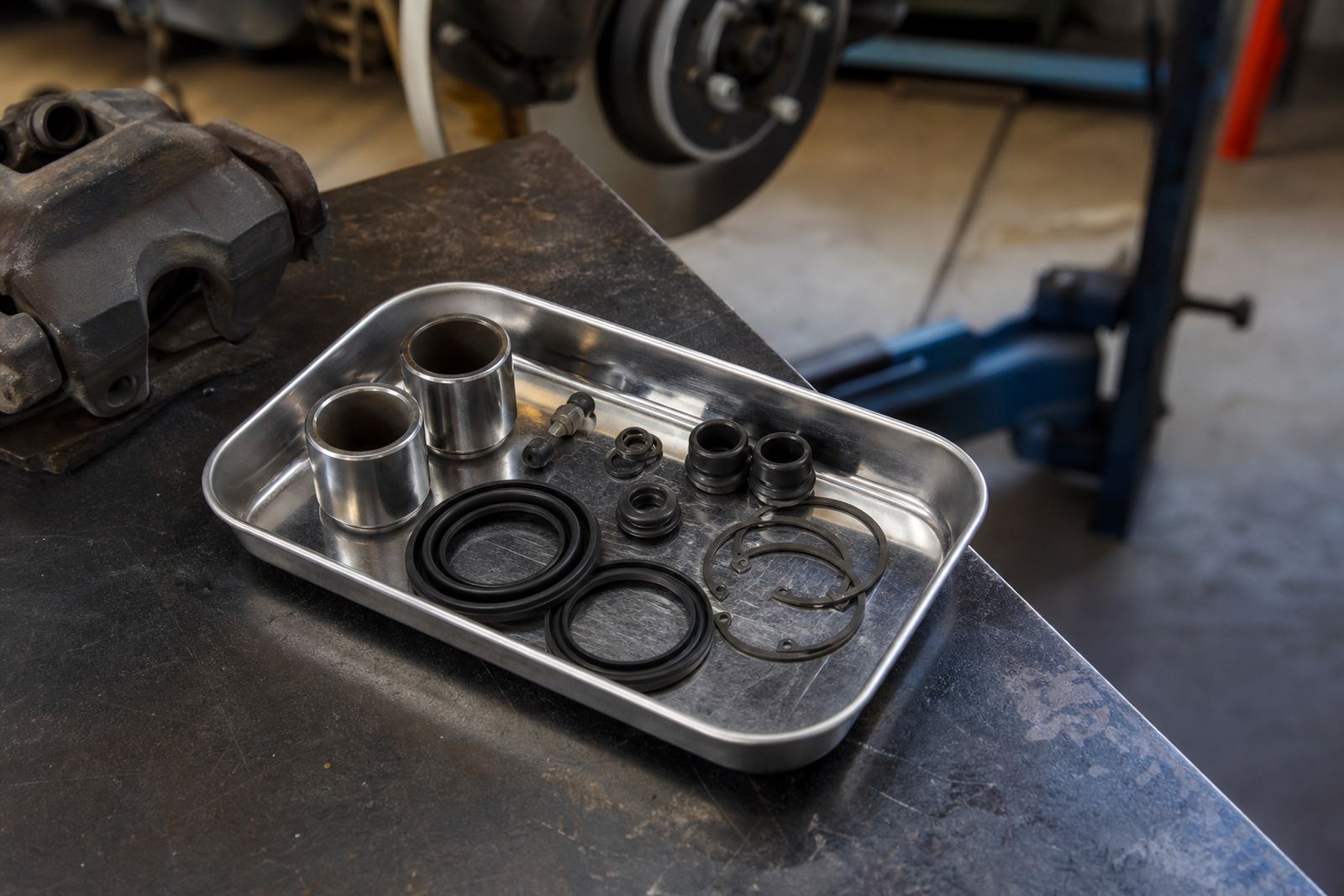
A caliper rebuild kit is the service pack used when piston seals start to harden, dust boots split or retaining pieces are no longer holding shape. On race cars that live through repeated pad changes, hot brakes and long stints, the kit keeps the caliper body usable without replacing the whole unit.
The usual contents are square-cut hydraulic seals, dust boots, slider seals where applicable, bleed screw seals, pistons seals for multi-piston units and the small hardware that belongs with the caliper half. On some calipers the kit also includes anti-rattle clips, pad retaining pins, springs or banjo washers. The exact mix depends on the caliper design, piston count and whether the body is fixed or floating.
These kits suit brake services on circuit cars, gravel cars and club machines that run harder pads and higher temperatures than road use. Midrand workshops, home garages and race prep teams often keep a spare set on the shelf before an event block begins.
Caliper Formats And Kit Variations
Not every caliper uses the same seal profile, piston size or rebuild layout. A two-piston front caliper on a club racer, for example, will use a different seal arrangement from a four-piston fixed caliper on a serious track car or a rear handbrake caliper on a rally build. That is why the caliper body number, piston diameter and mounting style matter before a kit is selected.
RaceHouse handles kit matching for common motorsport caliper patterns and for mixed setups where front and rear axles do not share the same hardware. Some kits are supplied as single-caliper service packs, while others are packaged as axle sets for a pair of calipers. Piston count, piston size and seal type still need to line up with the exact caliper on the car.
For cars running in humid coastal conditions, especially around Durban and the Cape, seal condition deserves closer checking after storage. Brake fluid residue, moisture and dirt can sit in the caliper bores and shorten the life of a fresh rebuild if the caliper is not cleaned properly first.
- Single caliper kits
- Axle pair kits
- Fixed caliper sets
- Floating caliper service packs
- Kits matched by piston count and bore size
Where These Kits Fit Into A Brake Service
A rebuild kit makes sense when the caliper body is still sound, the piston bores are clean and the service issue sits with wear items rather than cracks or deep corrosion. It is part of the brake service process alongside pad inspection, rotor condition checks, fluid change and bleed work. On race cars the caliper service often sits with a wider brake upgrade plan, especially where heat soak or pedal feel has changed over a season.
These kits suit track day cars that need dependable pedal feel, rally cars that see dirt and water, and club cars that get stripped between meetings. They also suit workshop rebuilds where the caliper is already off for suspension work, alignment checks or corner weighting, because the brake system can be inspected properly while the car is apart.
Where a caliper has been leaking fluid around the pistons or the dust boots have torn, the rebuild is usually more practical than chasing symptoms with fresh pads alone. If the body is pitted or the threads are damaged, the caliper may need a different repair path.
Fitting Notes From The Workshop Side
Installing a caliper rebuild kit takes careful cleaning, correct lubrication for the seals and proper attention to piston movement. The caliper body should be stripped, washed and dried before any new rubber goes in, because old fluid residue can damage the fresh seals during the first few heat cycles. Piston bores need a close look for scoring, corrosion and dirt lines that can catch the seal lip.
Fitting advice matters because a caliper that goes back together with the wrong seal orientation or poor piston alignment can give drag, uneven pad wear or a soft pedal. After assembly the caliper should be bled fully, the bleed screws checked for condition and the pads seated against the disc before hard use. If the car runs braided brake lines, the caliper service should be done with the line routing and banjo hardware in mind.
RaceHouse supports fitting advice for owners, local builders and race prep teams across Midrand, Johannesburg, Pretoria and the rest of Gauteng. Track setup days also help when brake work is being matched with suspension and corner weight changes on the same car.
Care Between Events And Service Intervals
Caliper life improves when the brake system stays clean and the fluid is changed before it turns dark or moisture-heavy. On race cars, dust and heat cycle the seals hard, so it helps to rinse the caliper area carefully, keep pad wear even and avoid letting brake fluid sit on painted or coated parts. After a wet rally stage or a dusty event, the caliper should be checked for leaks, boot damage and sticking pistons.
In storage, the car should not sit with damaged seals and old fluid in the system. That can leave the piston faces exposed to air and grime, which is especially hard on cars based near the coast. A clean brake service interval is easier to manage when the calipers are rebuilt before they start dragging or leaking.
For teams that test often, keeping one kit per caliper type on the shelf makes workshop planning easier. It helps when the same car is shared between drivers or when a second set of calipers is used for different events.
Caliper Body And Piston Details For The Kit
When ordering a caliper rebuild kit, the safest way is to match the exact caliper body and piston details rather than guessing from the vehicle model alone. Some cars have had brake conversions, mixed front and rear hardware or different calipers fitted over the years. A quick check of the caliper casting marks, piston count and bore size avoids the wrong seal set reaching the bench.
The details below help narrow the correct kit. If there is a split between left and right calipers, or between front and rear axles, note both sides. If the car has been changed for motorsport use, include the current caliper type rather than the factory brake setup.
RaceHouse works from Midrand and supports motorsport builds across South Africa, including Johannesburg, Pretoria, Kyalami, Centurion, Durban, Cape Town and Port Elizabeth. Photos of the caliper body and its casting marks help us find the right seals.
Key facts
| Product type | Caliper rebuild kit |
|---|---|
| Use case | Seal and hardware service for race calipers |
| Kit contents | Piston seals, dust boots and small hardware |
| Fitment | Fixed and floating calipers, depending on design |
| Typical use | Track, rally and club racing brake maintenance |
| Service note | Match the kit to piston count, bore size and caliper body |