

A pedal box is more than a pedal bracket
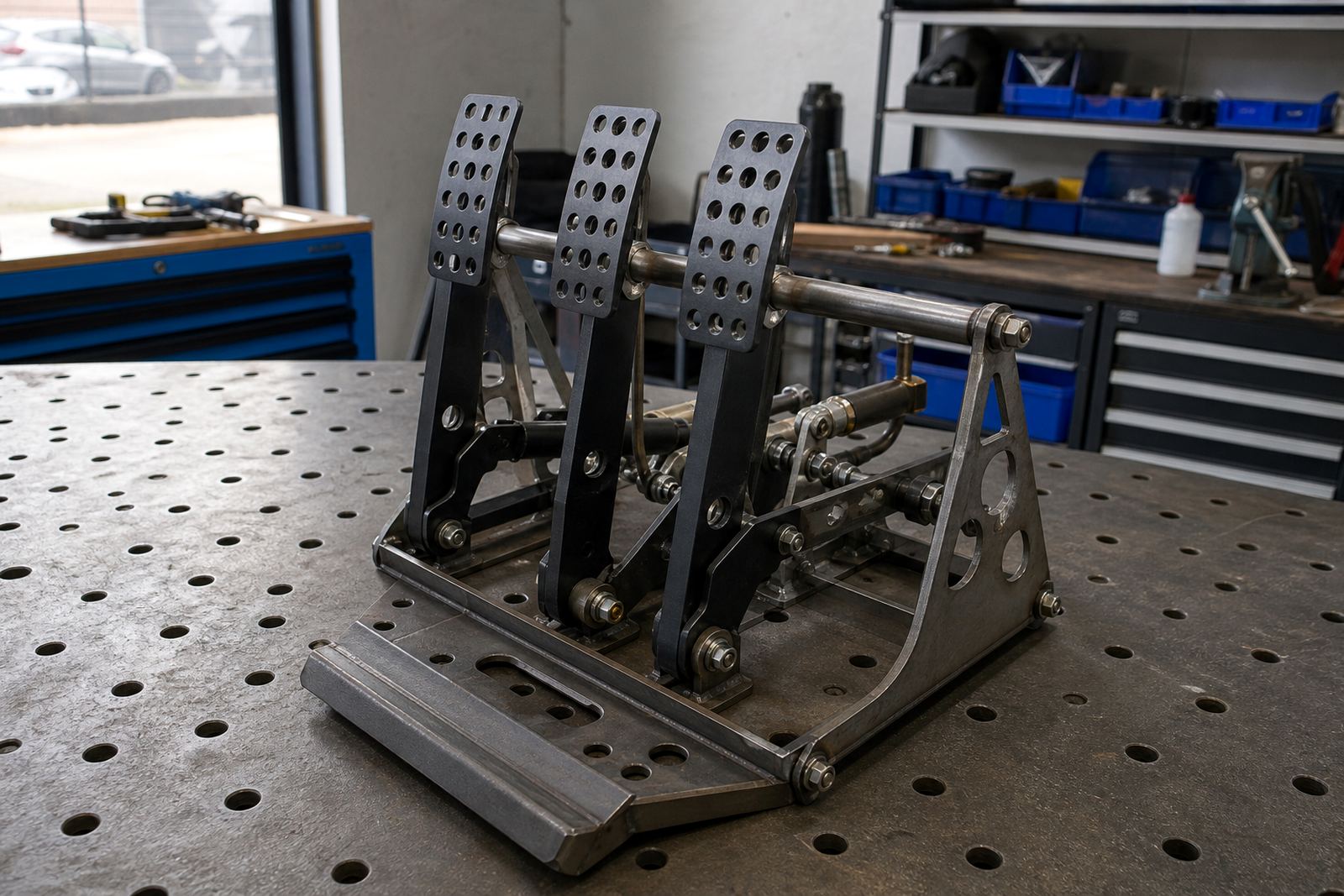
A proper pedal box assembly groups the brake, clutch and throttle pedals into a rigid floor-mounted unit, with adjustment points that help the driver sit squarely in the seat and work the pedals with less wasted movement. In a motorsport car that matters, because brake balance feel, pedal spacing and leg position all affect repeatable lap times and confidence under trail braking.
The assemblies we deal with are typically built around a two-pedal or three-pedal layout, depending on whether the car runs a clutch pedal or a sequential-style setup. The brake side may use a balance bar arrangement with twin master cylinders, giving a wider range of brake force distribution front to rear. That setup is common in race cars where the driver wants finer control than a standard road pedal cluster can offer.
- Floor-mounted pedal box assemblies for motorsport use
- Two-pedal and three-pedal layouts available
- Brake balance bar systems with twin master cylinders
- Adjustable pedal faces for reach and driver position
- Suitable for cars with custom seats and harness positions
Sizes, layouts and the bits that change the feel
Pedal boxes are selected around the car, the cockpit space and the way the driver works the pedals. A compact cabin in a rally shell usually needs a tighter pedal arrangement than a wider circuit build. Some boxes are made for side-by-side master cylinders, while others use a staggered arrangement to clear bulkheads, steering column parts or cable routes.
Options often include pedal ratio choice, adjustable pedal stops, different balance bar lengths and master cylinder bore sizes. Smaller bore sizes can give a longer pedal travel and a softer feel, while larger bores shorten travel and raise effort. The right combination depends on caliper size, pad compound, tyre grip and whether the car runs on slicks, semi-slicks or road legal rubber.
- Two-pedal and three-pedal layouts
- Different pedal ratios for road car conversions and race shells
- Master cylinder bore sizes matched to brake hardware
- Adjustable balance bar for front to rear bias control
- Pedal pads that can be spaced for heel and toe work
Where this setup earns its keep
This type of assembly suits track cars, rally cars and club racers where driver position and brake balance need to be more deliberate than on a standard road car. It also suits stripped interiors, roll cage builds and cars fitted with fixed-back seats and multi-point harnesses, because the pedal position can be set around the driver rather than forcing the driver to adapt to the original layout.
In a Kyalami circuit car, the driver may want firmer braking for repeated high-speed stops. In a gravel rally shell, the aim may be a more forgiving pedal with easier modulation over rough ground. On a Centurion or Midrand club car, the pedal box often forms part of a wider cockpit reset that includes seat height, steering wheel reach and harness anchor placement.
- Track days and sprint cars
- Rally cars with frequent brake modulation
- Club racing shells with stripped interiors
- Custom cockpit builds with fixed seats and harnesses
- Cars needing better heel and toe access
Fitment details that matter before the car goes on stands
A pedal box needs the floor, the master cylinders and the driver's feet to agree. The unit has to sit square to the driver, clear the bulkhead and leave enough room for the master cylinders, lines and reservoir layout. The pedal box may need mounting plates, firewall reinforcement, new brake lines and careful routing around the steering column or crossmember. On many race cars the mounting position also affects seat placement and the angle of the harness straps.
Brake system bleeding is part of the job once the hardware is in place, and a balance bar system must be checked with the car loaded as it will be driven. That means paying attention to pedal free play, end stops, clevis alignment and whether the pedals return cleanly after repeated use. If the setup includes clutch or throttle modifications, the final check should include full travel without binding.
- Mounting position and firewall clearance
- Master cylinder size and line routing
- Pedal travel, free play and return movement
- Seat and harness position around the new pedal height
- Brake bleed and bias check after installation
Care, inspection and the wear points to watch
Pedal boxes work hard, especially in cars that see repeated brake temperature changes, dust from paddock use and vibration from kerbs or rough rally stages. The main wear points are pivot hardware, clevis pins, balance bar threads, return springs and master cylinder seals. If the car runs in humid coastal conditions, like Durban or Cape Town, corrosion protection matters too, especially around exposed fasteners and line fittings.
Routine care should include checking for loose mounts, worn bushes, fluid leaks and any change in pedal feel. A pedal that starts to sit lower than usual, or needs extra pressure for the same stop, can point to air in the system, pad wear, cylinder wear or movement at the mounting plate. Keep the area clean, keep brake fluid off painted panels and inspect the pedals after any contact with helmet, boot or harness hardware.
- Check pivot points and balance bar threads for wear
- Inspect master cylinders for leaks or seepage
- Look for cracked mounts or fatigue around the firewall
- Keep brake fluid away from painted and powder coated surfaces
- Watch for pedal feel changes after hard events
Details to send before you order one
To match a pedal box to the car, it helps to know the chassis type, current brake setup, seat type and whether the car runs manual or sequential controls. Wheel size, brake caliper size and master cylinder preferences also matter. For a race shell that has been stripped and caged, photos of the footwell, firewall and existing pedal area are often the most useful starting point.
RaceHouse works from Midrand and supplies motorsport parts to drivers across South Africa, including Johannesburg, Pretoria, Kyalami, Centurion, Durban, Cape Town and Port Elizabeth. The team can talk through pedal position, brake balance planning, seat positioning and the way the box ties into the rest of the cockpit. Footwell photos help the team judge pedal spacing before any part is chosen.
- Car model and current pedal layout
- Brake system details, including caliper and disc type
- Seat style and driving position
- Whether the car runs clutch, sequential or converted controls
- Photos or measurements of the footwell and firewall area
Key facts
| Product type | Motorsport pedal box assembly |
|---|---|
| Layouts | Two-pedal or three-pedal |
| Brake control | Balance bar with twin master cylinder setup |
| Materials | Metal pedal assembly with adjustable mounts and hardware |
| Fitment | Floor-mounted, with firewall and line routing considerations |
| Use cases | Track cars, rally cars and club racing builds |