

What control arm bushes do on a race car
On a motorsport car, the control arm bush is more than a rubber sleeve. It is the pivot point that lets the arm move while keeping the wheel where the setup expects it to be. When the bush is tired, soft or split, the arm shifts under braking and turn-in, and that movement shows up as vague steering, uneven tyre wear and small geometry changes that are hard to tune out.
Firmer bushes reduce that unwanted movement. The driver feels a more direct front end, the car takes a set earlier in the corner, and alignment figures stay closer to where the technician set them. That matters in Midrand workshop conditions and it matters at Kyalami too, where repeated heat cycles and curb strikes expose weak suspension parts fast.
We supply bushes for race and fast road use across front and rear suspension points, depending on the chassis layout and the job at hand. The right choice depends on whether the car is mainly doing sprint laps, rally stages, or mixed club racing work.
Materials, sizes and fitment choices
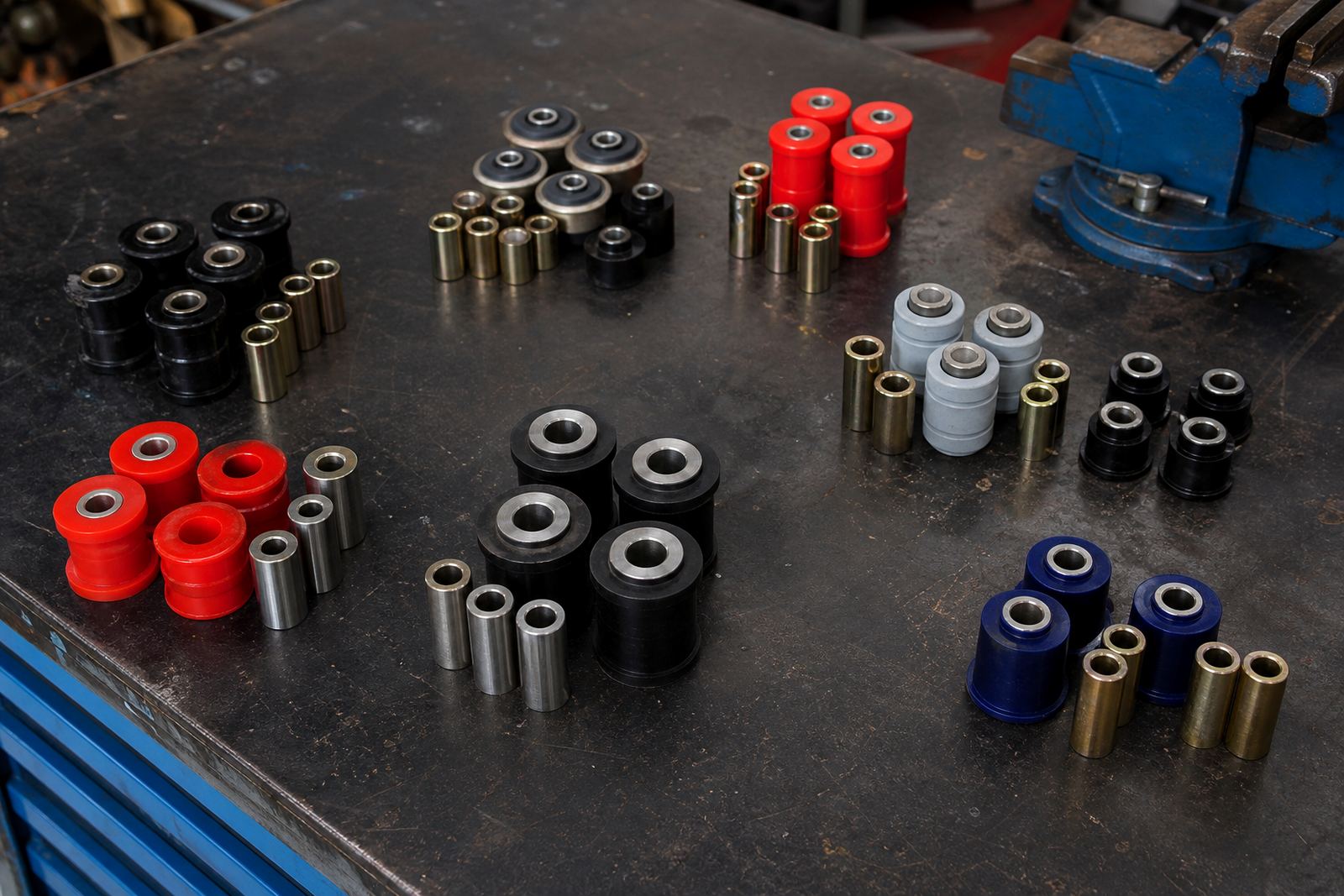
Control arm bushes are available in several materials and stiffness levels. Some are designed to give more compliance for rougher surfaces, while others are very firm for precise location in dry track work. The material choice affects noise, vibration and the amount of suspension movement that remains in the system.
- Polyurethane bushes for firmer location and better wear resistance
- Solid or motorsport-grade inserts where maximum arm control is needed
- Bonded rubber options for cars that still need more road comfort between events
- Split or single-piece styles depending on arm design and press requirements
- Inner sleeve sizes matched to the bolt diameter and arm width
- Outer diameters and lengths selected to suit the control arm bore
We look at the original arm, the mounting ears and the intended use before suggesting a size. A bush that is close but not correct can bind under load, wear unevenly or leave the arm sitting off-centre. On motorsport hardware, a clean fit is worth more than a quick guess.
Where these bushes suit motorsport use
Control arm bushes are fitted on cars that need stable geometry under repeated load. They are used in front lower arms, upper links and rear suspension arms, depending on the chassis. Track cars benefit from the tighter feel under braking and turn-in. Rally cars often need a slightly more forgiving compound so the suspension can absorb rough surfaces without tearing itself apart.
Club racing cars in Johannesburg, Pretoria, Centurion and Durban often see a mix of short circuit sessions and road transport, so the bush choice has to balance control with durability. At coastal events in Cape Town and Port Elizabeth, moisture and road grime can shorten the life of tired suspension parts, especially where old bushes have already been heat-cycled and cracked.
These bushes suit cars that already run matched shocks, correct spring rates and proper alignment. If the arm, ball joint or mount is damaged, the new bush will not fix the rest of the system on its own.
- Track cars needing sharper steering response
- Rally cars needing stronger arm location under rough load
- Club racers looking to hold camber and toe more consistently
- Cars with clunking, wandering or uneven tyre wear at the front end
Installation work and workshop checks
Most control arm bushes need correct pressing or careful removal before fitting. Some are pressed in with the arm out of the car, while others can be installed with the right tools and access. The arm must be inspected for oval wear, corrosion and heat damage before the new bush goes in, because a worn housing will undo the benefit of the part.
At RaceHouse, our workshop team can advise on fitment, and on setups that need more than a simple replacement. If the car is also due for alignment checks, corner weighting or coilover setup, it makes sense to treat the suspension as one system. A new bush on its own will not correct poor ride height, crossed weights or a bent arm.
For cars that run regular track days, we also pay attention to fastener torque and bushing preload. Tightening the suspension in the wrong position can shorten bush life and leave the car feeling harsh in the middle of a corner.
- Inspect the arm bore before pressing in the new bush
- Check the bolt size and sleeve length against the chassis
- Torque suspension fasteners at the correct ride height where required
- Follow up with alignment and a test drive under load
Wear signs and practical care
Worn control arm bushes often show up before a major failure. The steering may feel delayed, the car may pull or wander on braking, and the tyre wear may show feathering or inside edge scrubbing. On the ramp, split rubber, cracked polyurethane or a sleeve that has started to move inside the arm are all signs that the suspension is losing control.
Care is straightforward but important. Keep the area clean, check for oil contamination from a leaking damper or engine leak, and inspect the bushes after heavy kerb strikes or a rough stage. Oil and heat can shorten the life of some compounds, and if the car runs close to the ground, debris can damage exposed edges.
If the car spends time in humid conditions or gets washed often after events, drying the suspension area properly helps limit surface corrosion around the mounts and sleeves. That matters on cars that sit for a while between race weekends.
What we need from you to order the correct set
Ordering the correct bush set is easier when the chassis details are clear. The same model can use different control arm dimensions across years, trims or suspension packages, and motorsport conversions often change the original arrangement. We work from the arm in front of us, or from accurate vehicle details if the car is already apart.
- Vehicle make, model and model year
- Front or rear control arm location
- Inner sleeve diameter and outer bush diameter
- Arm width and overall bush length
- Intended use, such as track, rally or club racing
- Any existing modifications to arms, mounts or subframe pick-up points
Send us those details with your enquiry. That lets the team check the fit against the arm design, the suspension package and the car’s actual use. For drivers across South Africa, from Midrand and Kyalami to Cape Town and Durban, the right bush starts with the right measurements, not a broad guess.
Key facts
| Product type | Motorsport control arm bushes |
|---|---|
| Common materials | Polyurethane, bonded rubber, solid motorsport inserts |
| Typical fitment points | Front lower arm, front upper arm, rear suspension arm |
| Use case | Track, rally and club racing |
| Sizing | Matched to inner sleeve diameter, outer diameter and arm width |
| Support | Fitment advice, setup checks and workshop guidance from Midrand |