

Multi-point restraint built for motorsport seating
A motorsport harness replaces the slack of a road belt with a fixed restraint layout that keeps the torso, hips and shoulders planted under load. That matters in fast direction changes, hard braking and stage conditions where a driver needs to stay centred in the seat and reach the wheel, shifter and switches without fighting body movement.
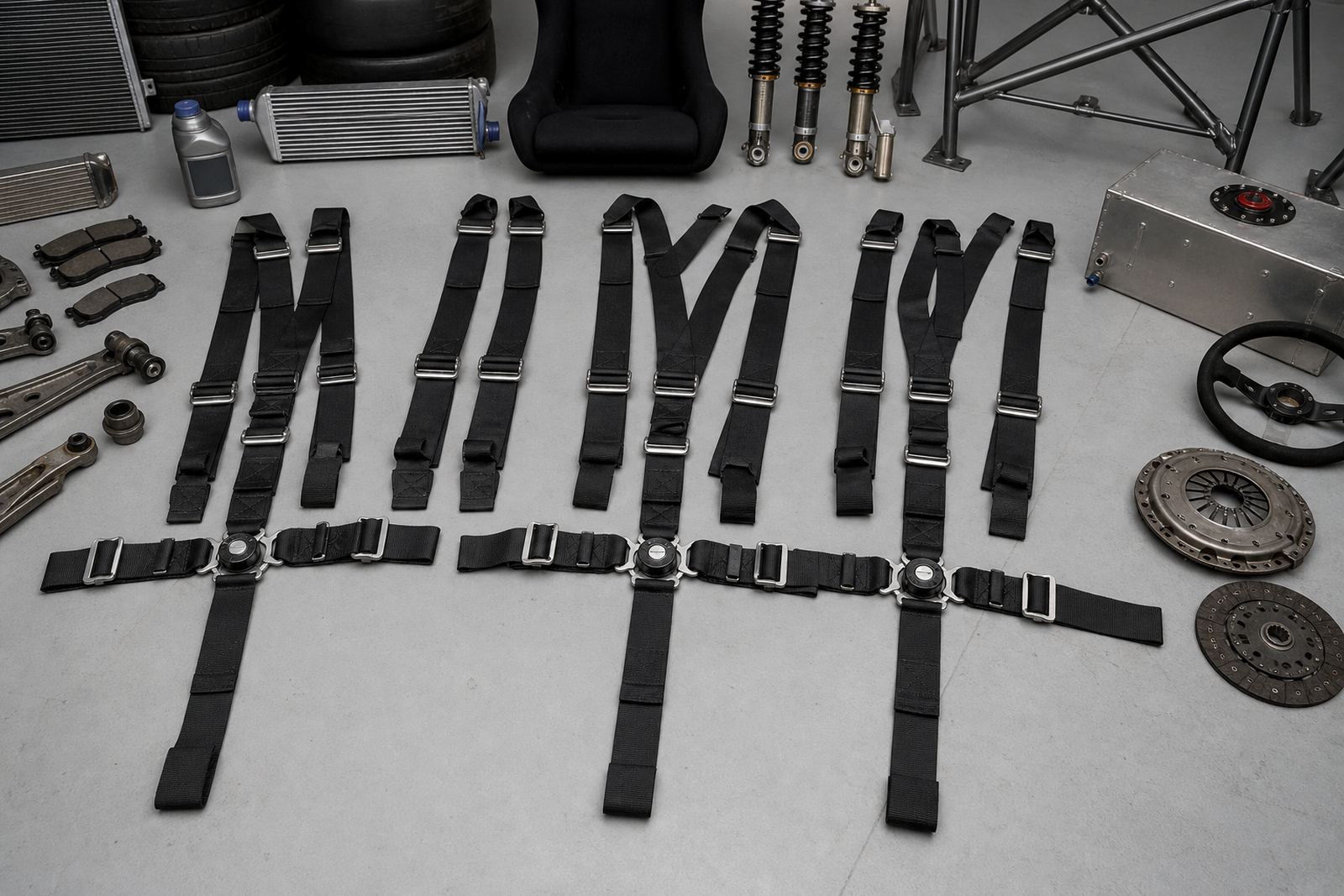
Most systems supplied for competition use are 4-point, 5-point or 6-point layouts. A 4-point set uses two shoulder straps and two lap straps. A 5-point adds a single anti-sub strap between the legs. A 6-point uses two anti-sub straps, which spreads the load more evenly and suits many closed-cockpit race builds where the seat shell and harness holes are matched properly.
- 4-point harnesses suit lighter club cars and test cars with modest lateral load.
- 5-point harnesses give stronger pelvic retention for harder braking zones.
- 6-point harnesses are common where the seat base and anti-sub routing support the layout.
Widths, adjusters and buckle layouts that change the fit
Harnesses are not all the same once the webbing width, buckle style and adjustment hardware are considered. Strap width is commonly 2 inch or 3 inch, with 3 inch shoulder and lap webbing often used for road-based race cars and 2 inch sections used where the seat shell, anti-sub points or shoulder slots ask for a narrower path.
Lengths vary by car type, seat position and roll cage layout. A low-slung saloon with fixed seat rails will use different strap lengths to a hatchback with taller belt mounts. Most buckle systems are camlock or latch-style. Camlock layouts are common in motorsport because they are quick to secure and release during driver changes or pit work, while still giving a firm lock under load.
- Shoulder straps can be wrapped or bolted, depending on the anchors.
- Lap straps need a clean angle across the pelvis, not the stomach.
- Anti-sub straps must route through the seat openings without sharp bends.
Where harnesses suit the car and the driver
These systems suit track cars, rally cars, sprints, hill climbs and club race builds where the driver spends long periods under sustained cornering force. They are also common in cars with bucket seats and cage work, where the whole seating position has been planned around repeatable lap position and safer restraint geometry.
For rally use, the harness needs extra attention to anchor position, strap angle and access around the cockpit. Dust, vibration and repeated strap movement can loosen poorly set hardware, so the fit must be checked against the seat shell, cage tubes and the driver’s position in full kit. In race cars used around Gauteng and coastal circuits alike, the harness should keep its shape even when humidity and temperature shift through the day.
- Track cars benefit from consistent shoulder height and tight lap control.
- Rally cars need cleaner routing around cage bars and seat cut-outs.
- Club cars often need a balanced setup for one driver or shared driving.
Fitment points, mounting angles and cage clearances
Harness fitment is not a matter of clipping straps into any open point. The anchors need the right height, spacing and load path so the belts work with the seat and not against it. Shoulder straps should leave the seat back in a straight line or a slight downward angle, depending on the cage crossbar and seat opening. Lap straps should sit low over the pelvis and pull back to secure mounts with no twist in the webbing.
We also check how the straps move around the seat shell, the cage and the side mounts. If the harness rubs on sharp edges or sits under tension at the wrong angle, it can wear faster and feel awkward during a stint. For builds with rear seat delete, fuel cell changes or a new cage fit-out, the harness should be planned at the same time as the seating position.
- Confirm seat slot height before choosing shoulder strap routing.
- Check whether the car uses wrap-around or bolt-in anchor points.
- Make sure the buckle sits where the driver can reach it cleanly.
Care between events and the checks that matter
Harness webbing should be kept clean, dry and free from oil, fuel and abrasive dust. After an event, inspect the straps for fraying, stiffness, damaged stitching and faded labels. Buckles must move freely and latch positively. If a strap has been twisted under load or dragged across a rough edge, that point should be examined before the next run.
In workshop use, a harness should not be left trapped under a seat rail or crushed by loose trim. That kind of pressure can affect the webbing and makes the fit inconsistent from one session to the next. Where the car is used often, the belts need regular checks after setup changes, seat swaps or cage work. It helps to keep the hardware dry in humid coastal storage conditions and away from fluids that attack webbing fibres.
- Look for cuts, burn marks and loose stitching on every strap.
- Check label date markings and overall webbing condition.
- Test buckle action and confirm the release motion stays smooth.
Details to confirm when ordering a harness set
When a harness is being specified, the car and seat details matter more than a generic part number. We need the seat type, intended use, anchor style and the driver’s build so the lap and shoulder layout matches the cockpit. A harness that suits a saloon with a standard cage may not suit a sprint car with different seat height or a rally shell with tighter routing around the B-pillar area.
It also helps to know if the car is built for one driver or several, whether the seat shell has anti-sub openings, and whether the mounting points are wrap-around, bolt-in or paired with a cage bar. That lets us guide the right strap width, buckle style and overall length before the belts are fitted. For drivers working through our contact form, the useful details are the car model, seat type, cage layout and the type of racing planned.
- Car model and body style
- Seat shell brand or seat opening pattern
- 4-point, 5-point or 6-point preference
- Mounting style and cage tube layout
- Driver size, seated position and helmet clearance
- Track, rally or club racing use
Key facts
| Harness types | 4-point, 5-point and 6-point multi-point systems |
|---|---|
| Webbing widths | 2 inch and 3 inch sections, depending on layout |
| Buckle styles | Camlock and latch-style releases |
| Typical fitment | Shoulder, lap and anti-sub strap routing |
| Use cases | Track, rally, sprint and club racing cars |
| Support in Midrand | Fitting advice, harness checks and setup days |