

Where wheel spacers earn their keep on a race car
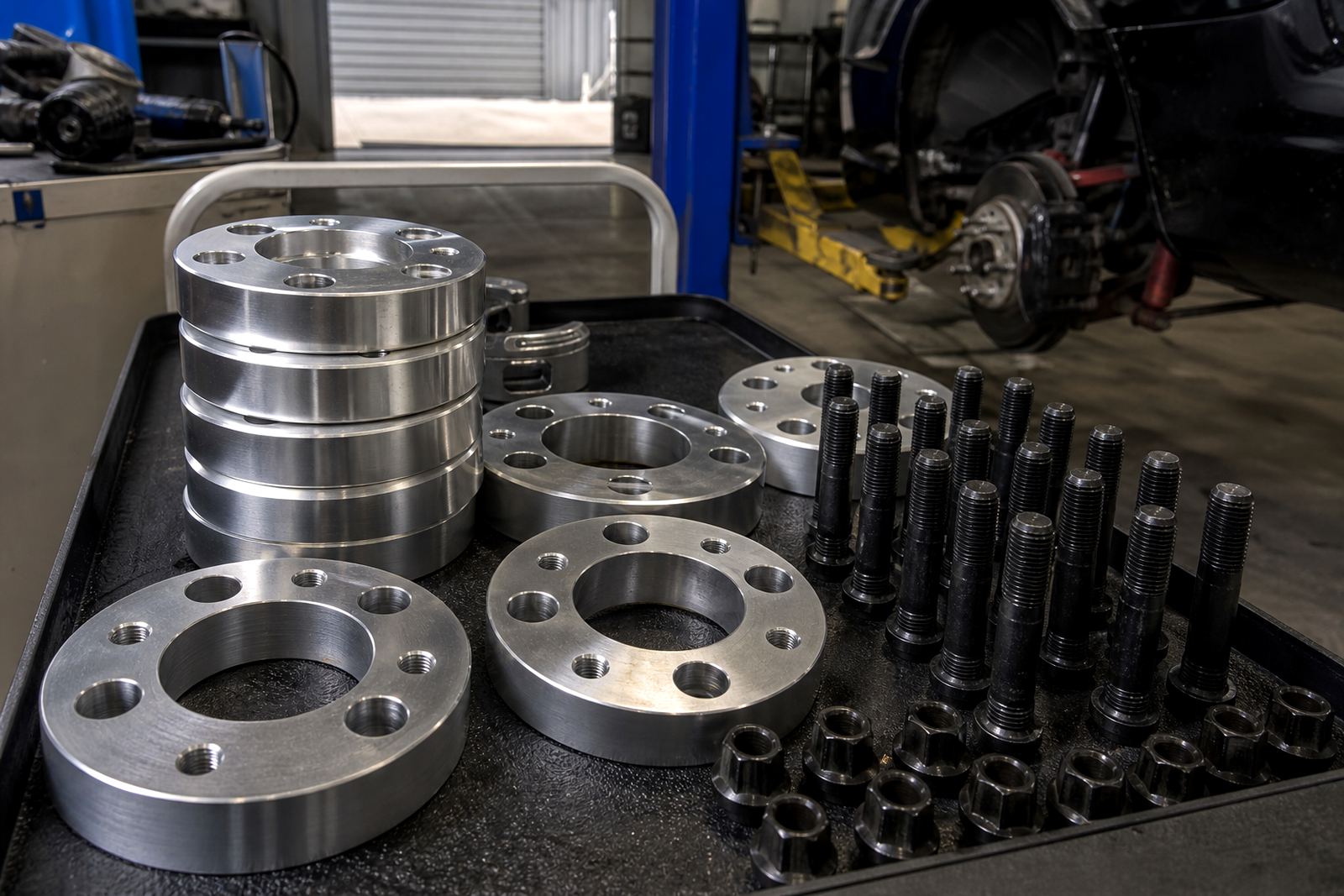
Wheel spacers move the wheel outward from the hub face, which changes track width and creates more room around suspension arms, brake hardware and bodywork. On competition cars with wider tyres, larger brake kits or more aggressive steering lock, just a few millimetres can mean the difference between a clean fit and rubbing at full compression. Hub-centric spacers are the type we favour for motorsport use because the spacer centres on the hub register and supports the wheel properly, rather than leaving the wheel hanging off the studs or bolts.
They suit track cars, rally cars and club racers where the wheel package is already chosen and the last piece of the puzzle is clearance. In some builds the spacer is used to clear a caliper face, in others it is there to correct wheel tuck under a wide arch or to balance the look and handling response across both sides of the car. The aim is always the same, a secure mounting surface with enough room for the wheel to rotate freely under load.
- Hub-centric design for accurate location on the hub register
- Used to gain clearance for calipers, arms and arch liners
- Common on track, rally and club cars with modified wheel fitment
- Can be paired with longer wheel studs or extended bolts where required
Spacer sizes, bolt patterns and what is normally stocked
Wheel spacers are supplied in several thicknesses, usually starting at thin shims for small clearance corrections and moving up to larger blocks where the wheel sits too far inside the arch. In motorsport, the usual sizes are 3 mm, 5 mm, 8 mm, 10 mm, 12 mm, 15 mm and 20 mm, but the right choice still depends on hub type, thread engagement and the exact wheel design. Bolt pattern matters too, because the spacer must match the vehicle’s PCD and centre bore accurately.
Material and machining quality matter as much as thickness. A properly made spacer has a clean hub bore, accurate stud holes and a flat face so the wheel sits evenly. For heavier use, an aluminium spacer is common because it keeps mass down while remaining rigid enough for repeated heat cycles and cornering loads. We also look at whether the car uses hub studs or wheel bolts, as that changes the fitment approach and the hardware needed.
- Spacer widths: 3, 5, 8, 10, 12, 15 or 20 mm
- Common fitments include 4, 5 and 6 stud layouts
- Centre bore must match the hub or the spacer must be hub-centric to the car
- Wheel bolt or wheel stud arrangement affects hardware selection
The fitment checks before the car leaves the bay
A spacer is only useful if the rest of the wheel package still fits correctly. That means checking the hub face for rust or paint build-up, confirming the register diameter, and measuring how much thread engagement remains after the spacer goes on. If the wheel uses bolts, the thread length has to be considered before the car is sent out. If it uses studs, the stud length and nut type need to be right for the added thickness.
We also check for brake hose movement, caliper clearance, inner barrel clearance and full steering lock. On lowered cars, the wheel can clear the arch while sitting still yet touch under load when the suspension compresses or the steering loads up in a corner. A proper fitment check looks at all of that, not just the static gap you see in the workshop.
- Hub face condition and cleanliness
- Centre bore and PCD match
- Remaining thread engagement after spacing
- Clearance to caliper, arm, strut and arch at full movement
How these spacers are used in motorsport settings
On circuit cars, wheel spacers are often used to create breathing room around larger brake packages or to nudge the tyre outward for a better stance under a wide body kit. On rally cars, the reasoning can be different, since mud, stone pickup and suspension travel make clearance more sensitive. A wheel that sits too close to the strut or liner can wear the tyre shoulder or heat up the inner sidewall. A spacer can fix that, but only if the wheel bolts or studs still carry the load properly.
Club racers often use spacers to make a mixed wheel and tyre package work across practice and race days. That can involve changing wheel offsets, switching brake hardware, or setting a car up for a specific circuit with kerb use in mind. We keep the advice practical: the spacer must suit the hub, the wheel, and the job the car is doing.
For cars running across Johannesburg, Pretoria, Kyalami, Durban and Cape Town, road transport between events also matters. A wheel that sits neatly under load should still clear the body while trailering, unloading and moving through paddocks with the steering on full lock.
Installation notes that matter on the day
Spacer fitment starts with clean hardware and correct torque. The hub face should be free of scale, dust and old thread locker so the spacer sits flat. The wheel bolts or nuts must be tightened to the correct specification for the car, and if longer studs are required they should give enough engagement for proper nut depth. A spacer that is too thick without the right hardware can create a weak joint and that is not where a race car should cut corners.
After fitment, the car should be rolled, turned lock to lock and checked under load before it leaves the bay. If the wheel is close to a brake duct, arch liner or suspension component, that gap must be treated as real and not guessed. In our Midrand workshop we often combine spacer fitting with alignment checks, brake upgrade planning or coilover setup, because the wheel position affects all three.
- Clean hub face before installation
- Use the correct torque for the wheel fasteners
- Check for full-lock and full-bump clearance
- Recheck after the first hard outing or wheel change
Keeping spacers in serviceable condition
Wheel spacers do not need much attention, but they do need regular inspection. Look for scoring around the centre bore, fretting on the hub face, damaged threads and any sign that the wheel has been sitting unevenly. Dirt and brake dust can build up between the spacer and hub, especially on wet rally stages or at coastal events where humidity and grime hang around longer than they should.
If the car is stored for a while, remove the wheels and inspect the mating faces before the next event. A light smear of corrosion on steel hubs is common in South African conditions, particularly where salt air or wash bay moisture gets into the wheel area. Clean the surfaces carefully and do not force a spacer over damage. If the fit no longer feels exact, it should be measured again rather than guessed.
RaceHouse supplies wheel spacers with practical motorsport guidance from our Midrand base, with support for drivers in Midrand, Johannesburg, Pretoria, Kyalami, Centurion, Durban, Cape Town and Port Elizabeth. If you need a spacing change that suits your wheel, hub and brake package, send the details through our contact form and we will work from real measurements, not rough guesses.
Key facts
| Product type | Hub-centric wheel spacers for motorsport fitment |
|---|---|
| Common thicknesses | 3, 5, 8, 10, 12, 15 or 20 mm |
| Material | Machined aluminium spacer body |
| Fitment types | Stud and bolt applications |
| Use cases | Brake clearance, track width changes, arch clearance, offset correction |
| Supplied from | Midrand, Gauteng |