

Fuel Delivery That Stays Steady Under Load
A competition fuel pump is part of the system that keeps the engine fed when cornering, braking and acceleration all happen in the same lap. On a road car the original pump can be adequate for standard use, but motorsport asks for stable flow at sustained throttle, long lateral load and heat soak from the tank area. That is where a higher output pump, or a matched pair in some layouts, becomes part of the fuel system rather than just a bolt on part.
For track days, club racing and rally stages, the pump has to work with the tank shape, pickup position, lines, regulator and injector demand. A pump that is undersized will show itself as lean running at the top end. One that is far larger than the setup needs can bring noise, heat and pressure control issues. We examine the full fuel circuit, not the pump on its own.
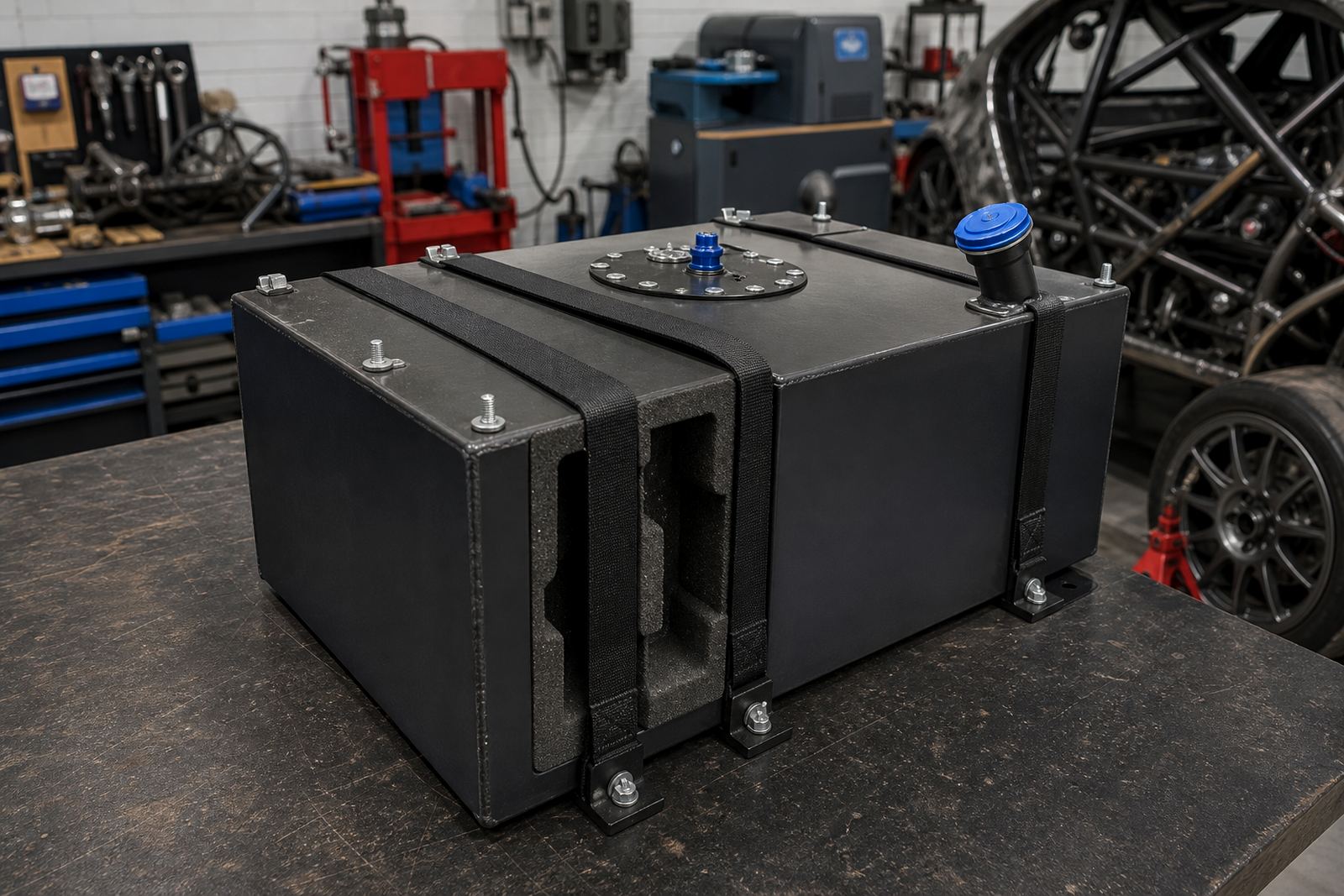
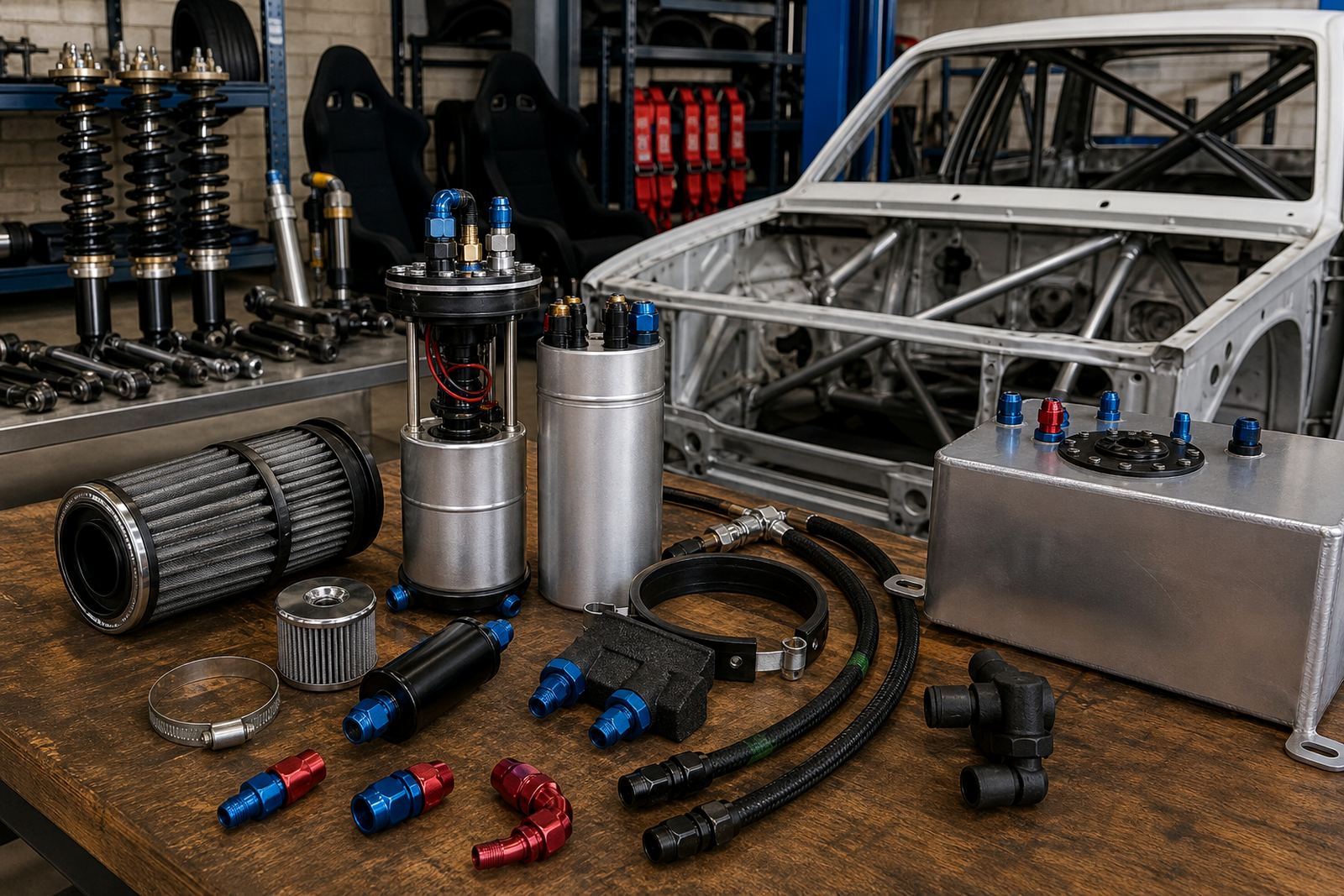
Common build uses include in tank electric pumps, inline high pressure pumps and lift pumps feeding a surge tank. The right choice depends on the engine output, fuel type, fuel rail pressure and how the car is driven. On a car that sees rough surfaces or a half full tank on long sessions, a surge tank layout is often part of the conversation too.
Options, Sizes and Layouts We Handle
Fuel pump choice is usually shaped by delivery target, mounting space and the rest of the fuel system. Some builds only need a single compact unit, while higher output cars may use a lift pump and a high pressure pump together. We also see cars where the pump sits in tank for quieter operation, and others where an external inline unit gives easier access for service.
- In tank electric pumps for neat packaging and quieter running
- External inline pumps for accessible mounting and service work
- Lift pump and surge tank combinations for hard cornering and braking
- High pressure pumps for fuel injection systems with stronger demand
- Fuel filter pairing matched to the pump and line size
- Rubber isolated mounts and fittings that suit motorsport vibration
Line size matters. A pump may perform well with 6 mm or 8 mm lines on milder engines, while stronger setups often need 10 mm lines or larger feed sections, depending on the pressure drop and the full fuel path. Hose type, clamps and filter style all have to suit the fuel being used, the bay temperature and the chassis layout.
Where Fuel Pump Upgrades Fit Best
We supply fuel pump options for track cars, rally cars and club racers that spend long periods above half throttle or at high g load. Cars used for drag launches, circuit racing, tarmac rally and gravel stages all place different demands on fuel delivery. A setup that works well in Johannesburg traffic may fall short at Kyalami, or on a fast freeway link to a test day with repeated pulls and heat build up.
Engine swaps, injector upgrades, turbo conversions and full race builds often move past the original fuel system’s comfortable range. That is usually the point where pump choice, pressure control and line sizing become critical. We also see older cars where the original tank internals are tired, the pickup is restrictive, or the wiring has voltage drop that leaves the pump underfed.
For Cape Town, Durban and coastal cars, corrosion and moisture are worth watching. A pump mounted in a damp boot or exposed underbody area needs proper sealing, clean earth points and fittings that hold up under humidity. In Gauteng, heat and dust mean the filter and wiring route should be checked with the same care.
Fitment Work That Matters Before The First Session
A new pump can still starve the engine if the pickup and wiring are wrong. The pump needs correct polarity, secure wiring, a sensible relay arrangement and hose routes that avoid sharp bends or chafe points. We look at the full system on the bench and in the car, especially where the tank shape, surge pot, and return line all share limited space.
On race cars, a noisy pump can point to cavitation, restriction or poor pickup conditions. That is usually a sign to review the line diameter, filter placement and the height difference between tank, pump and rail. Pressure control also has to be set with the regulator and gauge position in mind so the driver and the workshop see the same reading.
- Check pump inlet position and fuel level behaviour
- Use correct relay, fuse and wire gauge for the current draw
- Keep hose runs short where the layout allows it
- Mount filters where they can be reached for service
- Secure lines away from heat, moving parts and splash zones
When a car is booked for setup days, we can combine fuel system checks with clutch, cooling and suspension work so the car leaves the bay with the main systems working together, not in isolation.
Pump care, servicing and warning signs
A competition pump lasts longer when the fuel stays clean and the system is not run dry. Track use can uncover a weak pickup or a tank that sloshes heavily on low fuel. The pump may sound harsher, build pressure unevenly or draw more current than expected. If the car misfires at the top end, the cause may be at the pump, filter, wiring or regulator, not only the engine tune.
Regular checks should include the filter, hose clamps, electrical terminals and any rubber mounts. If the car sits for periods between events, stale fuel can leave deposits in the pump body and the lines. That is especially important on cars that run ethanol blends or spend time in humid coastal conditions. A clean system is easier to trust when the green light goes on.
We also advise checking the tank venting, since a fuel pump can struggle if the tank cannot breathe properly under load. A vent issue can mimic a supply problem and waste a full test day before it is found.
What To Confirm When Ordering
When you order a fuel pump, the details matter. The right answer depends on the engine, fuel type, fuel pressure target and how the car is used. A naturally aspirated circuit car, a turbocharged rally build and a club racer on modest boost do not ask for the same delivery curve. When you give us fuller details, we can match the part to the car more easily.
- Vehicle make, model and year
- Engine type, induction type and expected fuel pressure
- Fuel type being used, including pump fuel or race fuel
- Tank style, pickup layout and whether a surge tank is fitted
- In tank or external mounting preference and available space
- Line size, regulator type and any injector or power upgrades
If the existing layout is unclear, send the details through our contact form and add a few clear notes on what the car is doing now. That helps us work out whether a single pump, a lift pump arrangement or a surge tank solution makes sense for your build.
Key facts
| Product type | Competition fuel pump options for motorsport use |
|---|---|
| Common layouts | In tank electric, inline external, lift pump, surge tank feed |
| Typical line sizes | 6 mm, 8 mm and 10 mm feed sections, depending on build |
| Use cases | Track, rally, club racing, turbo conversions and engine swaps |
| Fitment needs | Wiring, relay, fuse, hose routing, filters and pressure control |
| Service focus | Clean fuel, sound earthing, secure mounting and pickup health |