

How the mount actually changes the car
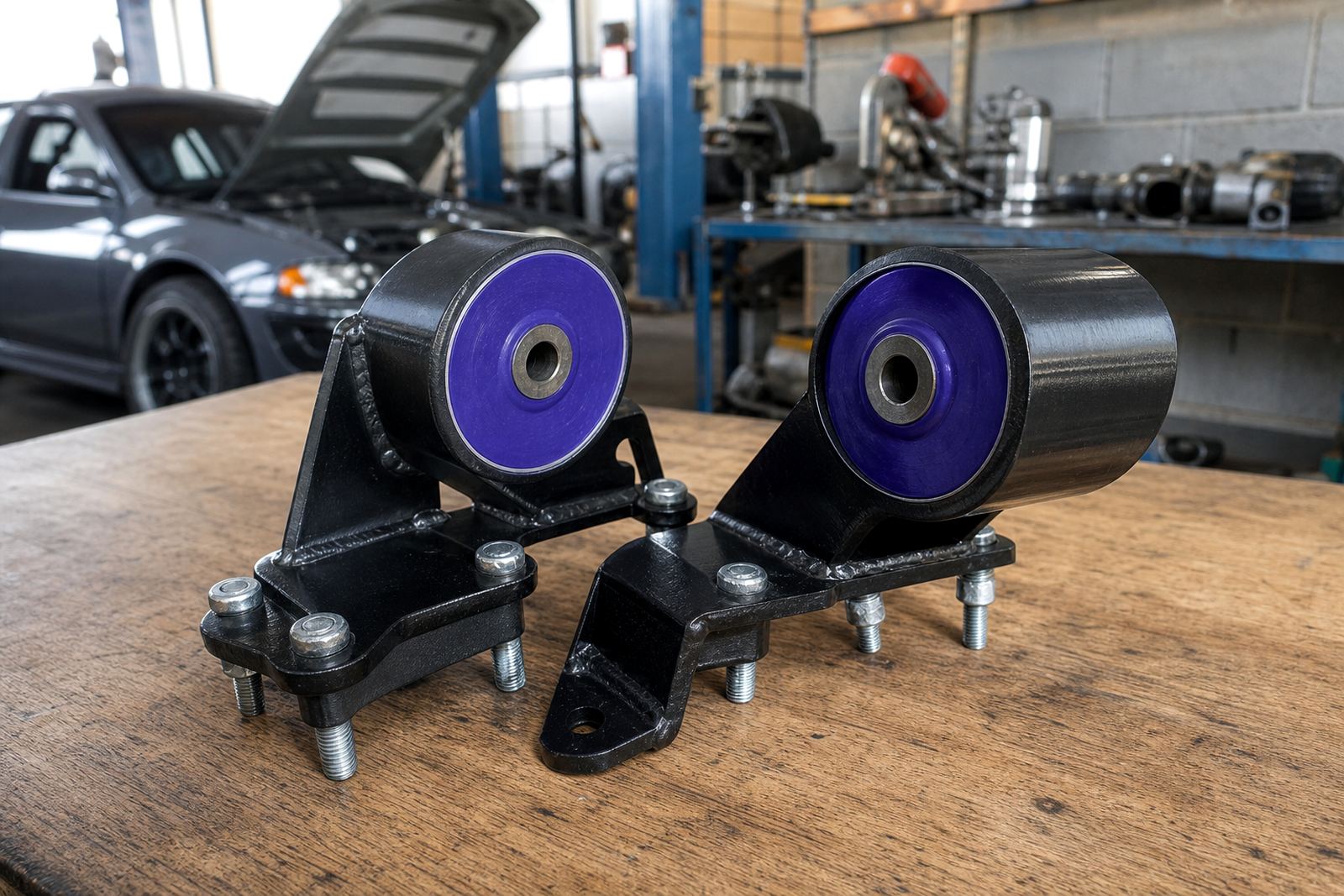
Engine mounts do more than hold the block in place. In a hard launch, a late brake zone or a kerb strike, soft factory rubber can let the engine rock enough to pull on exhaust joints, hoses, shifter linkages and the prop shaft line. Uprated mounts use firmer rubber, polyurethane or solid-style construction to reduce that movement and keep the drivetrain sitting where the car was set up to run.
On a race car, that extra control can make the gearbox feel more precise and keep throttle response cleaner through quick direction changes. It also helps with consistency when the car is on sticky tyres and the suspension is working hard. The trade-off is always vibration, so the mount material and durometer need to suit the car, the class and the driver.
- Reduced engine twist under load
- Cleaner gear changes and less shifter movement
- Less strain on adjacent plumbing and mounting points
- Better control of driveline angle during hard braking
Materials, durometers and fit styles that matter
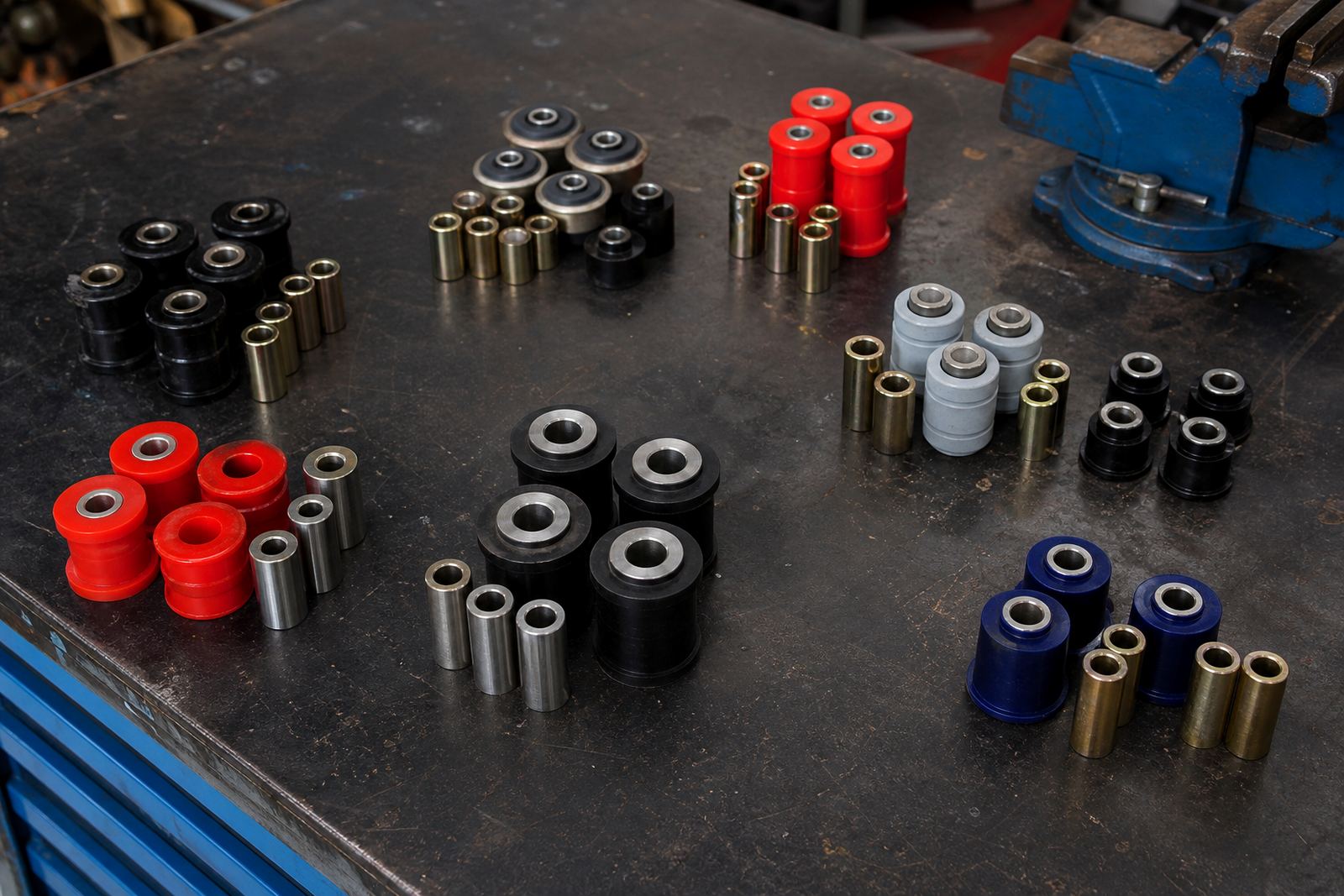
Most performance mounts fall into three broad groups. Reinforced rubber mounts keep some compliance and are useful where the car still covers road miles. Polyurethane mounts are firmer, with common durometers around 70A to 95A depending on the car and the level of control needed. Solid or billet-style mounts give the least movement and are usually reserved for dedicated competition use where vibration is acceptable.
Fit and material carry equal weight. Some cars use a direct replacement pair, some use a left and right mount with a separate gearbox mount, and some need an insert that supports the original rubber shell. Mount geometry must match the engine family and chassis brackets, because a few millimetres of offset can affect bonnet clearance, shaft alignment and fan shroud clearance.
- Reinforced rubber for mild performance use
- Polyurethane for a firmer street and club-racing setup
- Solid-style mounts for race-focused control
- Direct-fit, insert or bracketed layouts depending on the chassis
Where uprated mounts suit best
Track cars, rally cars and hillclimb builds often benefit most from firmer engine support. Cars with higher torque, sharper clutch engagement or close-ratio gearboxes usually show the change quickly. If the car runs on semi-slicks or slicks, the extra traction can expose movement that was never obvious on standard road tyres.
These mounts also suit cars that have already had suspension work done. Once coilover setup, alignment and corner weighting are sorted, drivetrain movement becomes easier to feel. A car that once felt vague on throttle can become more predictable, especially on corner exit or during quick left-right transitions. On gravel or rough stages, the right balance matters, because a mount that is too hard can transmit unnecessary shock into the shell.
- Track-day cars that need tighter drivetrain control
- Rally cars that see repeated shock loading
- Club racers running upgraded clutches and gearbox ratios
- Cars with worn original mounts that have turned soft or torn
Fitting checks before the engine goes back in
Mount fitment is rarely a bolt-on job on a competition car. Clearance needs to be checked against the sump, turbo plumbing, steering rack, bulkhead, bonnet bracing and header routing. A firmer mount can also expose weak hangers or a tired gearbox mount, so the whole mounting line should be assessed together.
Our workshop team looks at the full install rather than only the mount itself. That includes bolt condition, bracket straightness, captive nut alignment and the effect on shifter position. On some cars, the engine has to sit slightly differently to maintain prop shaft angle, and that is where setup experience helps. A mount that is right on paper can still be wrong if the rest of the package is not checked.
- Engine family and chassis code
- Left, right and gearbox mount layout
- Clearance to exhaust, radiator, fans and turbo piping
- Bolt size, thread pitch and bracket spacing
- Desired vibration level for road or race use
Care, inspection and what wears first
Performance mounts should be inspected regularly, especially after kerb strikes, engine removal or a season of hard use. Look for cracked rubber, split polyurethane, torn sleeves, loose hardware and contact marks where the engine has touched surrounding parts. On a car that runs in damp coastal conditions, fastener corrosion can creep in around the brackets and make later removal a pain.
Heat is another factor. Mounts near turbo hardware, downpipes or missing heat shielding can harden sooner than expected. Where possible, keep oil leaks and coolant leaks under control, because soaked rubber and polyurethane can age badly. If the car is being used in sprints or rally stages, a quick check of mount torque and bracket position should sit alongside brake fluid checks and wheel nut checks.
- Inspect after any impact or heavy drivetrain shock
- Check for torn material or polished contact points
- Keep hardware clean and correctly torqued
- Watch heat soak and fluid contamination around the mounts
Ordering details that prevent the wrong mount from landing
Getting the right mount starts with the exact car details. Engine code, chassis code, gearbox type and whether the car is manual or sequential all affect fitment. If the vehicle has had an engine swap, aftermarket subframe, turbo conversion or relocation work, those changes need to be listed clearly, because a standard listing may not match the car any longer.
It also helps to note whether the car is for road use, track days, gravel stages or a full race build. That tells us how much stiffness makes sense. The right mount spec can be different for a Kyalami circuit car than for a rally car running rougher surfaces, and the vibration tolerance in a helmeted race cabin is not the same as in a road car.
- Engine code and chassis code
- Gearbox type and mount arrangement
- Road, track, rally or club-racing use
- Any engine swap, sump change or exhaust modification
- Preferred stiffness, if the driver already knows the feel wanted
RaceHouse works from Midrand and supplies motorsport parts and performance upgrades to drivers across Johannesburg, Pretoria, Kyalami, Centurion, Durban, Cape Town and Port Elizabeth. Our contact form is the place to send the car details, and the team can talk through engine mounts together with brake upgrade planning, coilover setup, alignment checks, corner weighting and other fitment work for motorsport builds.
Key facts
| Product type | Uprated engine mounts for motorsport and performance use |
|---|---|
| Common materials | Reinforced rubber, polyurethane, solid-style metal construction |
| Typical stiffness range | About 70A to 95A polyurethane, depending on application |
| Fitment styles | Direct replacement, insert type, bracketed mount sets |
| Use cases | Track, rally, club racing, engine-swapped performance cars |
| Key checks | Engine code, chassis code, gearbox type, clearance and mount spacing |