

Oil temperature control for hard-running engines
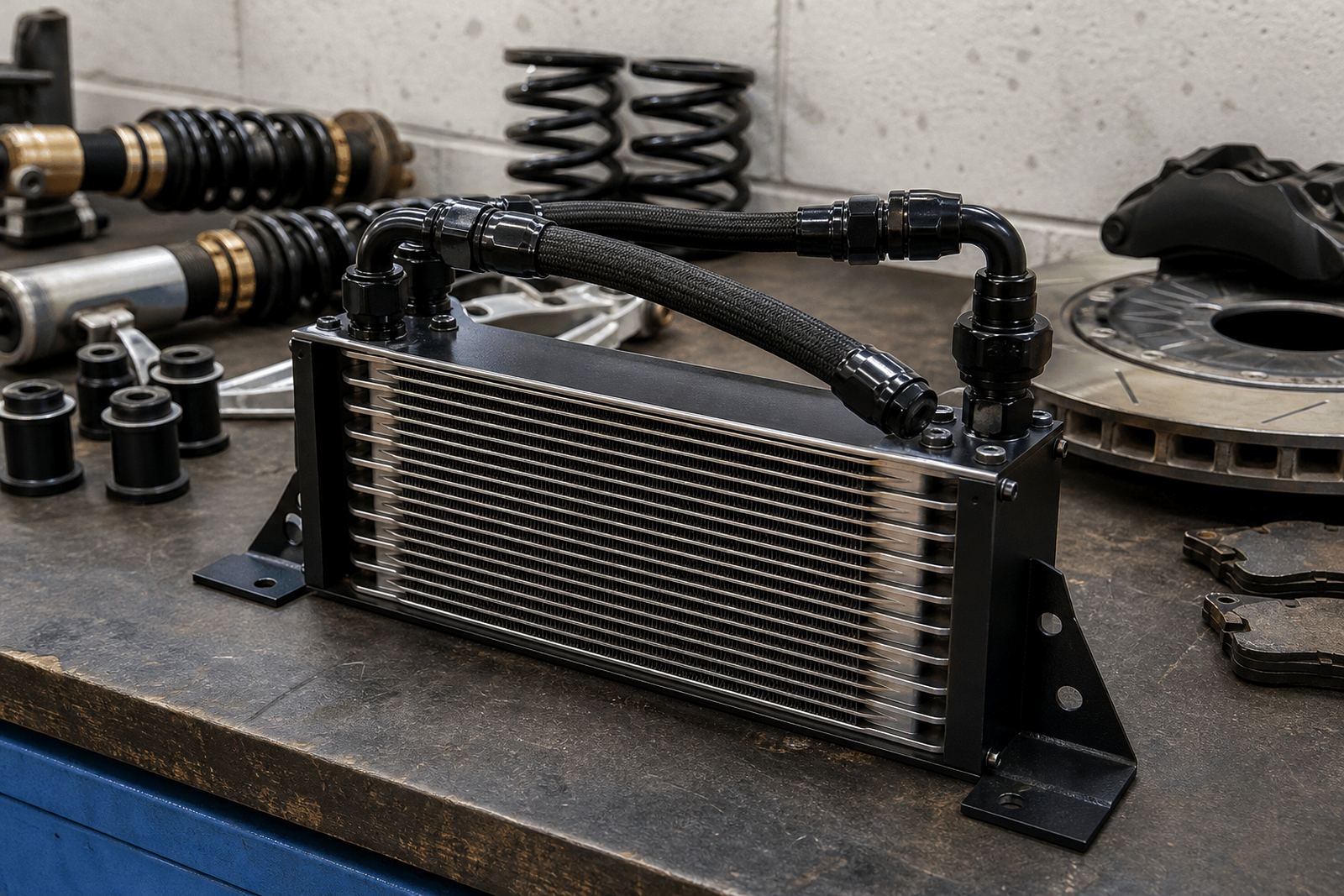
An engine oil cooler moves heat out of the oil circuit so the lubricant keeps carrying load through long laps, stage sections and repeated high-rpm runs. In motorsport use, stable oil temperature helps protect bearings, cams, turbocharger housings and the oil film under sustained stress.
We supply cooler cores, hose sets, adapters and mounting hardware for front-mounted and duct-fed installations. The right size depends on engine output, oil volume, ambient heat and whether the car sees sprint work, hillclimbs or longer circuit sessions.
Core sizes, fittings and package choices
Most race cars use stacked-plate oil coolers because they shed heat well and handle vibration better than light road-spec units. Common core widths range from about 235 mm to 405 mm, with heights from 50 mm to 115 mm, though the correct choice depends on available grille space and airflow. Hose sizes are usually -8AN or -10AN, with some heavier builds stepping up to -12AN for higher flow.
- Compact cores suit tight bumper openings, club racing and lighter naturally aspirated engines.
- Medium cores work well for warmed-over track cars, turbo petrol engines and mixed-use gravel cars.
- Larger cores suit high-heat builds, long sessions and cars that carry extra oil capacity.
- Sandwich plates, thermostatic plates and remote mounts are available where oil routing needs more control.
We also look at thread type, adapter angle and hose path, because a neat line route matters when the car has splitter supports, bumper beams or tight suspension pick-up points.
Where oil coolers suit the car best
Oil coolers are common on rally cars that work in dust, heat and repeated throttle changes, and on circuit cars that spend long periods above 6 000 rpm. They also suit club racing builds with modified exhausts, increased boost or tighter engine clearances, where oil temperature climbs faster than standard road use would suggest.
Placement matters. A cooler needs clean airflow, enough protection from debris and a route that avoids sharp edges, hot exhaust sections and moving steering or suspension parts. In Midrand and Gauteng cars often see mixed traffic and track days, so we normally consider stone strike risk as well as the airflow path through the nose of the vehicle.
- Front bumper or grille openings usually give the best airflow.
- Side pods or ducted mounts can work where the nose is already crowded.
- Gravel cars need more guard protection and stronger bracketry.
Fitment details that keep the system tidy
Correct fitment is about more than bolting in a cooler. Hose length should be measured with full steering lock and suspension movement in mind, and the line routing must avoid rubbing points and heat soak. We check bracket strength, hose support, connector orientation and whether the cooler sits level enough for sensible oil drainage during maintenance.
Where a thermostatic plate is used, it helps bring oil up to operating temperature before full cooling starts, which is useful on short sprint events and cooler winter days. That keeps the engine from running too cold on the out lap or road section.
- Confirm whether the car uses a sandwich plate, remote filter head or bespoke oil take-off.
- Check the oil filter thread, adapter size and available space around the filter housing.
- Confirm if the installation needs braided hose, hard line sections or hose fire sleeves.
- Inspect clearance around splitter bars, radiator pack and bumper supports before final mounting.
Care between events and during service stops
Oil coolers work best when the fins stay open and the fittings stay dry. Bent fins, packed dust and oily grime reduce heat transfer, so the core should be cleaned regularly with low-pressure air and a suitable degreaser. On gravel cars, it is worth checking for stone dents, rubbed hoses and loose brackets after each event.
Keep an eye on hose chafe, clip tension and any signs of sweating around the fittings. If the car has had a front-end knock or a high kerb strike, inspect the cooler closely even if the engine still runs normally. A small leak on a race car can become a bigger problem once oil pressure and heat rise together.
What to confirm before ordering the cooler
To size the right setup, we need a few details from the car and the intended use. Engine type, gearbox layout, front bumper space and the kind of events you run all affect the final choice. A daily-driven turbo car in Pretoria will not need the same package as a dedicated circuit car running Kyalami or a rally build with repeated heat cycles.
Useful details include the engine capacity, oil filter position, existing oil lines, available mounting area and whether the car already has ducting. If you are also changing radiator layout, intercooler placement or front aero, it helps to plan those parts together so airflow is not stolen from one cooling system to feed another.
- Car make, model and engine code if available.
- Track, rally or club racing use, plus session length.
- Current oil temperature behaviour and any overheating history.
- Space at the front of the car and any existing cooler or ducting.
Our Midrand base supports drivers from Johannesburg, Pretoria, Kyalami, Centurion, Durban, Cape Town and Port Elizabeth, with fitting advice and setup days available around the wider build. If the car needs cooling, brake, suspension or seating work in the same round, we can help plan the package as one job rather than piecing it together later.
Key facts
| Core type | Stacked-plate aluminium race cooler |
|---|---|
| Common sizes | About 235 mm to 405 mm wide, 50 mm to 115 mm high |
| Hose sizes | -8AN, -10AN and -12AN options |
| Mounting styles | Front mount, ducted mount or remote bracket fitment |
| Typical uses | Track, rally and club racing cars |
| Related parts | Sandwich plates, adapters, hoses, brackets and hose sleeves |