

Filter media that suits race use
An air intake filter is the last barrier before dust, rubber bits and road grime enter the intake tract. In motorsport, that barrier has to pass enough air for sustained high revs, while still protecting the engine on gravel stages, tar circuits and dusty transport sections.
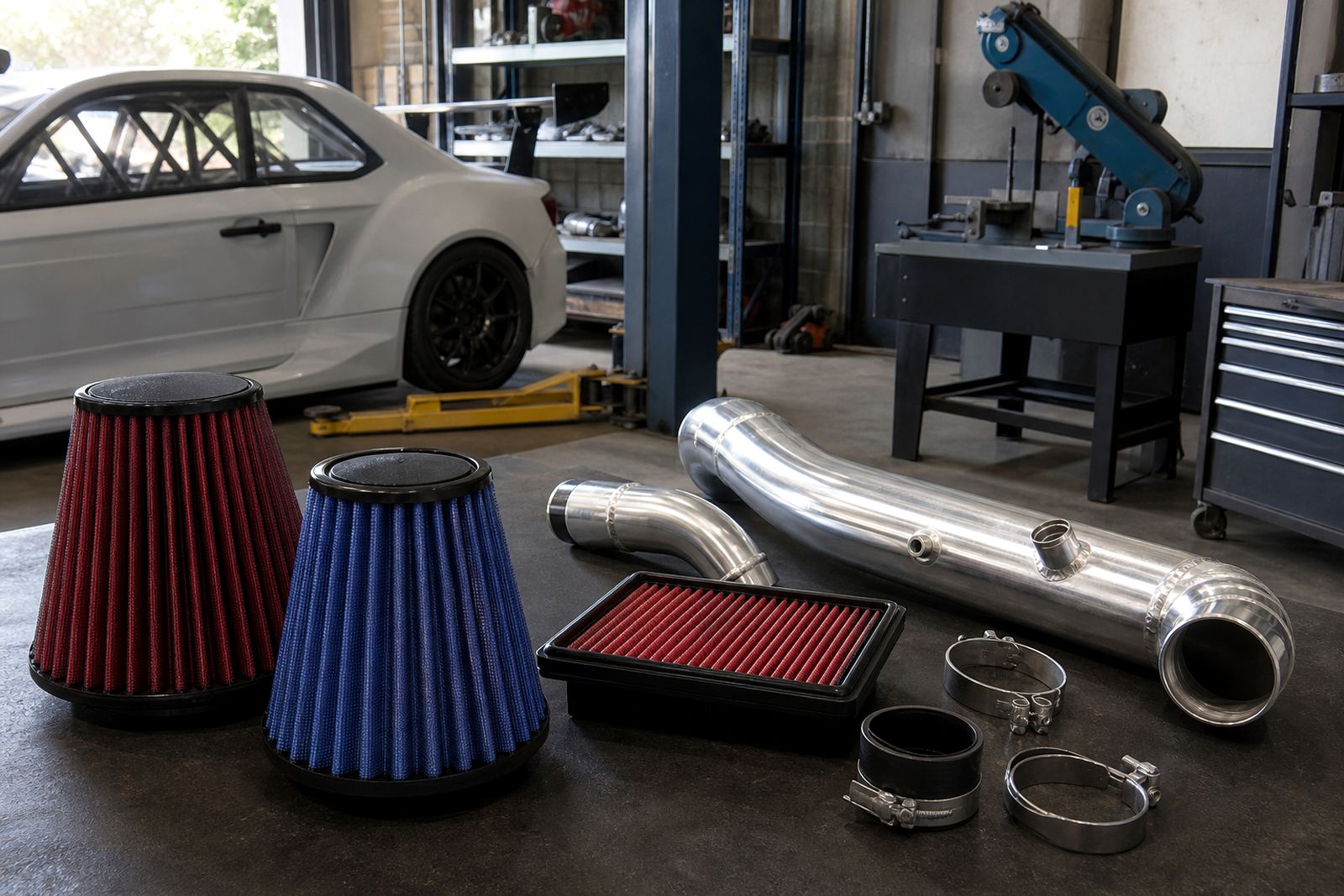
We work with serviceable filter types used in racing fitments, including oiled cotton gauze, dry synthetic media and foam elements where the intake layout calls for it. The right choice depends on intake volume, engine bay heat, throttle body size and how often the filter can be cleaned between events.
For club racing cars that see regular strip-downs, a washable element can make sense. For dusty rally use, sealing and pre-filtering matter just as much as the element itself, because a tidy filter housing with a poor seal will still pull in dirt.
Sizes, necks and housings we match
Filter sizing is not guesswork. The inlet diameter, flange depth and overall height need to match the intake pipe or airbox, and the available room under the bonnet must be checked with the engine rock under load. A filter that touches a strut brace, bonnet skin or radiator duct can lift, vibrate or open a gap at the base.
Common fitment details include straight neck, offset neck and tapered profiles, plus round, oval and panel styles for custom intake boxes. We also check clamp diameter, throat length and the exposed surface area of the element, because those details change how the filter breathes at speed.
- Neck size in millimetres, measured on the intake pipe or adapter
- Filter height and overall diameter for bonnet clearance
- Element style, round cone, panel or custom airbox insert
- Seal type, rubber base, flange clamp or panel gasket
- Preferred cleaning method, washable or replaceable element
Where these filters suit the car
These filters suit naturally aspirated and forced-induction race builds where the intake path has been planned as part of the package. On track cars, a good filter supports repeatable airflow through the session. On rally cars, it has to cope with heavier contamination and tighter service windows. On fast road or club cars, it can tidy the intake without making servicing awkward.
Air intake filters are often paired with cold-air ducts, sealed airboxes and smooth intake piping. That setup can reduce heat soak at the intake and help the engine draw cleaner air from outside the engine bay, especially on hot Gauteng days or in traffic before the next session.
If the car uses a custom bonnet vent, front duct or sealed airbox, the filter must sit where the air actually arrives, not only where there is space. A short, open cone may fit in the bay, but it may also pull hotter air if the intake path has not been planned properly.
Fitment work that stops small leaks
Most intake problems start at the clamp or seal. The filter must sit square on the throat, and the clamp has to compress the base evenly without distorting the neck. On some builds, a small silicone joiner, adapter ring or stepped reducer is needed to get the sizing right.
We look at the whole intake run during fitment advice, not just the filter. That includes the pipe route, the position of the mass airflow sensor if fitted, the space around the brake master cylinder and the heat coming off the exhaust manifold. A filter placed too close to heat can draw warmer air and pick up grime from the wrong side of the bay.
- Check the pipe outside diameter before selecting an adapter
- Allow clearance for engine movement and bonnet shut line
- Mount the filter clear of the manifold and any bracket that could cut it
- Use a proper clamp tension so the seal stays even
Cleaning, re-oiling and service intervals
Serviceable filters need correct cleaning, not just a quick rinse. Oiled cotton elements should be washed, dried and re-oiled in the right amount. Too little oil lets dust pass through, while too much can contaminate sensors or collect dirt at the surface too quickly.
Foam elements need their own cleaning and re-treatment routine, and dry filters should be handled carefully so the fibres are not crushed or torn. On dusty rally roads or karting paddocks, the interval between services may be much shorter than on a tar-only car.
We advise owners to inspect the filter after events, especially if the car ran in convoy dust, on gravel or behind other cars on a loose surface. A dark stain, grit at the base or a warped clamp line are all signs the intake needs attention before the next run.
Details to send before you order
To match the right filter, we need the intake neck size, available space, engine type and the way the intake is built. That saves time measuring parts that may already be in the car, and it helps avoid a filter that looks right but sits poorly once clamped in place.
Please include whether the car is for track, rally or mixed use, plus any airbox, ducting, turbo inlet or throttle body details. If the setup is custom, a clear photo of the intake area and the old filter helps a lot more than a rough description.
- Intake pipe diameter in millimetres
- Filter height and diameter limit inside the bay
- Engine code or capacity, if relevant to the intake layout
- Track, rally or club racing use
- Whether the car uses a sealed airbox or open cone setup
Filters go out from Midrand to racers on the Highveld and at the coast. Air intake filters are one part of a system, so we can also discuss brake upgrade planning, cooling checks and track setup days when the intake work sits inside a bigger build.
Key facts
| Product type | Performance air filters for motorsport intake systems |
|---|---|
| Filter media | Oiled cotton gauze, dry synthetic or foam element |
| Fitment styles | Round cone, panel, offset neck and custom airbox inserts |
| Common sizing | Neck diameters, height, base diameter and throat length |
| Typical use | Track, rally, club racing and fast road builds |
| Service notes | Wash, dry and re-treat or replace depending on media type |