

What a motorsport flywheel does in the car
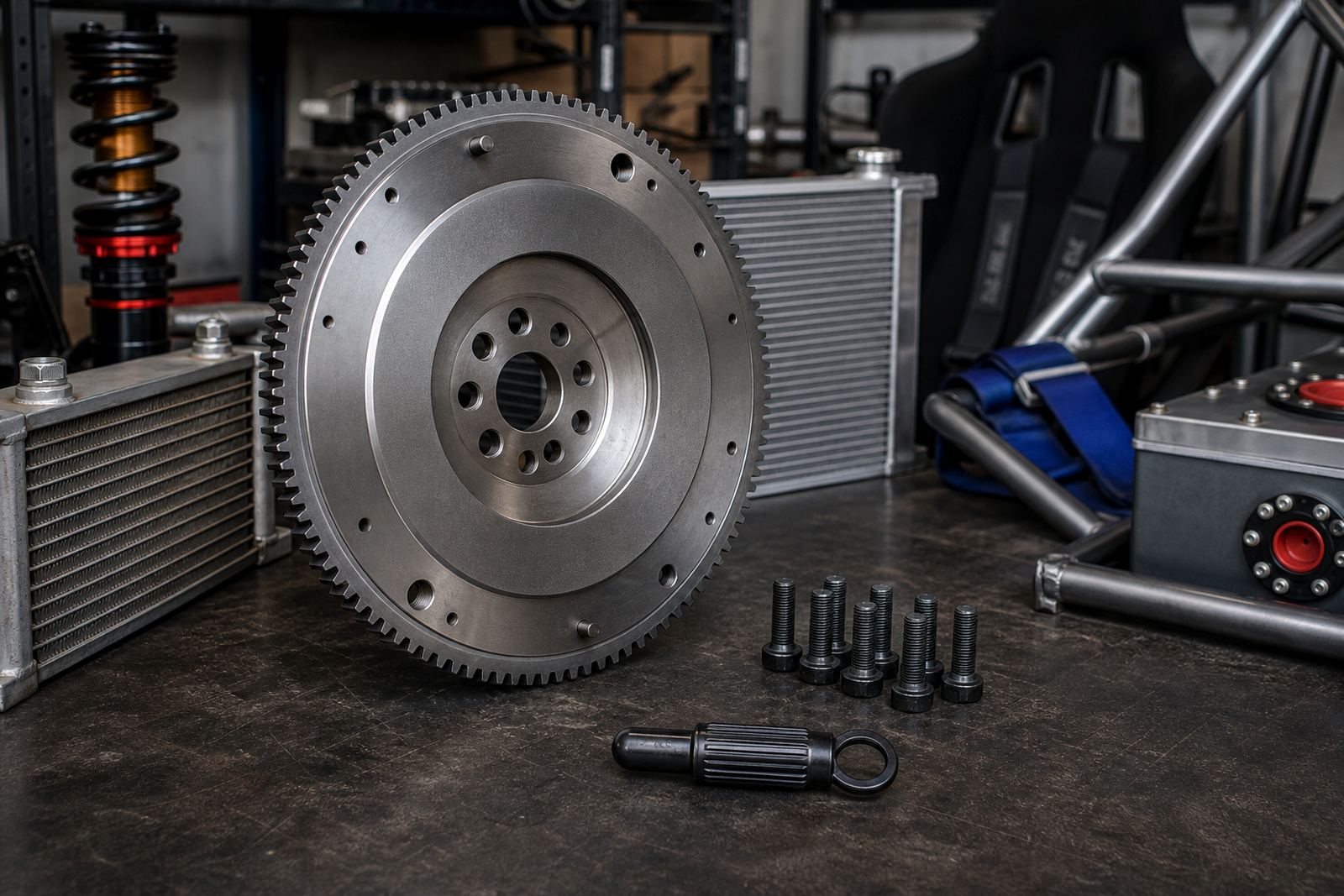
A flywheel stores rotating energy at the back of the engine and helps the drivetrain carry the crank through each firing gap. In a race car, a lighter flywheel reduces rotating mass, so the engine can pick up and drop revs more sharply, which helps with throttle pickup, heel and toe work, and cleaner gear changes on a tight circuit.
On track, that sharper feel is useful when the car needs to move cleanly out of slower corners. In rally or gravel use, the driver still wants predictable low speed control, so the flywheel choice has to suit the engine, clutch cover and the way the car is driven. A flywheel that is too light for the build can make launches snatchy and idle behaviour less settled.
Sizes, patterns and engine match points
Flywheels are not one-size-fits-all. Get one of those wrong and the starter grinds, the clutch drags or the bolts never line up. We also check starter engagement, crank flange depth and the intended clutch disc size before anything is fitted.
Typical specifications depend on the engine family, but the common details we confirm are flywheel diameter, ring gear tooth count, crank bolt pattern, clutch step height, and whether the setup is for a pull-type or push-type clutch arrangement. On some builds, especially where the gearbox and clutch are already chosen, the flywheel has to be matched around those parts rather than selected on its own.
- Starter engagement on the ring gear
- Crank bolt pattern and bolt grade
- Clutch face diameter and friction surface width
- Step height and release geometry
- Overall thickness and installed weight
Where lightened flywheels suit best
Lightened flywheels suit track cars, club racing cars and certain rally cars that need crisp throttle response and quicker rev matching. They work well where the driver spends time on and off the throttle, and where the gearbox setup benefits from a more direct connection between engine speed and wheel speed.
They are commonly chosen for circuit cars running repeated gear changes, older platform cars with manual gearboxes, and builds that have already had braking, suspension and cooling sorted out. On a car used for road-to-track driving, the decision needs to balance response with low speed manners and clutch behaviour.
- Track days and sprint cars
- Club racing saloons and hatchbacks
- Rally cars with manual gearboxes
- Restomod builds that keep a manual drivetrain
Fitment work that protects the whole drivetrain
Flywheel installation is not just a bolt-on job. The unit should be checked for runout, clutch face condition and bolt seating, then torqued correctly with the right thread treatment and locking method. If the flywheel has been skimmed or machined, the step height and surface finish must still suit the clutch cover.
We also look at the release bearing, pilot bearing or bush, gearbox input shaft wear and clutch fork clearance where applicable. A flywheel that is fitted without checking those parts can leave the driver with chatter, poor disengagement or vibration through the drivetrain.
- Crank flange cleaning and thread inspection
- Flywheel runout and surface check
- Clutch alignment before gearbox refit
- Release system and bearing condition
Keeping the flywheel in good shape
A flywheel works in a hot area, close to the clutch and gearbox bellhousing, so it should be kept free of oil contamination and checked whenever the gearbox comes out. A dry friction surface is important. Oil from a rear main seal or gearbox input seal can glaze the disc and spoil the feel of the whole setup.
If the car is used in humid coastal conditions or stored for long periods between events, surface rust can appear on the contact face. That light rust is often removed during normal use, but any heavy pitting, cracking or heat spotting needs attention. A flywheel that has been overheated may also show discolouration around the clutch face or bolt area.
- Check for heat cracks around the friction area
- Inspect for oil leak marks at each service
- Keep the mounting face dry and clean
- Replace worn bolts where the engine maker requires it
Details to send when you need the right part
To match a flywheel properly, we need the engine code or exact model, gearbox type, clutch size, and whether the car is built for track, rally or club racing use. If the engine has already been modified, the camshaft, compression level and fuel system layout can also affect the way the car behaves with a lighter flywheel.
The most useful details are the current flywheel type, whether the setup uses a single mass or dual mass arrangement now, the number of clutch bolts, and the size of the friction surface. If the car has already had machining work, that should be mentioned too, because it can change the stack height and release point.
- Engine code or exact model
- Gearbox model and clutch type
- Current flywheel and clutch dimensions
- Use case: track, rally or club racing
- Any machining, balancing or conversion work
Key facts
| Type | Lightened or standard single mass flywheel |
|---|---|
| Material | Steel or billet steel, depending on engine and use |
| Common fitment areas | Track, rally and club racing cars |
| Typical interfaces | Crank flange, clutch cover, starter ring gear |
| Usual checks | Runout, step height, bolt pattern, clutch face condition |
| Related services | Clutch And Shift Setup, Track Setup Days, Brake Upgrade Planning |