

Pad compounds that suit hard laps and hard braking zones
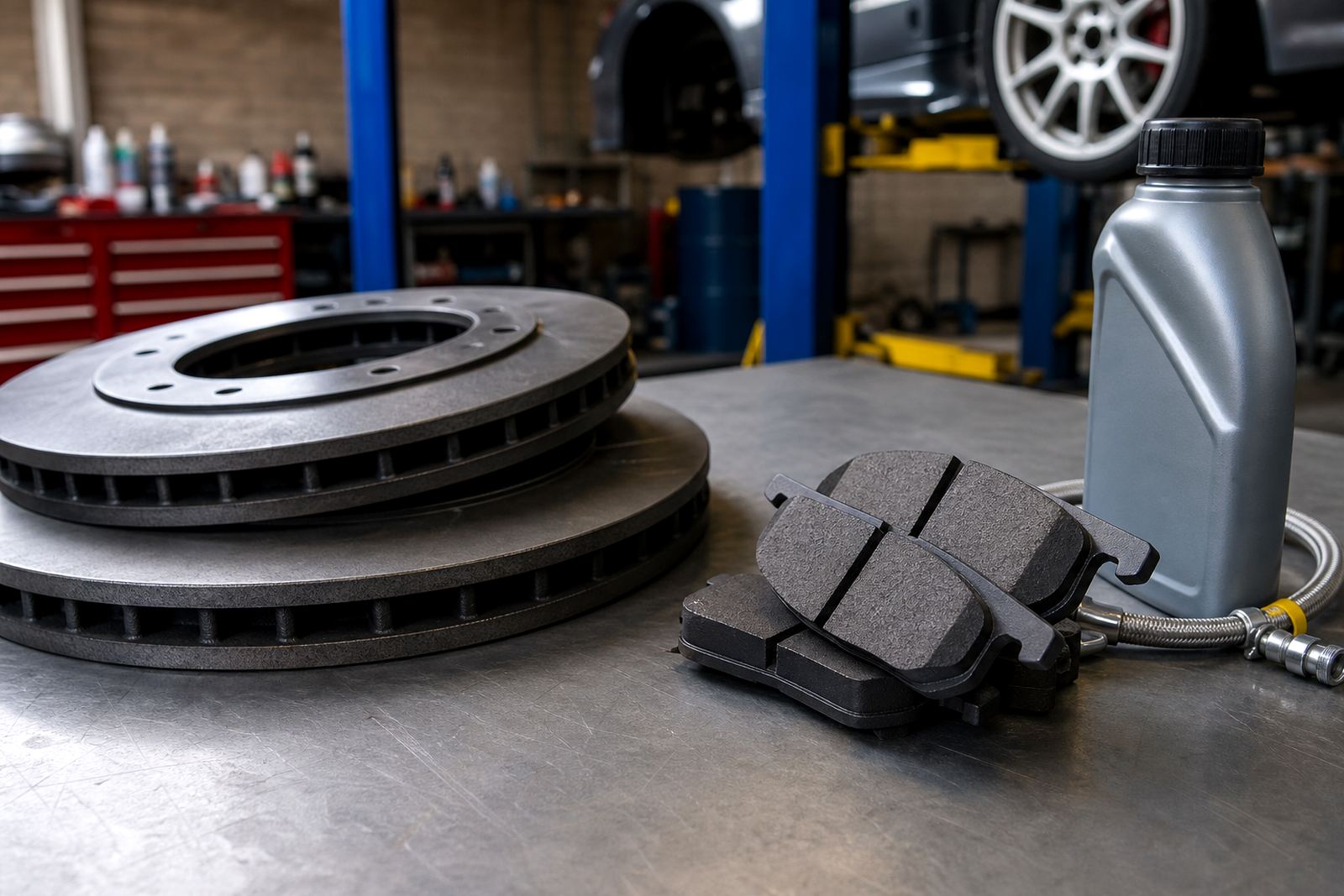
Brake pads are not all built for the same job. A pad that works well on a light club car at Kyalami may feel too sharp or too cold for a heavier sedan on the road to a rally stage. We supply competition pads in different compounds so the friction level, bite and temperature window match the car, the circuit and the driver’s style.
In motorsport, the compound matters as much as the caliper or disc size. Some cars need early bite and a firm pedal for short braking zones. Others need a pad that stays stable after repeated high-speed stops and does not fade when the discs are getting hot. Our brake pad discussions usually start with the car’s weight, disc diameter, caliper type and the temperatures you see on your normal run.
- Low to medium temperature compounds for club racing and lighter cars
- Medium to high temperature compounds for track work and repeated hard stops
- Pad shapes for single-piston, multi-piston and racing calipers
- Compounds with firmer initial bite or a smoother pedal build-up
Sizes, pad shapes and backing plates that must match
Brake pads are ordered by shape, backing plate profile and thickness, not only by the car model. Two cars that share a badge can still use different pad outlines, different wear sensor arrangements, or different caliper families. For that reason, the details on the old pad matter. A clear photo of the pad face, backing plate and any cut-outs helps avoid mistakes.
Most competition pads sit in a thickness band around 14 mm to 18 mm of friction material when new, though some larger systems use different figures. The backing plate must sit square in the caliper, with even contact across the disc face. If a pad is too tall, too thin or shaped wrongly at the ears, it can tap, drag or wear unevenly. That affects pedal feel and disc life.
- Pad length and height across the friction surface
- Backing plate thickness and retaining clip style
- Chamfers, slots and any wear indicator cut-outs
- Front or rear axle use, since many cars need different compounds front and back
Where these pads suit the way motorsport cars are used
Competition pads suit track days, club racing, rally stages and fast road cars that need more heat tolerance than standard road pads give. On a circuit car, the aim is steady pedal height and repeatable stopping point. On a rally car, the pad has to cope with dirt, water and heat cycling between sections. On a club racing car, a pad that is predictable from cold can be just as useful as one with very high peak friction.
Fitment advice matters because the whole braking package has to work together. Disc size, ducting, fluid choice, caliper piston area and tyre grip all affect how the pad behaves. If the pad is too aggressive for the master cylinder and tyre package, the car can become hard to place at corner entry. If it is too soft, the driver chases the brake pedal all session and the stopping point moves around.
- Track cars that see repeated heavy braking and heat build-up
- Rally cars that need dependable braking on mixed surfaces
- Club racers that want a firm, readable pedal under pressure
- Fast road cars that have moved beyond standard pad compounds
Fitting notes from the workshop side
Brake pads are easy to buy, but proper fitment is where the system earns its money. The pads need clean caliper slides, square piston faces and correct disc condition. If the disc has heavy grooves, heat spotting or a lip on the outer edge, a new pad will bed in unevenly and the pedal can feel inconsistent. We often pair pad work with brake bleeding, brake fluid checks and a look at the pedal box or bias setup where that applies.
For race cars, bedding-in is part of the install. The pad needs a controlled heat cycle so the transfer layer forms properly on the disc face. Hard bedding without checking disc condition can create vibration or reduce the working surface. The right pad also needs space to move in the caliper, but not so much that it rattles over kerbs and rough paddock roads. Midrand drivers, and teams travelling in from Pretoria or Johannesburg, often bring the car in with the old pads still fitted so we can compare wear and shape before ordering.
- Check disc thickness and surface condition before pad change
- Inspect caliper seals, pins and pad retaining hardware
- Bed the pads according to the compound and rotor condition
- Confirm clearance at the caliper body and wheel spokes
Keeping the braking feel steady through a season
Competition pads need care, even when the car is parked between events. Dust build-up can hide uneven wear, especially on cars that run on dusty inland roads or in humid coastal air around Durban and Cape Town. A quick pad inspection should look for taper wear, cracking, glazing and any sign that the outer edge has gone brittle from excess heat.
Pad wear is often linked to more than the pad itself. Brake fluid condition, tyre grip and suspension alignment all affect how hard the brakes work. If the car is pulling under braking or the inside edge is doing more work than the outside, pad wear can become uneven. On some cars, a slight change in corner weight or alignment after a setup day makes the brake pad last longer and feel cleaner at turn-in.
- Inspect pad thickness before every event block
- Keep the disc face clean of heavy residue and brake dust
- Watch for glaze, cracking or a sharp drop in bite
- Store spare pads dry and sealed from moisture
Details to send when ordering the right pad set
The quickest route to the correct brake pad is accurate information. A car can carry different calipers front and rear, and a small change in rotor size can move the pad shape as well. We work from measurements, photos and the car’s braking use, then match the compound to the job rather than guessing from a badge alone.
Useful details include the exact car model, year, front or rear position, current disc diameter and a picture of the old pad next to a tape measure. If the car already has uprated brakes, note the caliper body, piston count and whether the setup is meant for circuit work, rally use or mixed driving. Our contact form is the right place to send those details, along with any notes about pedal feel, fade or noise from the current set.
- Make and axle
- Disc diameter, caliper type and pad thickness
- Use case: track, rally, club racing or fast road
- Any fitment issues, noise, taper wear or pedal changes
Key facts
| Product type | Competition brake pads for motorsport and performance use |
|---|---|
| Compound range | Options for low, medium and high temperature working windows |
| Typical thickness | Around 14 mm to 18 mm of friction material, depending on pad shape |
| Fitment | Front and rear pad shapes for many single and multi-piston calipers |
| Use cases | Track days, rally stages, club racing and fast road upgrades |
| Support | Fitment advice, brake bleeding, pad bedding guidance and setup checks from Midrand |