
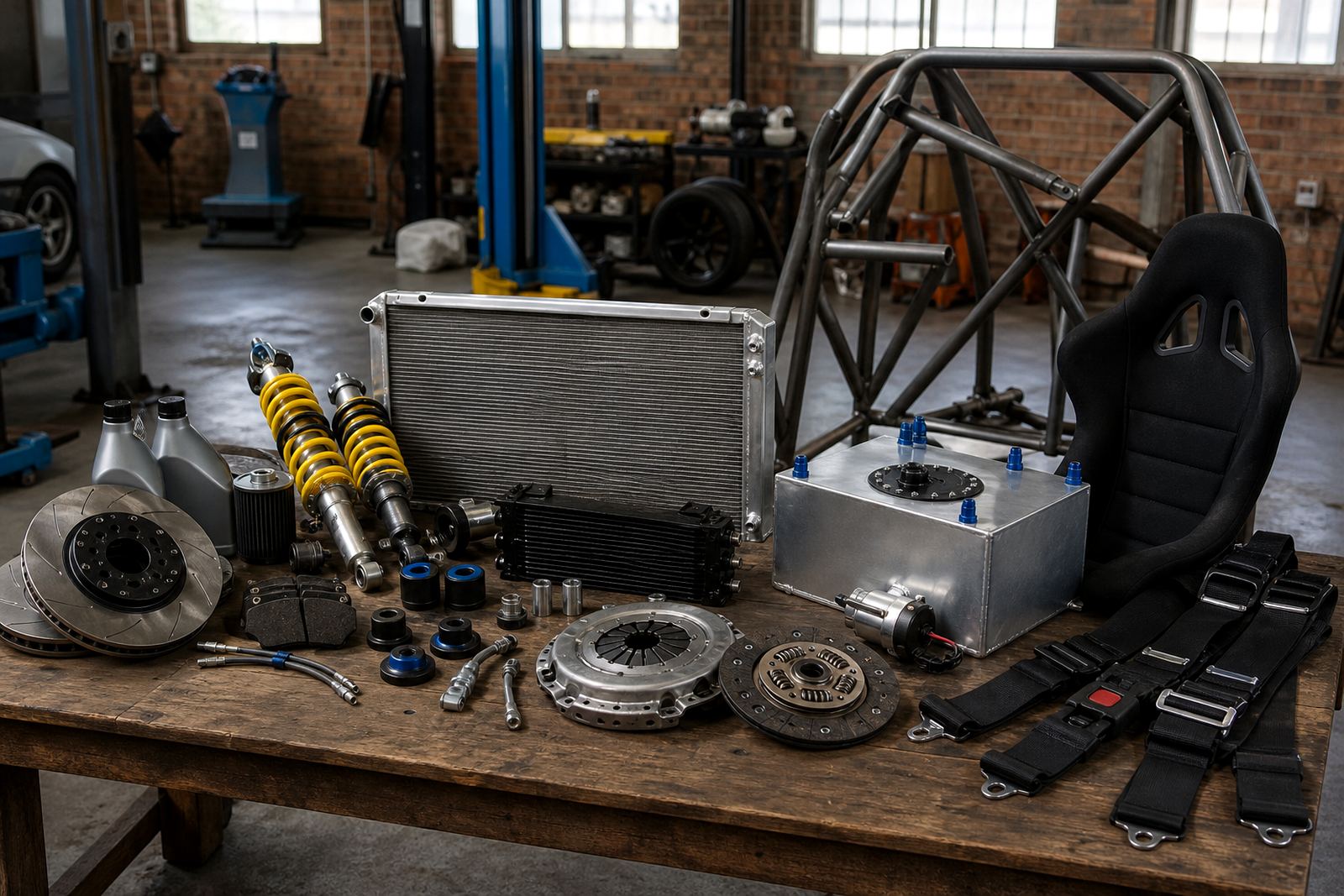
Strap paths that sit where they should
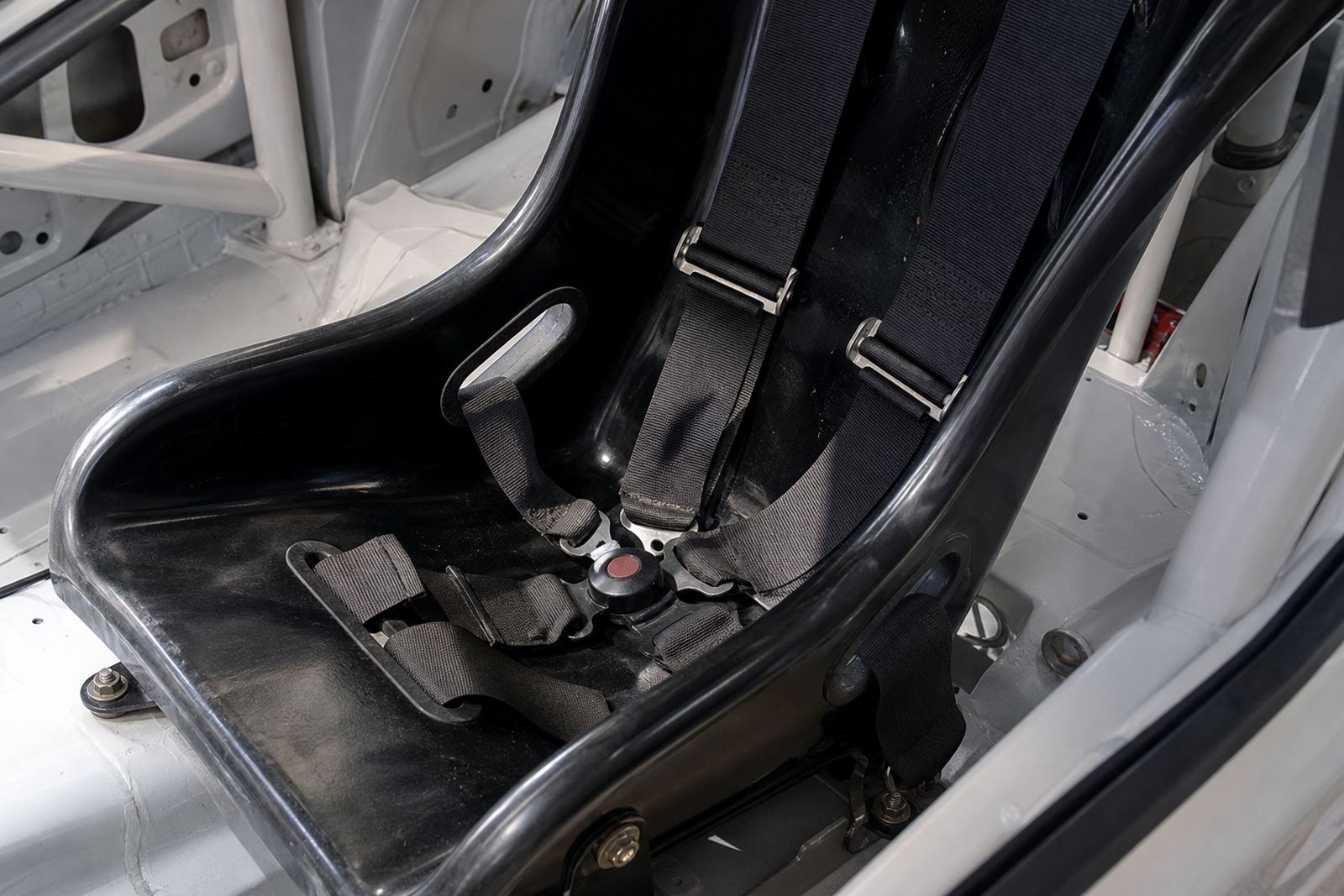
We check how the harness runs from the seat to the mounting points, then compare that layout with the seat shell, seat height and the driver’s driving position. Shoulder straps need a clean line off the seat openings, lap straps must sit low across the pelvis, and crotch straps need to hold the buckle in the correct place without pulling it upward. If the route is wrong, the harness can feel tight in the paddock but work poorly once the driver is strapped in and moving under braking and corner load.
The check suits fixed-back seats, reclining performance seats and most club racing interiors where the original belts have been replaced or retained for road use. We also look for chafe points on the seat edges, trim, harness bar, roll cage tubes and rear shelf areas where webbing can wear over time.
- Shoulder strap angle and symmetry
- Lap strap height across the pelvis
- Crotch strap position under the buckle
- Webbing contact with sharp edges or hot metal
- Clear access to the release buckle
What the fitment check includes on the car
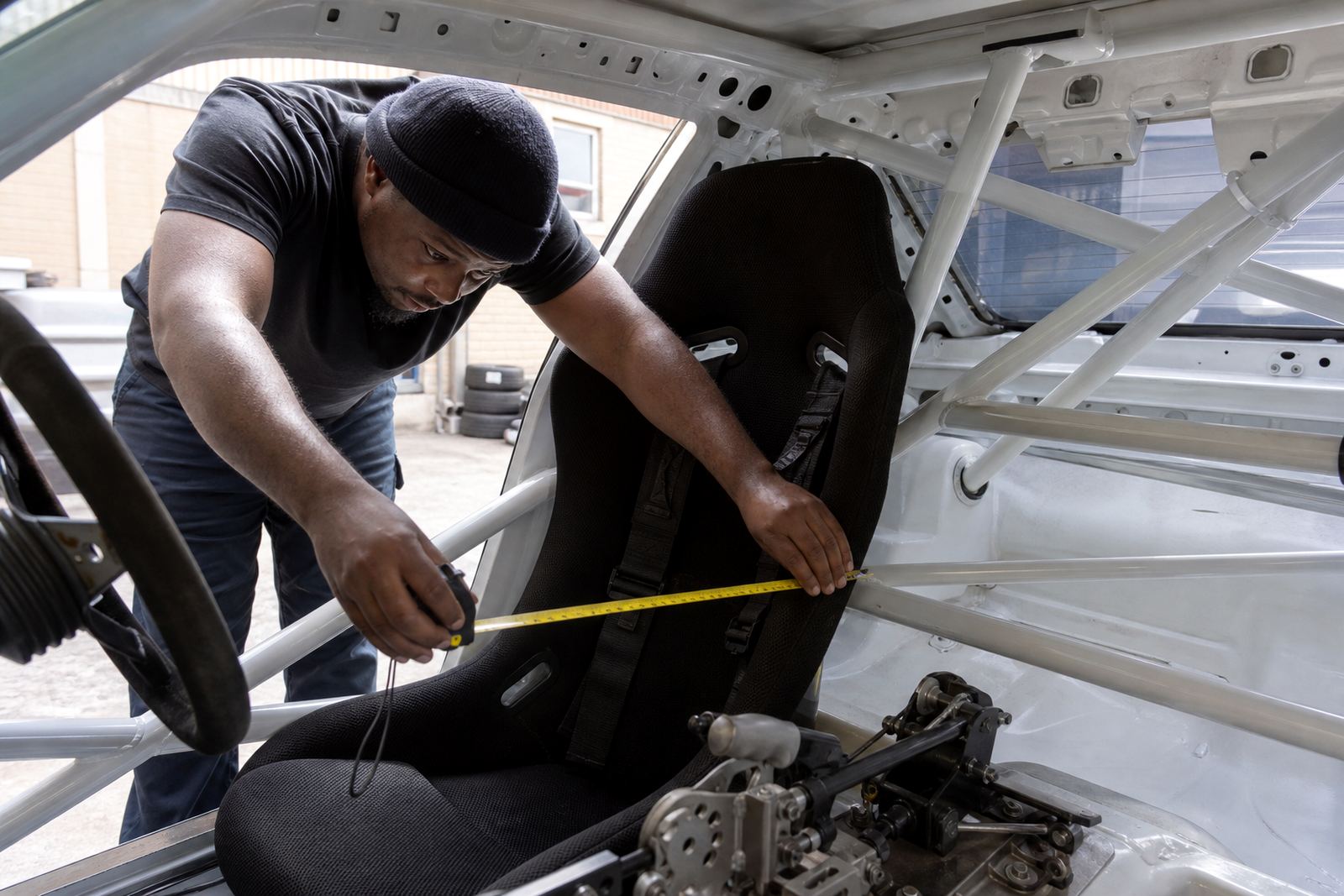
The service covers a hands-on look at the installed harness and the surrounding cockpit layout. We check the anchor type, mounting direction, bolt condition, spacer use where needed and the way the webbing leaves the seat. Where a car has a roll cage, we look at the harness bar location and whether the strap path supports the driver without forcing the belt over the top of the shoulders. We also inspect seat brackets and sliders if they affect belt geometry.
When needed, we point out practical changes such as moving the anchor point, adjusting seat height, changing the buckle location or re-routing the shoulder straps through the correct openings. The aim is a neat layout that makes sense in a hard-braking, high-heat racing environment, not just one that looks tidy on the hoist.
- Anchor point review and hardware check
- Harness bar and cage proximity check
- Seat shell opening alignment
- Buckle reach and release access
- Wear marks, fraying and fold damage inspection
What happens during the check at our Midrand base
We start with the car and driver combination, because harness fit changes with torso length, seat angle and helmet clearance. After that, the workshop team inspects the current arrangement and notes anything that may pull the straps off line. For cars used in sprint events, endurance races or club hillclimbs, we pay close attention to repeatable setup, since a seat that shifts a few millimetres can change the belt line more than people expect.
If the car is already prepared for competition, the check can be folded into a broader setup session that also covers seating position, shift reach and driver comfort. If the harness needs a different route or mounting correction, we talk through the parts and labour involved before anything is altered, so the owner knows what the next step looks like in plain terms.
- How the driver sits in the shell
- Installed harness inspection
- Mounting point and hardware assessment
- Practical routing notes for correction
- Optional tie-in with seat and cockpit setup
Specs that matter on real motorsport harnesses
We work with 4 point and 6 point harness layouts, depending on the car class and cockpit arrangement. Shoulder straps are normally checked for the correct angle off the seat and the lap straps for a low, secure path across the hips. Crotch straps need enough tension to keep the buckle from riding up, but not so much that the driver cannot settle back into the seat properly. Webbing width, anchor spacing and buckle style also matter, especially where the car sees rough kerbs or long stints.
For cars with tight interiors, we check the opening size in the seat shell and whether the webbing can pass through without twisting. In cars with a cage-mounted harness bar, we look at the offset from the driver’s shoulders and the level of the bar relative to the seat back. Small differences there can make a major difference to how the harness sits under load.
- 4 point and 6 point harness layouts
- Seat opening and webbing path alignment
- Shoulder strap angle off the seat back
- Lap strap path across the pelvis
- Crotch strap length and buckle location
- Harness bar height and offset review
Turnaround, pricing and what affects the bill
The turnaround depends on whether the car only needs a fitment check or whether the harness routing must be changed, hardware replaced or seat position altered. Pricing is quoted according to the work involved, the mounting setup already on the car and any extra parts needed for safe correction. A simple inspection is one level, while a car that needs new anchor hardware, seat bracket changes or a full cockpit rework sits at a different level.
We keep the pricing approach practical. If the job is straightforward, the cost stays tied to the check itself. If the car needs adjustment work, we itemise the added labour and fittings so there are no loose assumptions about what is included. That suits privateers, club racers and teams that need the numbers to line up with a race calendar and parts order.
- Inspection-only checks
- Routing correction and refit work
- Hardware and bracket changes where needed
- Quoted labour based on the car’s layout
- Parts listed separately when replacement is required
Aftercare for the next event
After the check, we note the settings and points that were corrected so the harness can be refitted the same way after seat removal, cage changes or interior work. If the driver changes helmet type, seat insert thickness or seating position, the harness line may shift enough to need another look. In motorsport that is normal, especially where one car does club events on a Saturday and testing the next week in different trim.
We also give practical notes on what to watch for at the circuit: loose buckle positioning, twisted webbing, rub marks on the seat edge and any movement at the anchors. If the car sees damp weather or coastal air, it is worth keeping an eye on metal fittings and fabric wear, particularly where the harness lives in a car that sits in a trailer or garage for a while between events.
- Setup notes recorded after the check
- Fit changes flagged after seat or cage work
- Wear points identified for later inspection
- Practical reminders for race-day prep
Key facts
| Service area | Fitted in Midrand, with Gauteng, KZN and Cape cars booked in ahead |
|---|---|
| Harness layouts | 4 point and 6 point racing harnesses |
| Core check | Shoulder, lap and crotch strap routing |
| Mounting review | Anchors, bolts, spacers, brackets and harness bar position |
| Related cockpit checks | Seat position, buckle access and driver fit |
| Use case | Track, rally and club racing cars |