

What we look at before a brake change
Brake Upgrade Planning starts with the current setup on the car. We check caliper type, disc size, pad shape, master cylinder feel, wheel clearance and the amount of heat the car is likely to see over a session, a stage or a sprint race. A light club car running on 15 inch wheels has a very different brake requirement to a heavier turbo car on wide tyres.
We also look at the braking pattern. Some cars need better initial bite for short stops. Others need a pad that stays steady when the brakes are hot and the pedal has travelled a few times. If the car is used in wet weather, on long descents or on a circuit with repeated heavy stops, fluid choice and ducting matter just as much as the pads.
- Pad compound matched to temperature range and use
- Brake fluid selection based on boiling point and pedal feel
- Brake line condition, including age cracking and swelling
- Rotor size, thickness and vented or solid design
- Wheel and caliper clearance before any upgrade is ordered
Pad, fluid and rotor choices that hold together
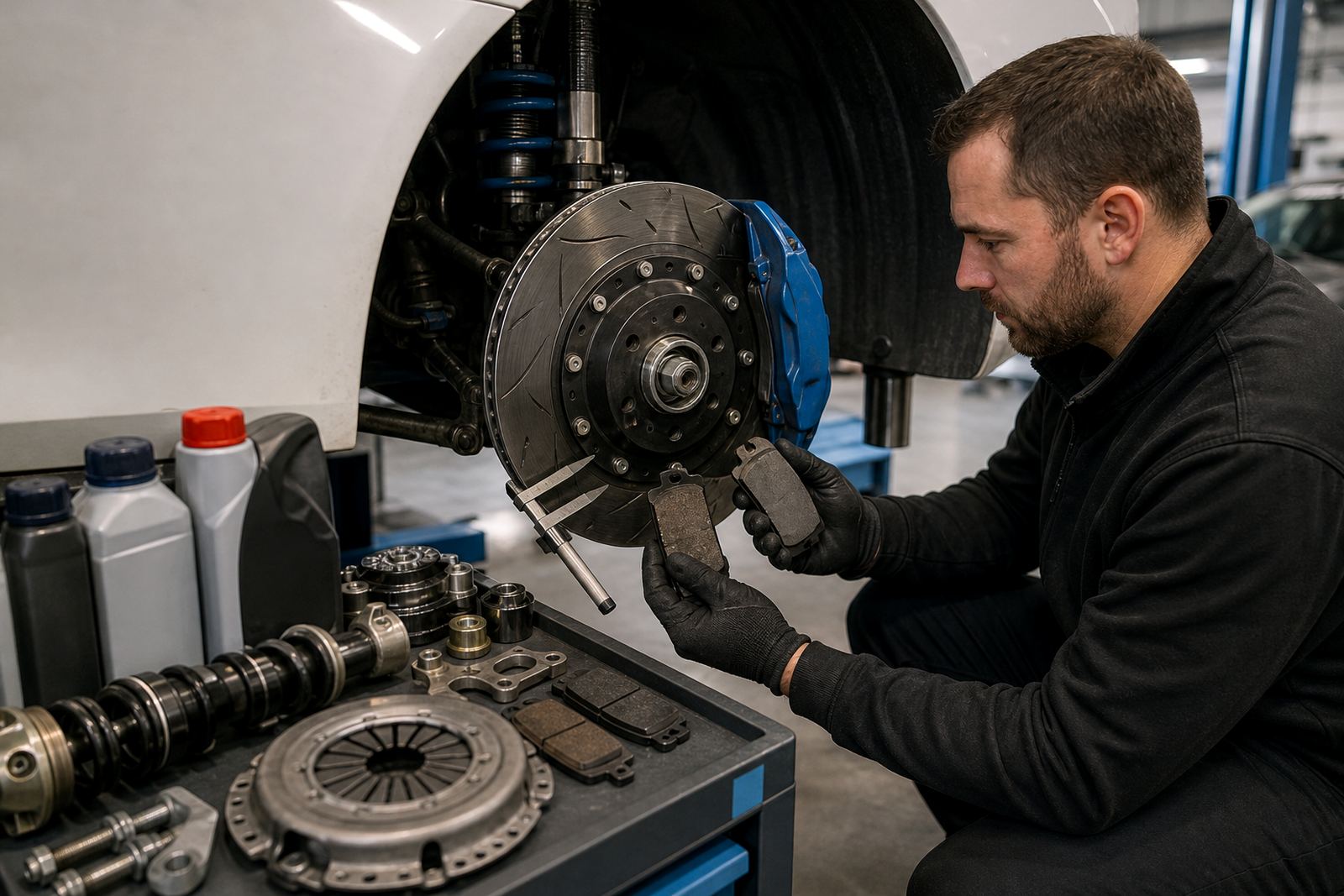
Brake pads are not all built for the same job. A softer compound can work well for road to track crossover use, while a more aggressive pad may suit a car that lives on the circuit and needs stronger heat control. We also check whether the car uses a floating caliper, a fixed caliper or a mixed setup, because pad shape and backing plate design affect fit and wear.
Fluid choice matters when the brake system heats up. Fresh high boiling point fluid helps reduce vapour lock risk and keeps the pedal more consistent under repeated use. On older cars, rubber lines can expand under pressure, so a braided line upgrade can sharpen pedal feel and reduce that spongy response. Rotor choice must suit the hub, caliper bracket and wheel size. There is no point fitting a larger disc if the wheel barrel leaves no room for the caliper body.
We work through the brake path from pedal to pad. That includes the master cylinder output, line routing, caliper piston area and the thermal load on the disc. If the rear brakes are too strong, the car can become twitchy under trail braking. If the front end is overloaded, the pedal may feel long and the stopping balance can go soft by the end of a session.
How the planning session runs at our Midrand base
The process is practical and hands on. You bring the car, or the relevant brake details, and we go through what is fitted, what has been changed before and what the intended use is. For some cars we can inspect pads, discs and lines on the spot. For others we work from measurements, photos and the current part numbers so the next step is not guesswork.
- Check current brake hardware and wheel fitment
- Measure disc diameter, thickness and offset where needed
- Review pad type, fluid condition and line material
- Discuss use case for track, rally or club racing
- Set out the brake plan before parts are ordered or fitted
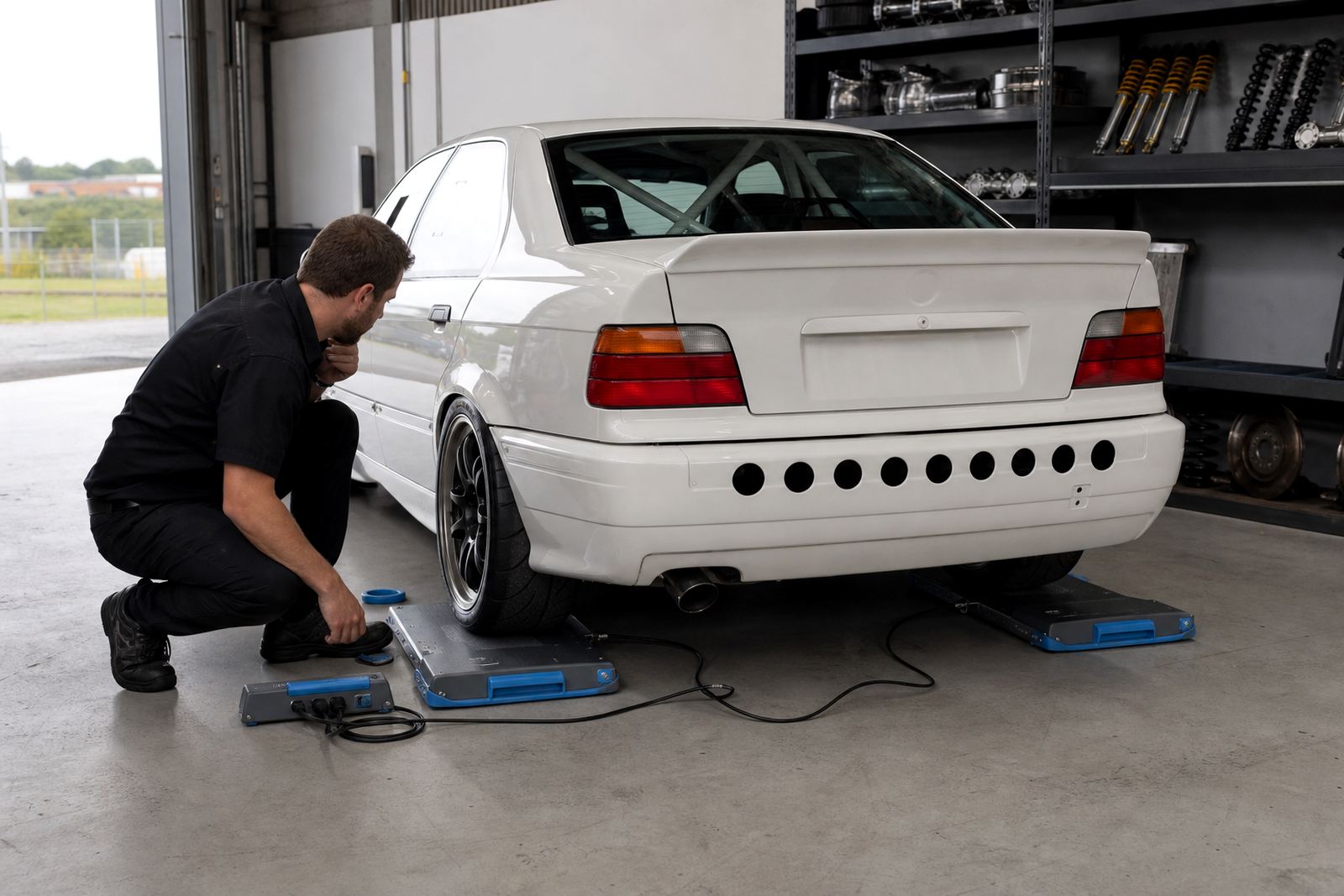
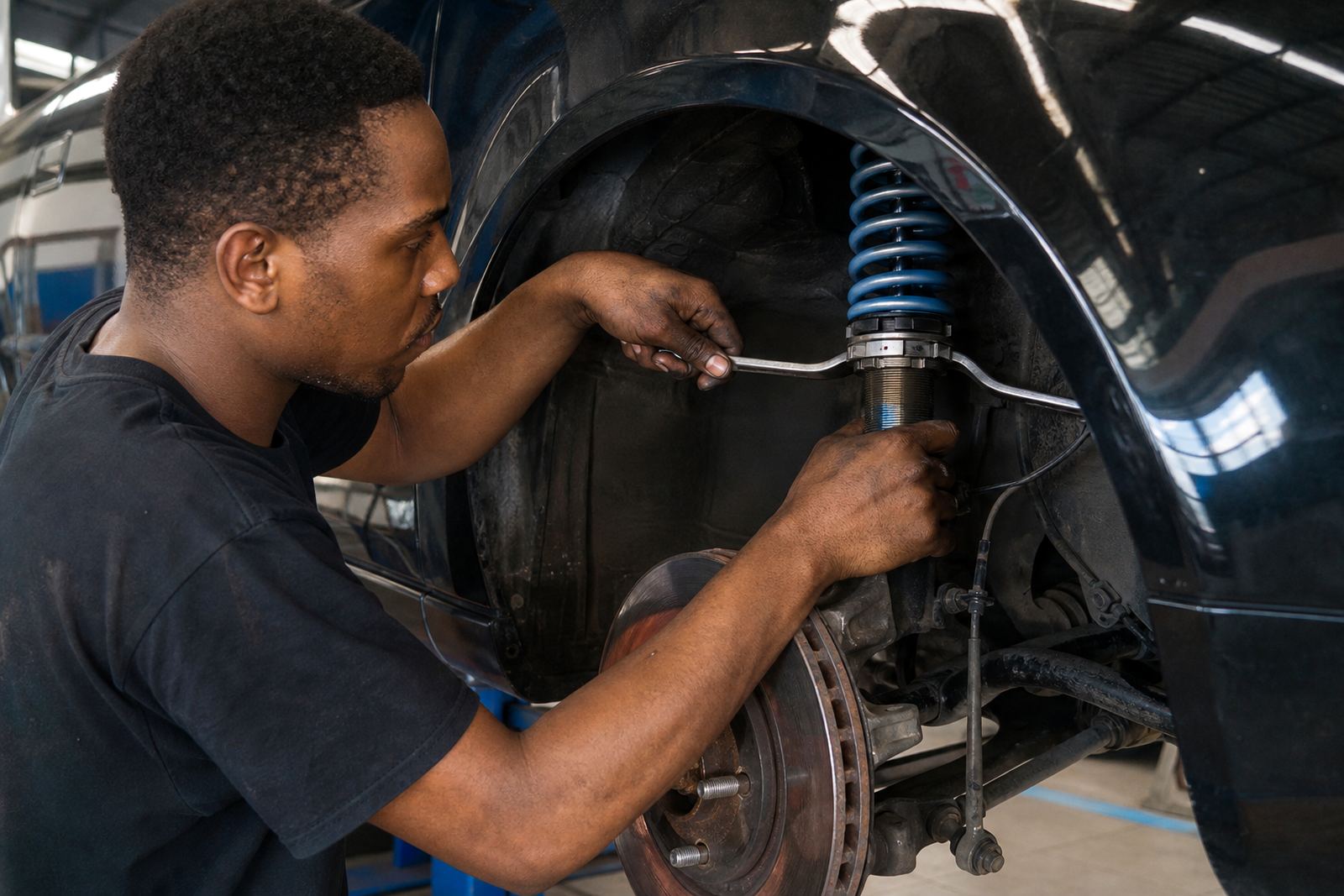
Our workshop team can also flag linked jobs that affect brake work. Coilover height, corner weighting, tyre width and alignment all change how a car loads up under braking. A car that dives heavily on turn in may need a different front pad bias or a better cooling path, not just harder parts. A detailed setup note saves time later.
Turnaround, fitment and track-day prep
Turnaround depends on what the car needs and whether parts are already on hand. A basic planning visit can be a quick check of the current package, while a full brake upgrade may involve parts sourcing, fitment, bleeding and test checks. If the car is being prepared for a setup day, we can combine brake planning with bleed work, alignment checks and corner weighting so the car leaves with one clear direction.
When fitting is part of the job, we inspect the lines, bleed points, banjo fittings and hardware torque. We also watch for hose routing near moving suspension parts and hot exhaust sections. A tidy install matters on a rally car and a circuit car alike, because brake faults often start with a small routing mistake or a loose fitting that was fine in the workshop but not on track.
For drivers heading to Kyalami, Zwartkops, Killarney or a local sprint event, we often talk through heat build-up, rotor choice and pad life in practical terms. There is no point recommending a setup that feels sharp in the pits but fades after three hot laps.
Pricing approach without guesswork
Brake Upgrade Planning is quoted on your car and your parts list. Pricing depends on the vehicle, the number of components being checked, whether fitment is included and whether the job needs extra measurements or setup time. A simple pad and fluid review costs less than a full brake conversion with lines, rotors and test bleed work.
We keep the pricing approach clear by separating planning, parts and labour. That makes it easier to compare a pad change only, a fluid and line refresh, or a larger brake package that includes caliper and disc changes. If extra setup work is needed after the brake changes, we list it separately so the figures stay clear and nothing is hidden in the quote.
- Planning only for part selection and fitment guidance
- Inspection plus bleed service where existing hardware stays in place
- Upgrade path for pads, fluid, lines and rotors
- Full brake package planning for track or rally use
Aftercare for the first hard stops
After the brake work is done, we talk through bedding, pedal feel and what to watch during the first few heat cycles. Fresh pads and rotors need the right bedding routine so the transfer layer forms evenly. If that is rushed, the car can get noise, vibration or uneven bite. Skip the bedding laps and the new pads never give what you paid for.
We also explain how to judge the brakes after a session. That includes looking at pad surface wear, checking for fluid darkening, feeling for a change in pedal travel and listening for clamp noise that might mean a bracket or slider needs attention. If the car is used in wet coastal conditions, especially around Durban or Cape Town, brake hardware can corrode faster than inland cars and that affects line ends, bleed nipples and pad backing plates too.
If you are mixing road miles with motorsport, we can help set a realistic brake plan that suits both. Some cars need a strong track setup with a calmer pad for the road. Others need a simpler package that keeps cost under control and still stops cleanly under race load.
Key facts
| Service area | Midrand, Johannesburg, Pretoria, Kyalami, Centurion, Durban, Cape Town, Port Elizabeth |
|---|---|
| Core checks | Pad compound, fluid choice, line condition, rotor suitability |
| Hardware covered | Pads, discs, calipers, brake lines, fluid, fittings |
| Workshop support | Fitment advice, brake bleeding, setup day input |
| Use cases | Track, rally and club racing cars |
| Visit base | Midrand base |