

What gets set on a fresh coilover install
Coilover setup starts with the car on level ground and the suspension at full working order. We check spring rates, thread condition, perch movement and the usable range of the damper body before any measurements are made. If the car already has adjustable top mounts or camber hardware, those settings are written down before anything is changed.
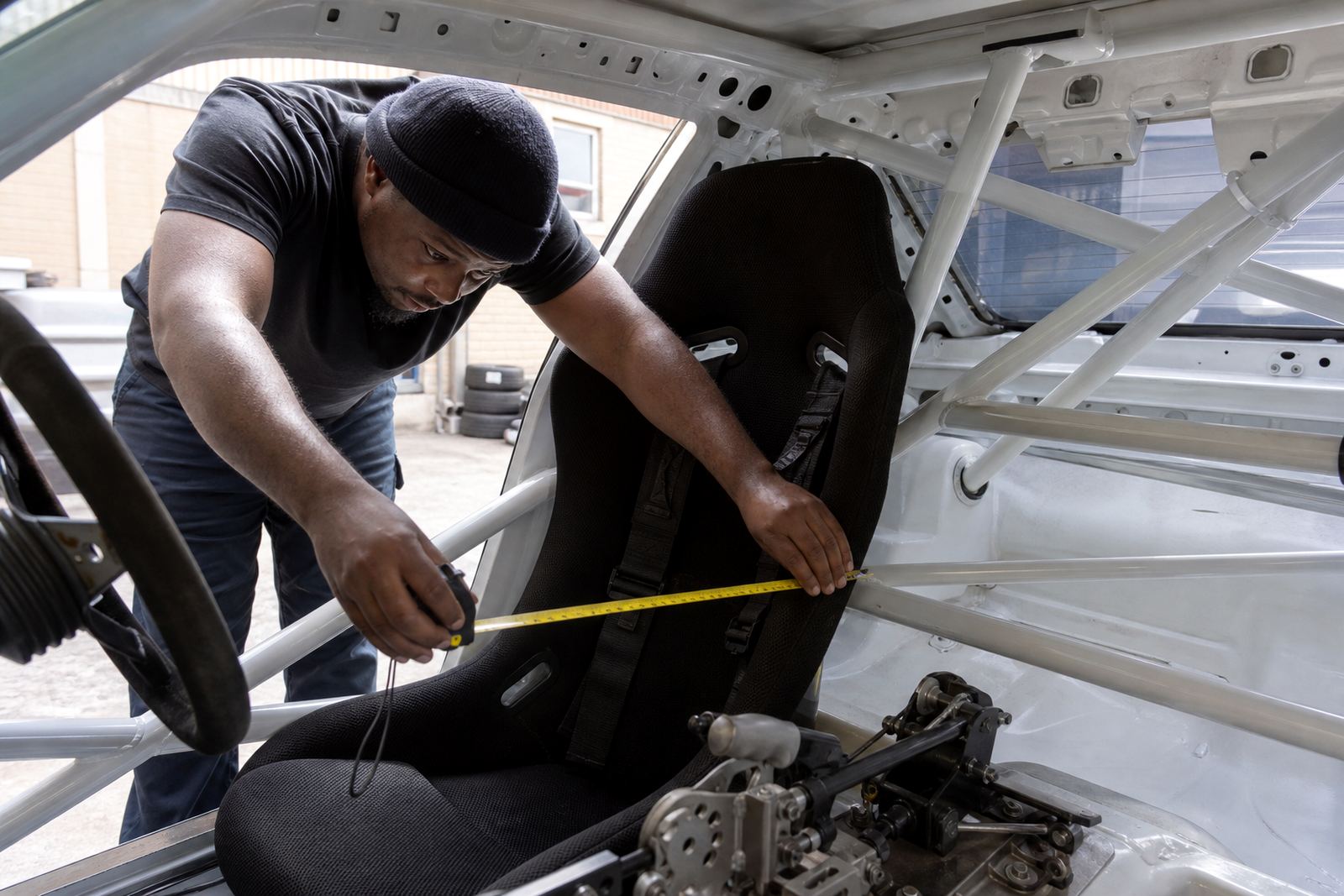
The main job is to bring the chassis to a useful baseline for motorsport use. That means setting ride height with enough bump travel left for kerbs, compressions and rough surface sections, then matching left to right where the car allows it. Preload is checked against the spring type in front or rear, and the damper range is set so the unit is not living at either extreme.
- Ride height measured at repeatable points on the chassis
- Preload checked against spring seat position and free length
- Dampers set to a baseline that suits the car weight and tyre grip
- Clearance checked around arch liners, driveshafts and brake lines
- Lock rings, collars and mounts tightened after setting
The workshop process we follow on the car
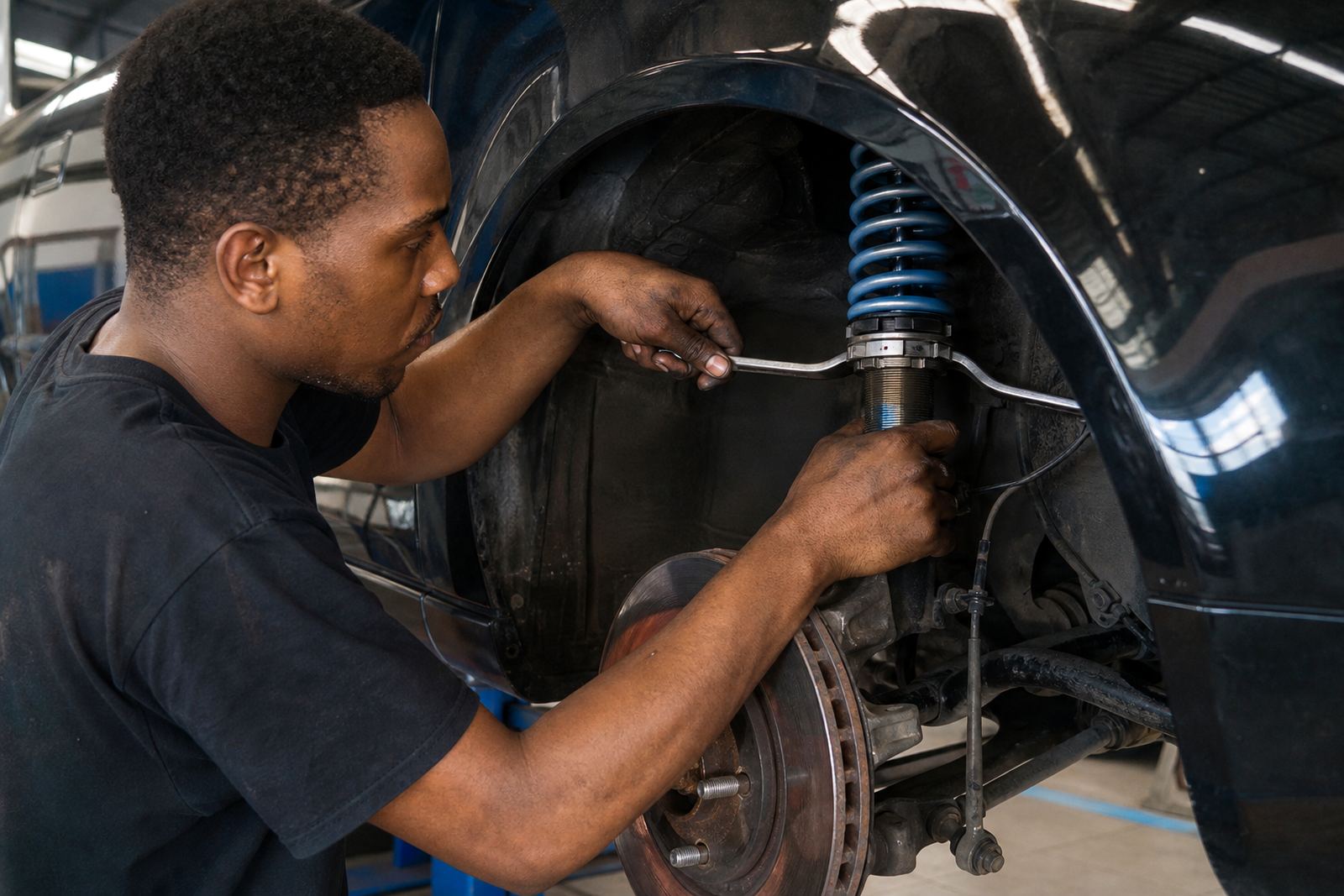
Every setup begins with a quick inspection of the install. We look for crossed threads, uneven perch movement, worn top mounts and springs fitted the wrong way around where that applies. Bushes, ball joints and wheel bearings are also checked because a noisy or loose corner can make the numbers meaningless.
Once the car is stable on the lift or stands, we measure static height, reset the corner position and work through the damper clicks in small steps. Some cars need a firm road-biased baseline for transit and club use, while others need a softer start point for rougher circuits or mixed surface rally stages. The aim is not a dramatic setting, just a car that reacts in a clear way when the driver turns, brakes and puts power down.
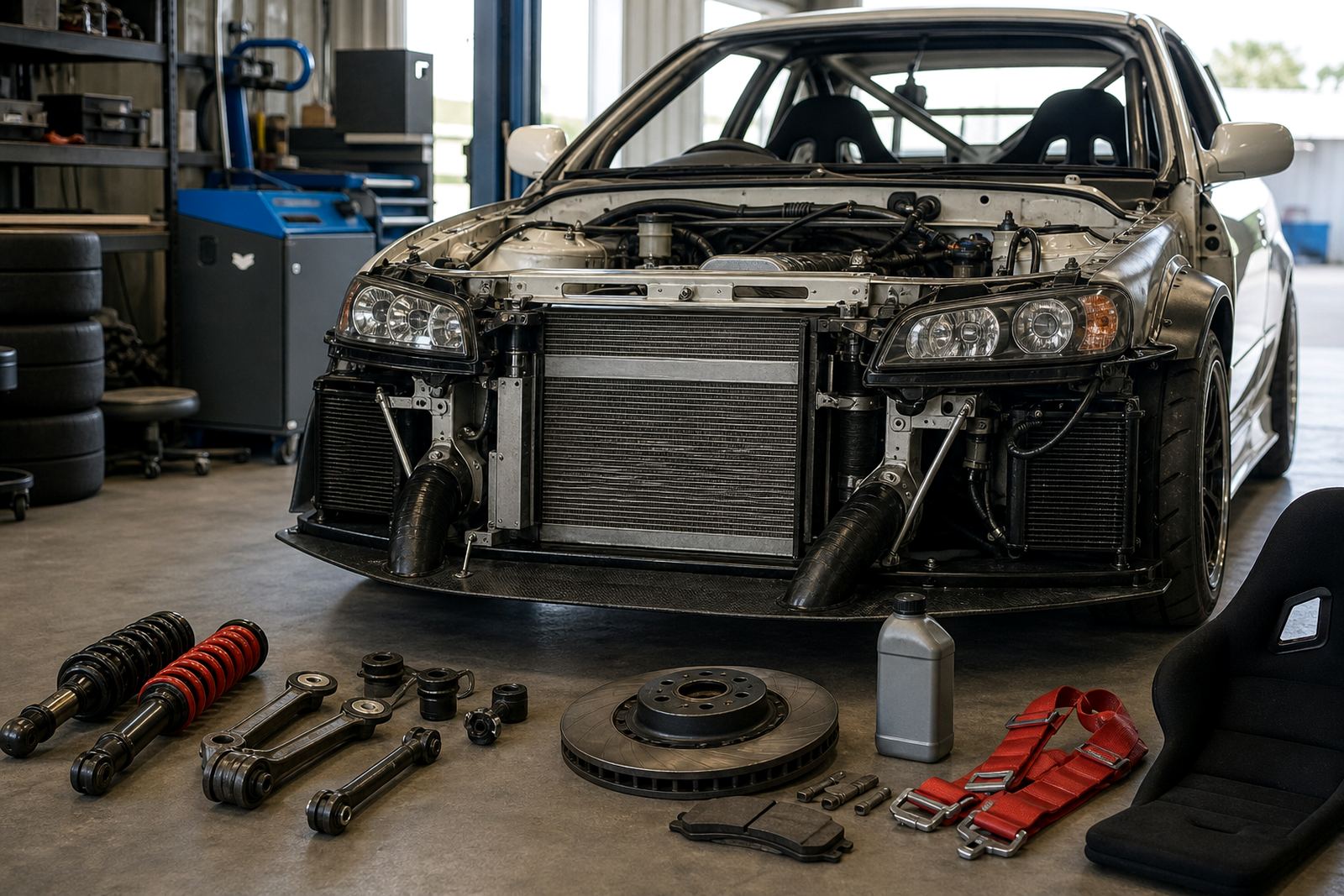
We also inspect the other parts linked to the suspension. Tyre size, wheel offset, brake disc diameter and seat position all affect how far the car can be lowered without creating contact or poor geometry. If the car needs extra setup work, we will flag it before the final adjustment is locked in.
- Initial inspection of coilovers and related front and rear hardware
- Height reset using measured points, not eye judgement
- Spring perch and helper spring position confirmed where fitted
- Damper click settings recorded for later reference
- Geometry notes made where alignment work should follow
Ride height and preload targets that make sense
No one figure suits every race car. A hatchback on circuit tyres, a saloon for sprint racing and a rally car on rough roads all need different clearance and suspension travel. We work from the car’s weight, the spring package and the way the body moves under braking and load transfer.
Preload is kept sensible. Too much preload can make the suspension harsh and reduce the usable travel, while too little can let the spring go loose at full droop where that is not intended. On many installations, the better answer is a clean seated spring with enough thread engagement for safety and repeatability, not a slammed stance that only looks low in the paddock.
Baseline damper settings are matched to what the car actually does on track. If the rear steps out too sharply on turn-in, or the front pushes on corner entry, we can adjust the balance before chasing unrelated problems. That is often the difference between a car that feels nervous and one that settles properly through a lap.
For drivers running mixed events across Gauteng and further afield, we can set the car up with a practical middle ground. The setup can then be fine-tuned after the first test run, especially if the vehicle is carrying different fuel loads or changing tyre compounds from one event to the next.
What the service covers around Kyalami and beyond
Coilover setup is often booked together with alignment checks and corner weighting, because the suspension can only be judged properly when the rest of the chassis is measured too. Midrand and Kyalami cars often arrive after a recent build or refresh, while Johannesburg and Pretoria customers may want a setup after a brake or wheel change. We also see cars from Centurion, Durban and Cape Town that need a clean starting point before the next event.
We work on track, rally and club racing cars with a practical view of how the vehicle will be used. That means the advice changes depending on whether the car needs fast direction change, better compliance over rough sections or a stable platform under heavy braking. If the install includes new bushes, roll stiffness changes or a different seat position, those details are folded into the setup notes.
- Circuit, gravel stage or club grid
- Ride height correction after new coilover fitment
- Preload and damper baseline guidance for driver testing
- Support with follow-up alignment and corner weight work
- Notes for cars that move between circuit and gravel use
Pricing structure and how jobs are quoted
Pricing depends on the car, the coilover type and how much adjustment is needed to get the suspension back to a usable range. A straight baseline setup on a car with tidy threads and easy access is priced differently from a vehicle that needs seized hardware freed, extra measuring time or linked alignment work. We quote around the actual labour and the condition of the install, not on a blanket figure.
If the car is booked in for a broader setup day, the coilover work can be grouped with other chassis checks. That approach makes sense when the driver wants the ride height, corner balance and alignment checked as one package. For race builds, we also note if extra hardware is needed later for spring rate changes, top mount correction or damper access.
We avoid unnecessary steps in the job. If the current setup already sits near the right window, the focus stays on verification and measured correction. If it is far off, we will show where the adjustment has gone astray and what needs to be changed before the car goes out to test.
Aftercare notes after the first test day
After the first run, a coilover setup often needs a small reset. Fresh springs can settle, lock rings may need rechecking and the driver may notice a balance change once the car has real heat in the tyres and brakes. We keep a record of the baseline so the next adjustment starts from known numbers rather than guesswork.
If a driver reports rubbing, sudden understeer, rear instability or a strange clunk, those symptoms are looked at against the setup data. Sometimes the answer is a ride height change, sometimes it is a tyre pressure issue or a loose mount. The point is to work through the car in a sensible order, not chase one corner while ignoring the rest.
For repeat event use, we can note the settings that worked best for a specific circuit or road event. That gives the driver a reference for later changes, especially when the car runs different wheels, fuel loads or tyres between meetings.
Drivers from across Gauteng and further afield bring their cars to Midrand for this work. The contact route stays simple through our contact form when a car needs coilover setup work, related alignment, or a broader chassis check before the next event.
Key facts
| Service | Coilover Setup |
|---|---|
| Focus | Ride height, preload and damper baseline guidance |
| Vehicle types | Track, rally and club racing cars |
| Typical related work | Alignment checks and corner weighting |
| Base | Midrand, Gauteng |
| Areas served | Johannesburg, Pretoria, Kyalami, Centurion, Durban, Cape Town, Port Elizabeth |