

What we inspect before a car goes back on track
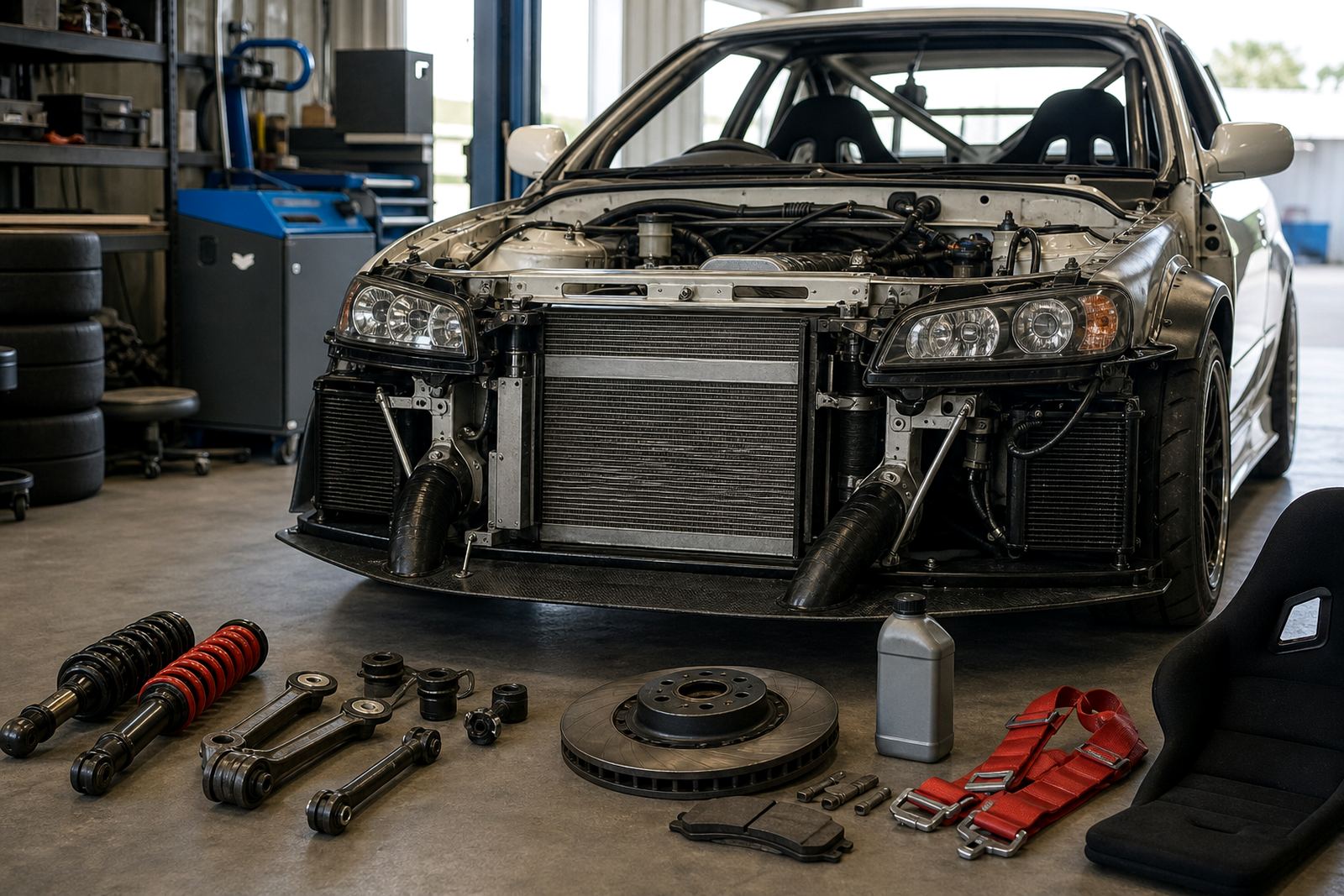
We start with the parts that carry heat away from the engine, gearbox area and turbo or induction side where relevant. The check covers radiator mounting points, hose length and bend radius, fan shrouds where fitted, bleed points, hose clamps, thermostat housing area, and the path air takes through the nose, core and exit area. On cars running oil coolers, we look at core placement, ducting, stone damage and whether the cooler is stealing air from the main radiator instead of helping it.
In practical terms, that means looking for soft hoses, hose rub marks, split ends, crushed fins, poor bracket spacing and any sign that the system is fighting itself. A tidy install can still run hot if the air path is blocked or the cooler sits in dead air behind a bumper beam, intercooler or number board. We check the whole route, not only the shiny parts.
- Radiator position and clearance to bodywork, fans and bonnet lines
- Coolant hose routing, clamp security and contact points
- Oil cooler placement, airflow path and protection from debris
- Signs of leakage, fin damage, chafing or trapped air
The way we do the check in our workshop
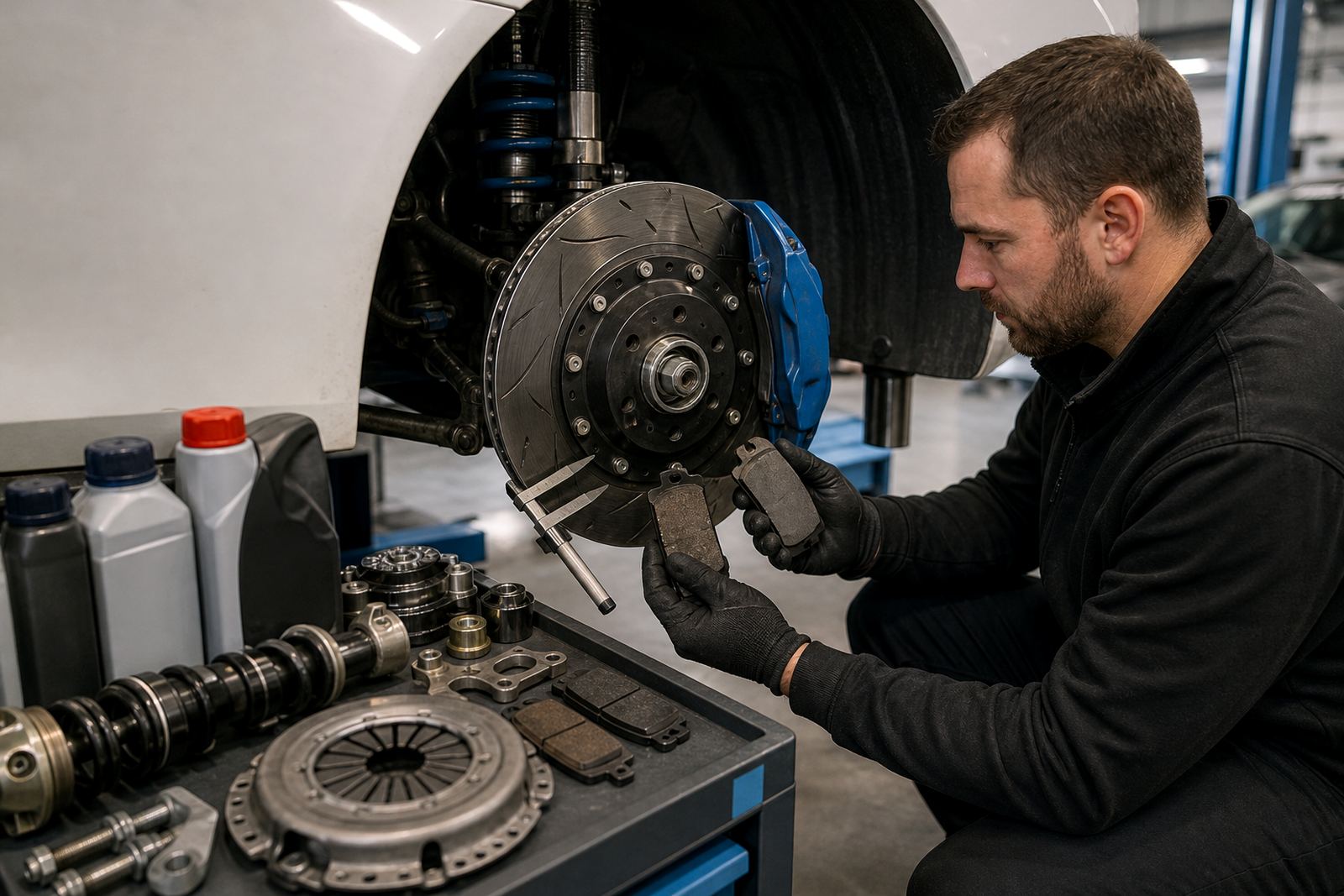
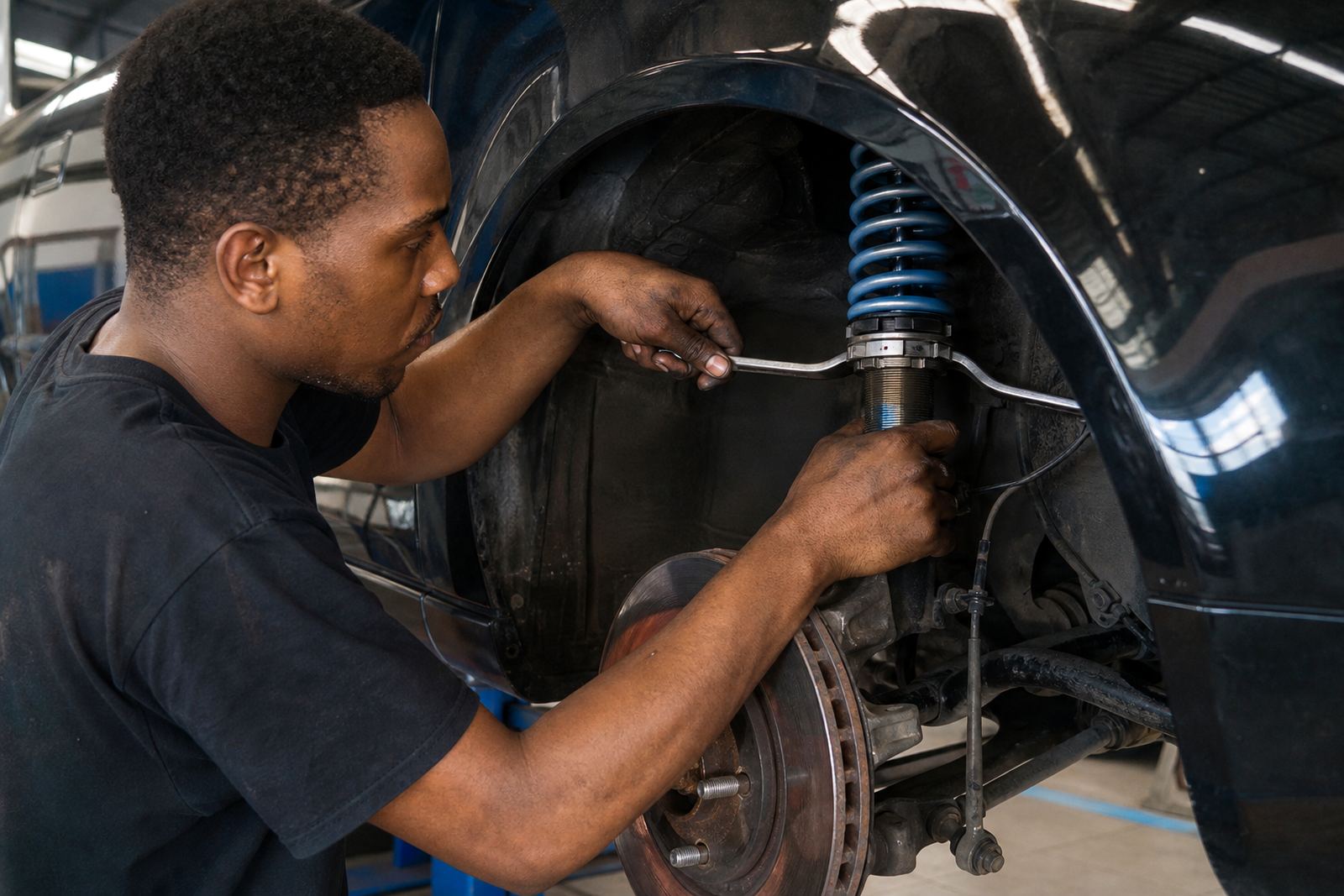
The process is hands-on and car specific. We begin with a visual inspection, then move to pressure related checks where the setup allows it. Hoses are traced from end to end so the routing matches the car’s layout, not just the way the bay happened to close on the day of install. If the car has been through kerb strikes, gravel or transport vibration, we also look at bracket fatigue and loose fixings.
When the setup calls for it, we assess whether the radiator and oil cooler are supported well enough for motorsport use. A light road car bracket can flex badly once the car sees repeated braking, vibration and heat cycles. We also look at the front opening and sealing around the core support because a radiator can be large enough on paper and still perform poorly if the air escapes around it.
- Inspect fitment, sealing and fastener security
- Check hose routing against heat sources and moving parts
- Review core exposure and outlet space for air exit
- Note any parts that need relocation, trimming or rework
Setup notes for track, rally and club racing cars
Different disciplines place different demands on the system. Track cars usually want strong low-speed airflow and clean air exit once the speed picks up. Rally cars need extra protection from mud, stones and repeated shock loads, with hose routing that survives rough roads and service stops. Club racing builds often need a practical compromise, where the car keeps its road manners but no longer cooks the coolant on a hot session in Gauteng weather.
We watch the small figures that count. Hose bore, core thickness, fan coverage and coolant volume all influence temperature control. A thicker core is not always better if the car cannot move enough air through it. In some layouts, a well guided 25 mm to 40 mm oil cooler and a correctly sealed radiator package do more for stability than a bigger part forced into a poor position.
- Track cars: airflow efficiency and heat soak management
- Rally cars: mounting security, debris protection and hose durability
- Club racers: dependable packaging with sensible service access
What you receive after the inspection
You leave with a practical summary of the cooling system’s condition and the points that need attention before the next session or event. Where the car is already set up well, the feedback confirms what is working and what should stay in place. Where changes are needed, we note the items that will give the best gain first, instead of filling the job sheet with unnecessary parts.
That summary may include suggestions for hose rerouting, revised bracket angles, better fan coverage, ducting changes, or a stronger route for the oil cooler lines. If the car needs additional work, the next step can be handled in our workshop with the right mix of fitment and practical setup advice. The aim is to leave no guesswork around coolant temperature, oil temperature and airflow direction.
- Clear notes on fitment, airflow and hose routing
- Prioritised action list for the next workshop step
- Advice on parts sizing and mounting geometry
Timing, pricing and how the work is booked
Turnaround depends on the car, the access to the cooling package and whether the system needs a basic inspection or a deeper strip and refit. A straightforward check is quicker than a car that needs front-end parts moved out of the way. If a hose reroute, bracket remake or cooler repositioning is required, we treat that as extra workshop time rather than forcing it into a rushed pass.
Pricing follows the work required, not a fixed guess. We look at the number of components to inspect, whether pressure testing is needed, how much disassembly is involved and whether the car needs fitting work after the assessment. That approach keeps the cost aligned with the actual job on the car. To book, send the car model, how it is raced and any cooling problem you have noticed.
- Basic inspection for clear fitment checks and visual fault finding
- Extended assessment when the bay needs strip access or rework
- Workshop pricing based on labour, access and parts handled
Aftercare for the next session and the next season
After the check, we help you keep an eye on the parts that matter most. If the car has a known hot spot, we can note where to watch for marks, movement or seepage after track use. That is useful on cars that run harder in winter or that see hotter ambient conditions in Gauteng, Durban or coastal areas where humidity and heat can show weaknesses fast.
For ongoing race prep, the cooling system should be reviewed alongside brake temperatures, tyre wear and engine bay packaging. A small hose rub today can become a cracked line after a few sessions, and a weak mount can turn into a core leak after transport vibration. We keep the advice grounded in the way the car is actually used, not in general workshop talk.
- Watch for fresh marks, damp joints and loose mounts after use
- Recheck airflow blocking items after bodywork changes
- Include cooling in the broader race prep routine
Key facts
| Service area | Checked in Midrand, parts couriered to Durban, Cape Town and Gqeberha |
|---|---|
| Core focus | Radiator fitment, hose routing and oil cooler airflow paths |
| Typical parts reviewed | Radiators, hoses, clamps, fans, oil coolers, brackets and ducting |
| Common use cases | Track, rally and club racing cars |
| Inspection outputs | Fitment notes, airflow notes and prioritised next steps |
| Booking method | Online enquiry with the car details |