Layout work that starts with the cell, not the guesswork
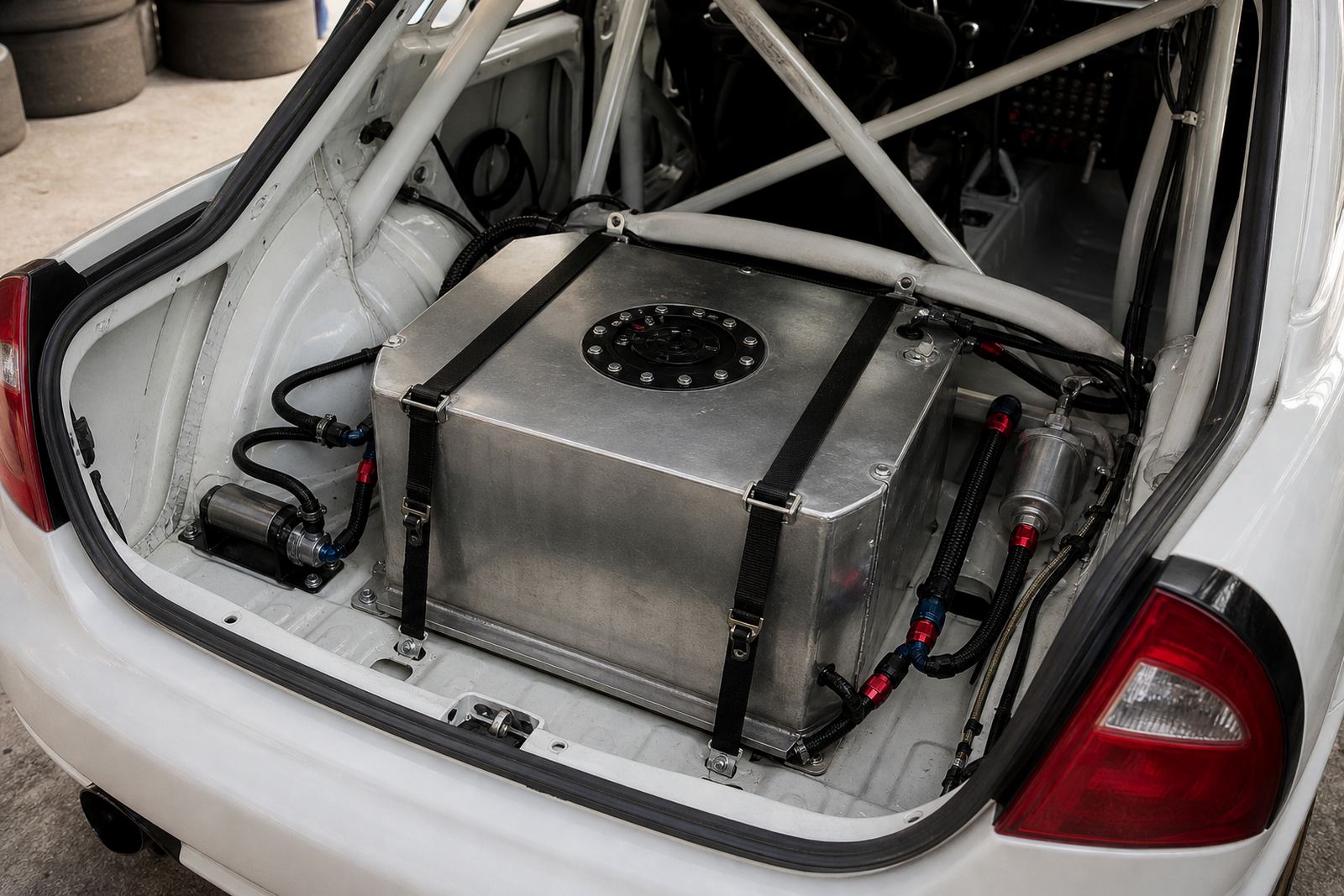
A proper fuel system layout begins with the fuel cell or tank position, the line run, and the way the pump will feed under hard cornering and heavy braking. In Midrand we set out the route so the lines do not rub on sharp panels, suspension movement or heat sources, and so the filter, pump and regulator stay reachable without stripping half the car.
For club cars, rally shells and track builds, we look at the full path from pickup to rail or carburettor feed. That includes hose size, clamp choice, bulkhead points, grommets, heat shielding and where the service loop sits for later inspection.
- Fuel cell placement and mount checks
- Feed and return line routing
- Pump and filter positioning
- Protection near exhaust and moving parts
- Access for inspection and cleaning
What we include in the fuel system plan
The service covers the practical pieces that make a fuel system easier to live with on race day. We map where the pumps, pre-filter, main filter, regulator and any surge device will sit, then work out the safest line path from the cell to the engine bay or rear setup. Where the car needs serviceable access, we allow for clamps and mounting points that can be reached without tearing into trim or panels.
We also check how the layout handles vibration and fuel slosh. On a car that sees curbs, rough roads or long stints, a tidy line run matters just as much as the parts themselves.
- Fuel cell and pump mounting advice
- Filter placement for easy cleaning
- Return line routing on injection setups
- Line sizing guidance by engine demand
- Heat and abrasion protection
Specs we work to on a real build
Every chassis is different, but the layout still needs practical boundaries. We look at common line sizes, hose construction and clearances against heat and suspension travel, then match the design to the car's use. A tidy layout is not only about looks, it helps keep the system serviceable when the car is on stands or back in the workshop.
For motorsport use, we pay attention to hose type, fittings, vent routing and the position of each component relative to the floor, wheel wells and cabin bulkheads. If the car carries a fuel cell, the mounting and vent path must suit the shell, not force the shell to suit the parts.
- Typical line sizes: 6 mm to 10 mm on many builds
- Hose routing kept clear of exhaust heat and sharp edges
- Filtered pickup and main filtration planned separately
- Service access left at pump, filter and regulator points
- Mounts checked for movement, vibration and splash exposure
- Bulkhead passes sealed where lines cross cabin or boot space
How the job runs in the workshop
We begin with the car, the use case and the parts already on hand. A circuit car with a rear cell and electric pump does not get the same route as a gravel car with a compact bay and limited rear space. Once the layout is agreed, the route is measured, marked and checked against the chassis before any final fastening takes place.
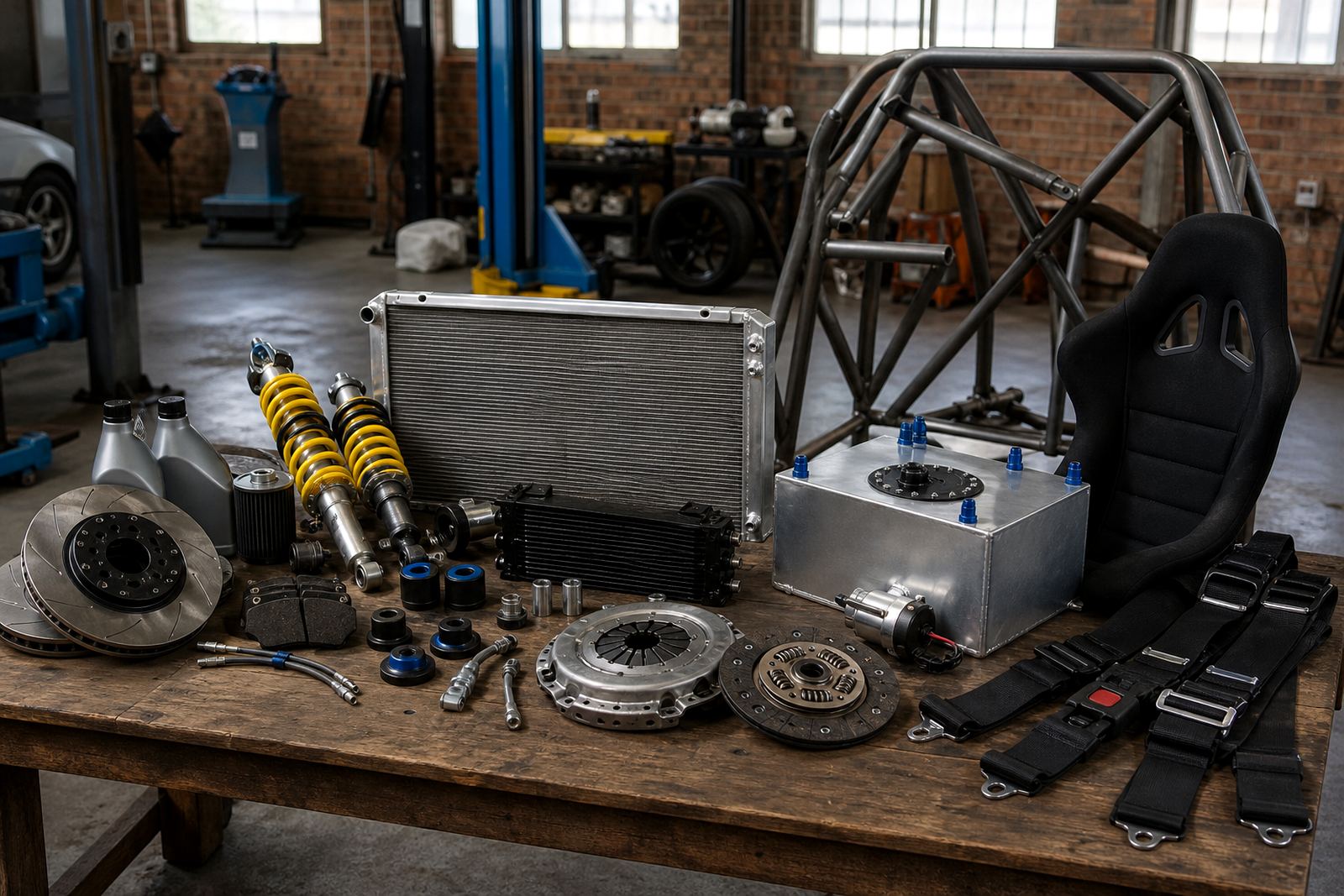
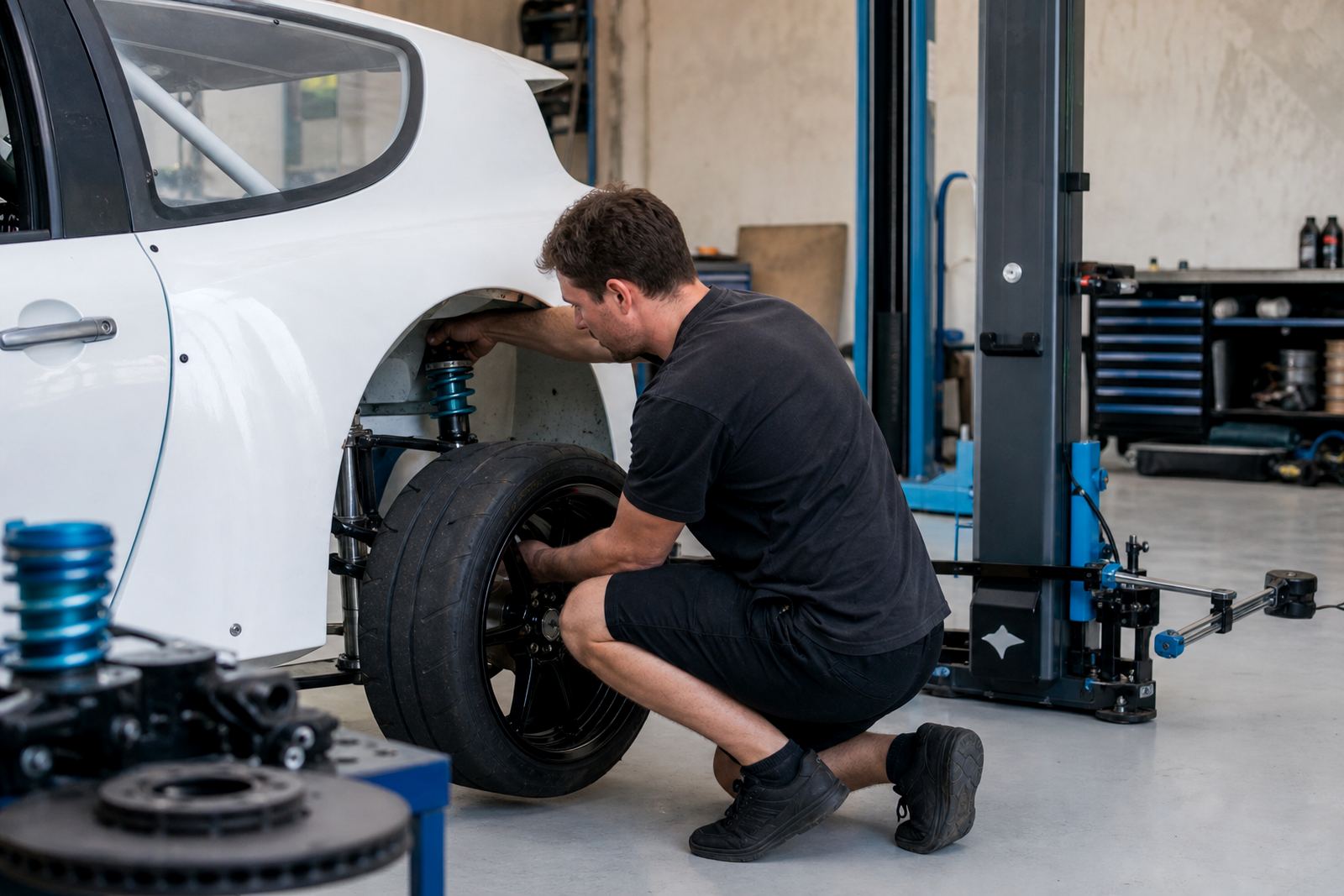
Where useful, we can fold the layout work into other setup jobs such as clutch and shift work, cooling checks or corner weighting. That helps keep the car on one plan, not a stack of separate fixes that fight each other.
- Initial check of current routing and parts
- Layout discussion around the car's use
- Measurement, marking and fitment plan
- Final check for clearance and access
- Setup notes for the next stage of work
Turnaround, pricing and what affects the quote
Turnaround depends on how much of the system is already in place, whether parts need re-positioning and whether fabrication is needed for mounts or shields. A straightforward routing update is different from a full cell, pump and filter redesign, so the work is priced around the actual layout and the hardware involved.
Pricing follows the scope of the job rather than a flat guess. We look at line lengths, fittings, mounts, labour for access panels or brackets, and any extra work needed to make the system safe and serviceable. If the car needs several changes at once, we group the work so the budget reflects the full plan.
- Price depends on parts already fitted
- Fabrication and bracket work affect cost
- Line type and fitting count shape the quote
- Complex access adds labour time
- Combined setup jobs can reduce repeat stripping
Aftercare for cars that see real use
Once the layout is in place, we go over the fasteners, hose runs and access points with the driver or team. The aim is to make the system easier to inspect before a race day and easier to service after a heat cycle, especially on cars that are driven hard in Gauteng heat or on longer coastal events.
We can also point out what to watch for if the car starts showing fuel starvation, pump noise or a filter that is harder to reach than it should be. A good layout should make those checks plain, not turn them into a strip-down job.
- Walk-through of mounted parts and line routing
- Notes on access to pump, filter and regulator
- Checks for rubbing, heat soak and loosened fittings
- Advice for future removal or component change
- Fitment notes kept for workshop reference
Key facts
| Service area | Midrand, Johannesburg, Pretoria, Kyalami, Centurion, Durban, Cape Town, Port Elizabeth |
|---|---|
| Typical parts covered | Fuel cells, pumps, filters, regulators, lines and fittings |
| Line sizing guidance | Common motorsport layouts from 6 mm to 10 mm |
| Use cases | Track, rally and club racing cars |
| Work focus | Routing, access, heat protection and serviceability |
| Related setup work | Clutch and shift setup, cooling checks, track setup days |