

Pedal feel that makes sense on track
Brake bleeding is not only about moving old fluid out of the system. It is about restoring a firm, predictable pedal after heat cycling, pad changes, a caliper swap or a fresh line installation. On track cars and rally cars, a spongy pedal can hide air in the lines, moisture in the fluid, or a tired master cylinder seal that is starting to struggle under pressure.
We handle brake bleeding for cars running motorsport pads, stainless braided lines, twin or single master cylinder layouts, and systems with ABS modules where access is a bit awkward. The aim is a clean pedal trace, correct pressure at each corner, and a brake feel that gives the driver a better read on the car under hard braking and trail braking.
- Brake fluid replacement with motorsport-grade fluid where required
- Air removal from calipers, lines, master cylinders and bleed points
- Pedal feel checks before and after the bleed
- Basic inspection of leaks, cracked hoses and loose fittings
What the bleed service covers in the workshop
A proper bleed starts with the hardware already on the car. We check the reservoir, the bleed screws, line routing and the condition of the calipers. If fluid has darkened or picked up moisture, we drain it down and replace it. If the car has been standing after a race meeting, we also look for seepage around unions and flexible lines, because small leaks make a big difference once the brakes get hot.
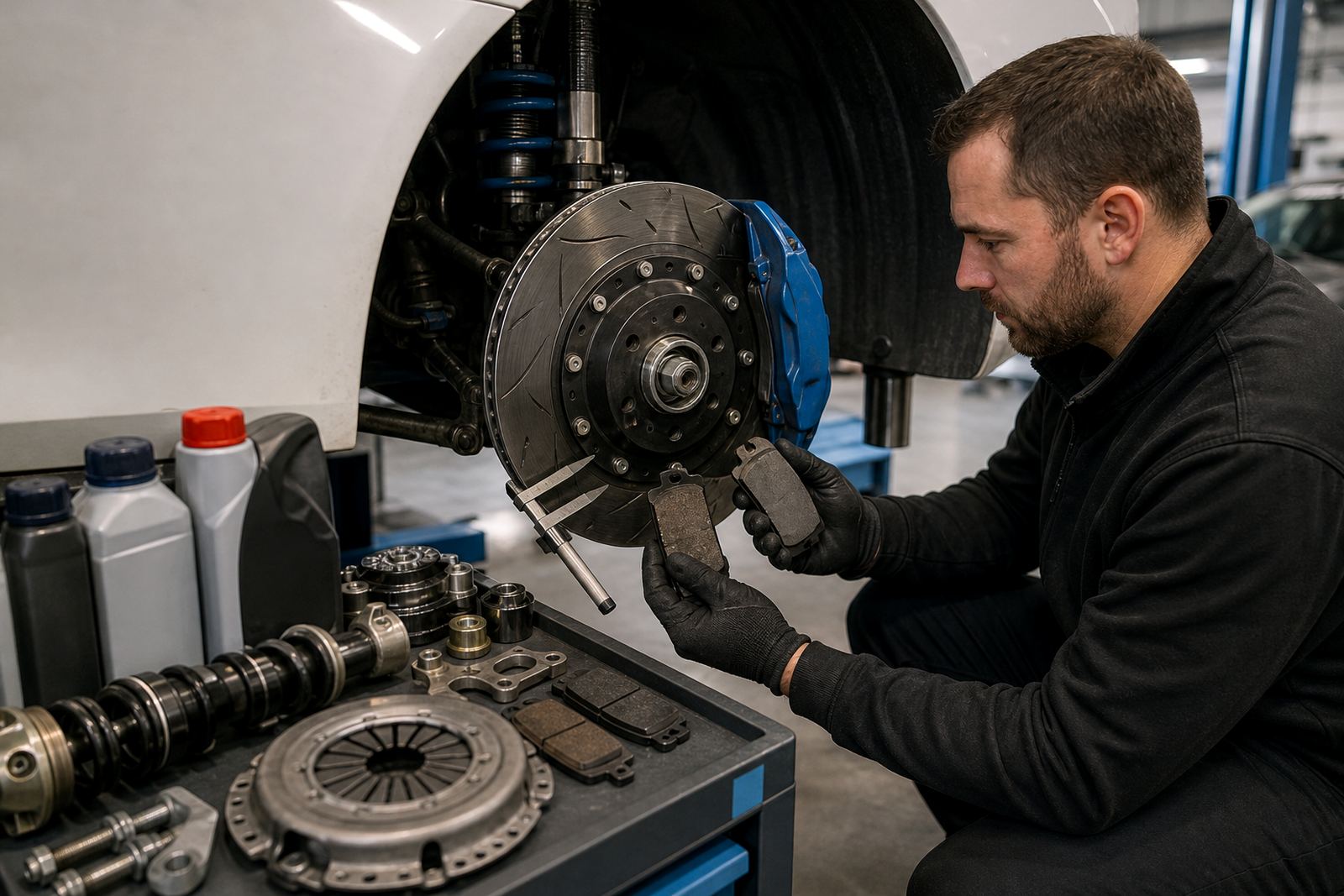
Where the system allows it, we work the bleed in the right order for the layout. That can mean starting at the farthest corner and moving in, or following the sequence needed for a split system, bias valve or racing pedal box. If the car has a firm pedal but poor bite, we may suggest checking pad compound, disc condition or the master cylinder pushrod setting at the same visit.
- Fluid flush on conventional and motorsport brake systems
- Manual or pressure-assisted bleeding where appropriate
- Inspection of caliper seals and bleed nipples
- Advice on fluid grade for heat load and use pattern
How we approach the job from start to finish
Each brake bleeding job begins with a quick look at how the car is used. A circuit car that sees repeated hard stops needs different attention from a club racer that only sees a handful of events a season. We note the brake fluid type already in the system, the presence of ABS, and whether the driver is chasing a shorter pedal travel or just a cleaner, more consistent pedal.
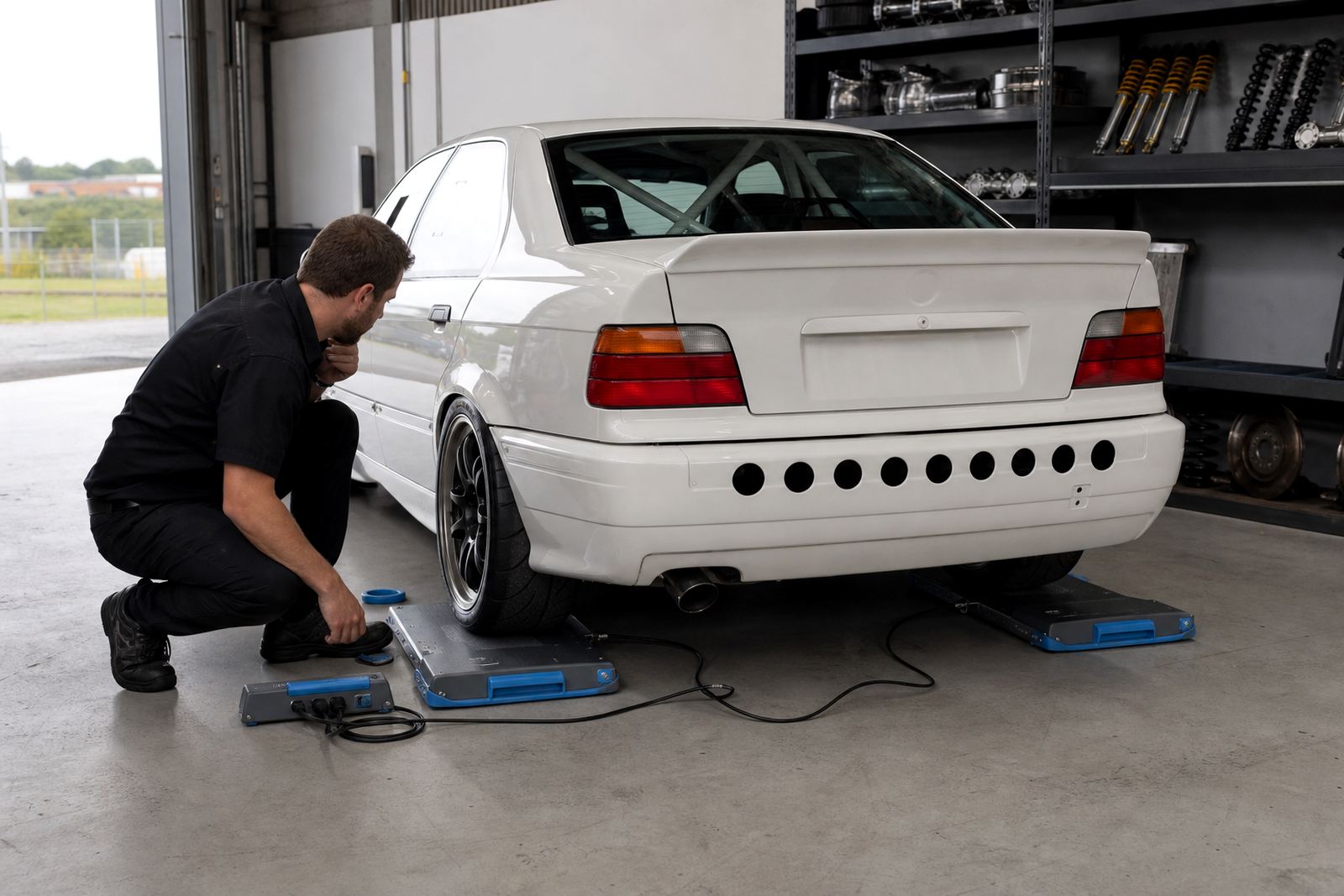
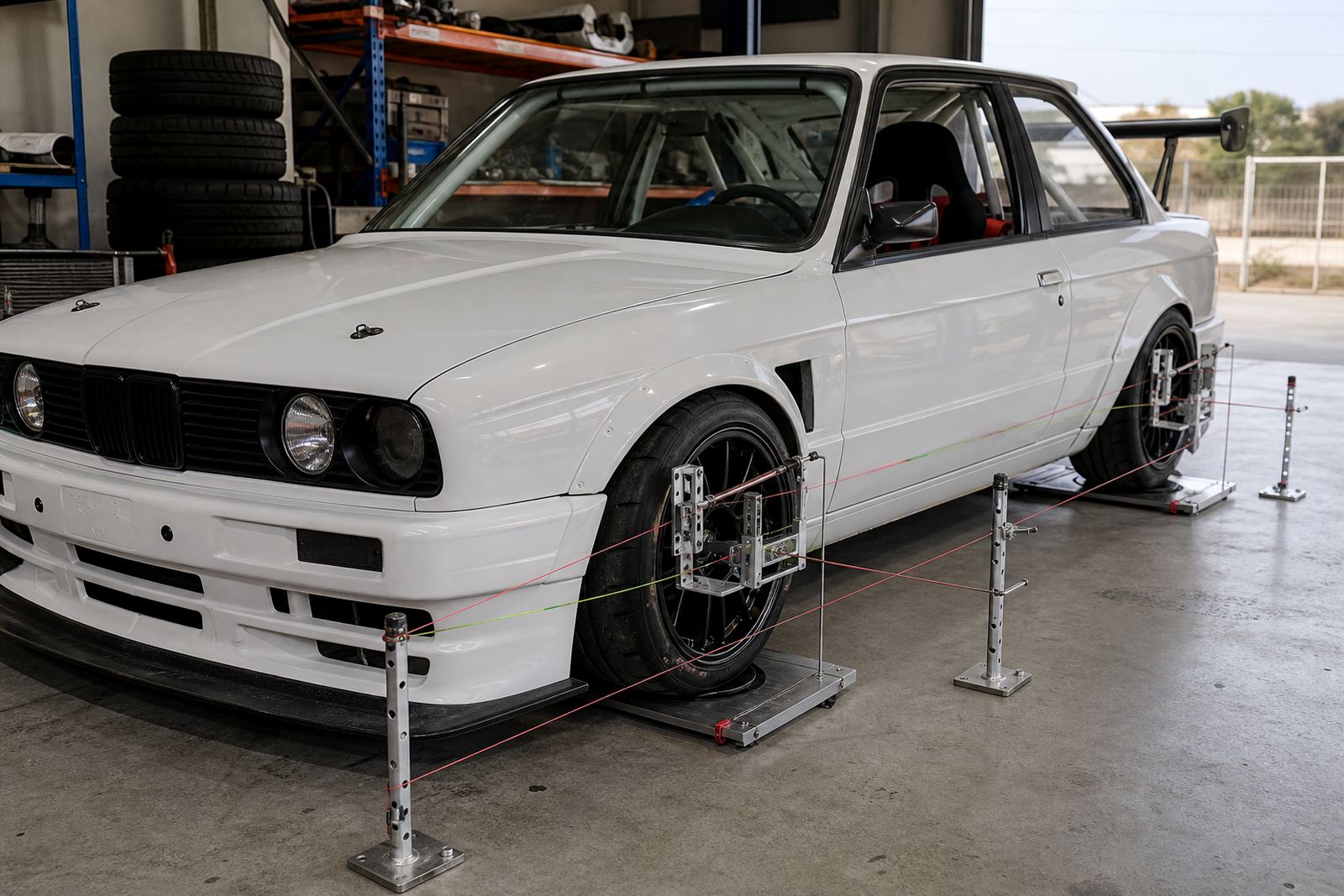
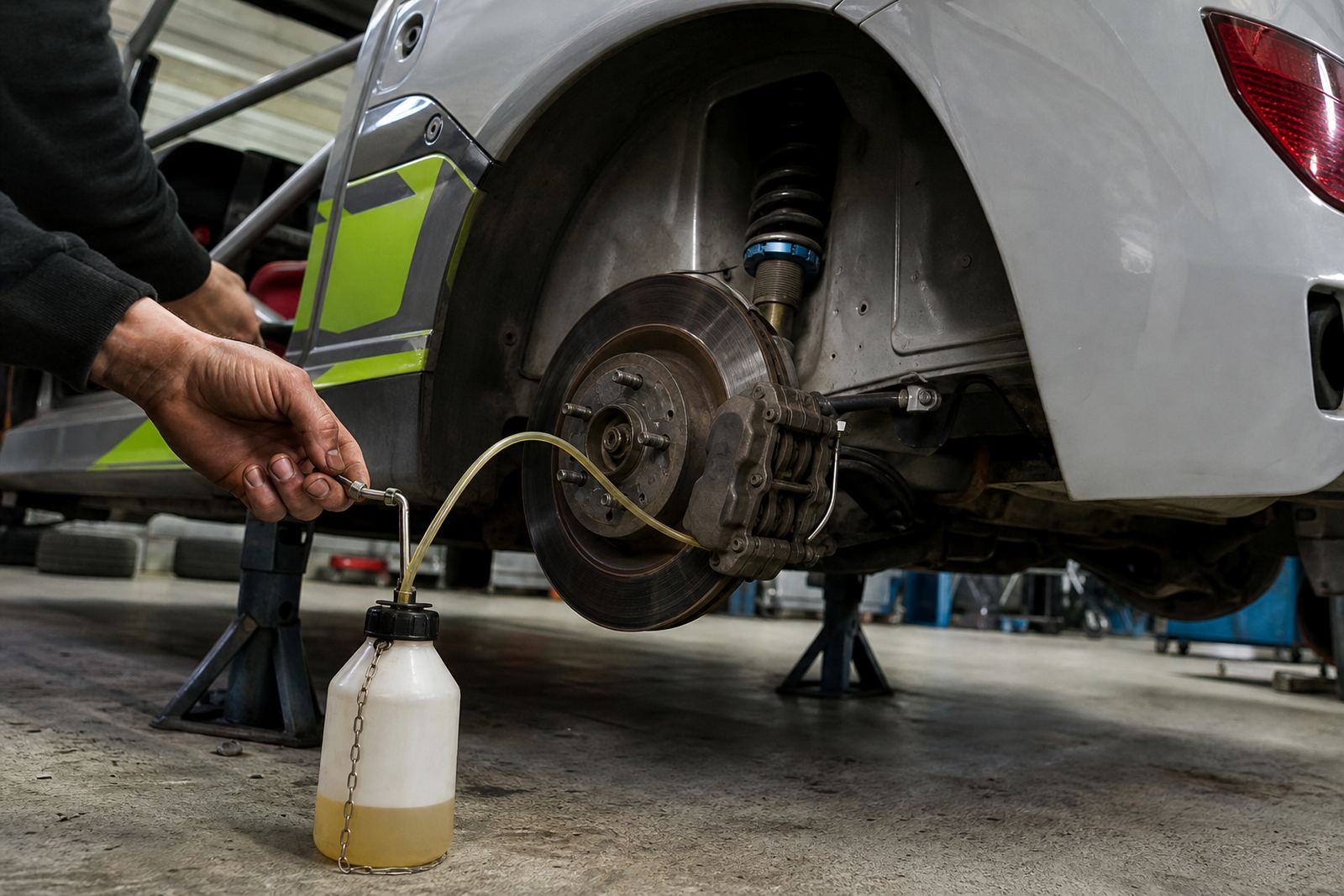
The process is practical. We lift the car if needed, open the bleed points in a controlled order, and keep an eye on fluid colour and bubbles as they clear. After the system is closed, we test pedal firmness and look for any uneven feel side to side. If the car is in for other work, such as coilover setup, alignment checks or corner weighting, we coordinate the brake bleed with those jobs so the driving setup is not thrown off by a loose pedal or a low fluid level.
- Inspect the system and confirm the brake layout
- Drain old fluid and clear trapped air
- Refill with the specified brake fluid
- Check pedal pressure, leaks and bite at the pedal
Workshop timing and what changes it
Brake bleeding is usually a focused workshop job, but the actual time depends on the system on the car. A straightforward road-based motorsport build is easier to clear than a car with multiple bleed points, racing calipers, long line runs or an ABS unit that needs a careful sequence. If a bleed screw is damaged, seized or rounded, that adds another layer of work before the car is ready to drive.
Cars booked in for setup days may be handled as part of a bigger preparation list, especially when the driver wants the braking feel matched to suspension and tyre changes. We can also work around event prep in Midrand for customers coming from Johannesburg, Pretoria, Kyalami, Centurion, Durban, Cape Town or Port Elizabeth. The point is not to rush a brake system just to get the car out the door. The pedal has to feel right when the driver leans on it for the first braking zone.
Pricing shaped by the system on the car
Pricing depends on the brake layout, the fluid required, and whether the car needs a standard bleed or extra fault-finding. A simple bleed on a neat system is not priced the same as a motorsport car with high-temp fluid, hard-to-reach bleed points, or a brake issue that needs diagnosis before the bleed can even begin.
When we quote, we look at the number of corners, the type of calipers, whether the system needs a full flush, and whether any seals, hoses or fittings need attention. If the car is part of a bigger service block, the brake bleeding can be grouped with brake upgrade planning, seat positioning, harness fitment checks or clutch and shift setup, which keeps the preparation in one place instead of turning it into several short stops.
- Standard bleed for a healthy system
- Full fluid flush where the old fluid has broken down
- Extra labour where bleed screws or fittings need careful handling
- Special fluid selection for track heat and repeated braking
Aftercare after the pedal feels right
Once the brake system has been bled, we do not leave the driver guessing. We give a plain handover on pedal feel, fluid level checks and signs that point to trapped air or a small leak. If the brake pedal starts to sink, the bite changes suddenly, or one corner feels different under repeated stops, it needs attention before the next hard run.
For cars that see regular track or rally use, we also talk through the signs of fluid fatigue and heat stress, especially where the car runs larger pads, more aggressive discs or repeated high-speed stops. Clean brake work is not just about the first outing after the bleed. It is about keeping the system honest after a few sessions, a tow to another province, or a hot day at Kyalami or Killarney-type conditions.
- Check fluid level before each event
- Watch for seepage at calipers and unions
- Recheck pedal feel after pad or tyre changes
- Report any long travel or uneven braking straight away
Key facts
| Service area | Midrand and drivers across South Africa |
|---|---|
| Vehicle types | Track, rally and club racing cars |
| Core task | Fluid bleed and pedal feel restoration |
| Related systems | ABS, master cylinders, calipers and brake lines |
| Fluid options | Motorsport-grade brake fluid where specified |
| Related services | Brake upgrade planning, setup days and alignment checks |