

What our alignment check covers on a race car
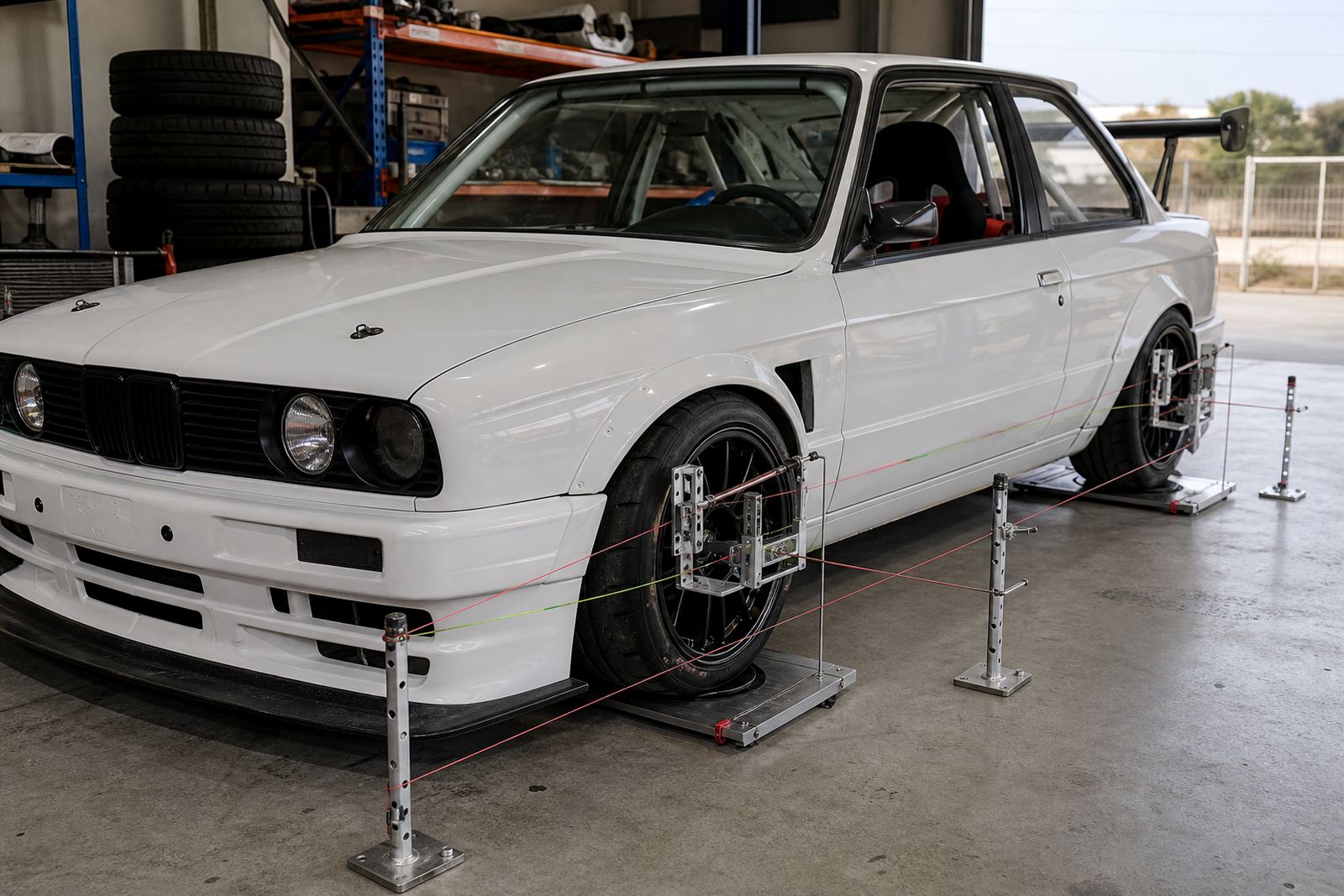
An alignment check is more than a quick look at wheel angle. We measure camber, toe and steering-centre position, then look at how those settings sit with the car’s suspension, bush condition and tyre choice. On a race car, a small change can alter entry grip, mid-corner stability and the way the rear follows the front through fast direction changes.
The check is suitable for cars used at Kyalami, local track days, rally stages and club events, especially where kerb use, rough surfaces or transport damage can knock settings out. We can also flag issues that sit outside alignment, such as loose ball joints, worn tie-rod ends or tired bushes that make readings shift under load.
- Camber readings on all four wheels
- Toe-in and toe-out checks front and rear
- Steering-wheel centre and rack position review
- Basic suspension and bush condition observation
- Tyre wear pattern discussion after the measurements
The way we do the check in our workshop
The car is placed on level ground and set up so the suspension can settle properly. We inspect ride height, tyre pressures and any obvious damage before taking readings. If the car has been on stands or has just arrived after transport, we allow for that in the process because a light car can show a false setting if the suspension is still hanging.
From there we record the current numbers and compare left to right. We also check whether the steering wheel sits centred when the rack is in its natural position. On competition cars, that matters because a wheel that is off-centre can hide a toe difference and make the driver fight the car through a long session.
If adjustment is needed, we work through the relevant points on the car and recheck the figures after each change. For some cars that means front toe only, for others it means camber and toe together, especially where coilovers, adjustable top mounts or altered ride heights have already changed the geometry.
Settings that usually get discussed after the readings
There is no single alignment spec that suits every racing car. A front-wheel-drive hatch used for sprint racing will usually ask for a different setting to a rear-wheel-drive sedan, and a rally car on loose gravel needs a different compromise to a circuit car on smooth tarmac. We work from the car’s layout, tyre size and event use, then discuss the numbers in practical terms.
- More negative camber can help the outer tyre work harder in cornering
- A touch of toe-out at the front can sharpen initial turn-in
- Straight rear toe settings often help the car stay calmer under power
- Too much toe can scrub speed and wear tyres unevenly
- Steering-centre correction helps the car feel balanced in a straight line
We keep the conversation tied to the way the driver actually uses the car, not to a single fixed formula. If the car needs a compromise for both road transit and track duty, we say so and set the numbers with that in mind.
Lead times, pricing and quote factors
Alignment checks are priced according to the work involved, because not every car arrives in the same condition. A simple inspection and report takes less than a car that needs seized adjusters freed, damaged components identified or repeat readings after setup changes. Cars with aftermarket suspension, altered ride height or worn parts often need more time at the stand.
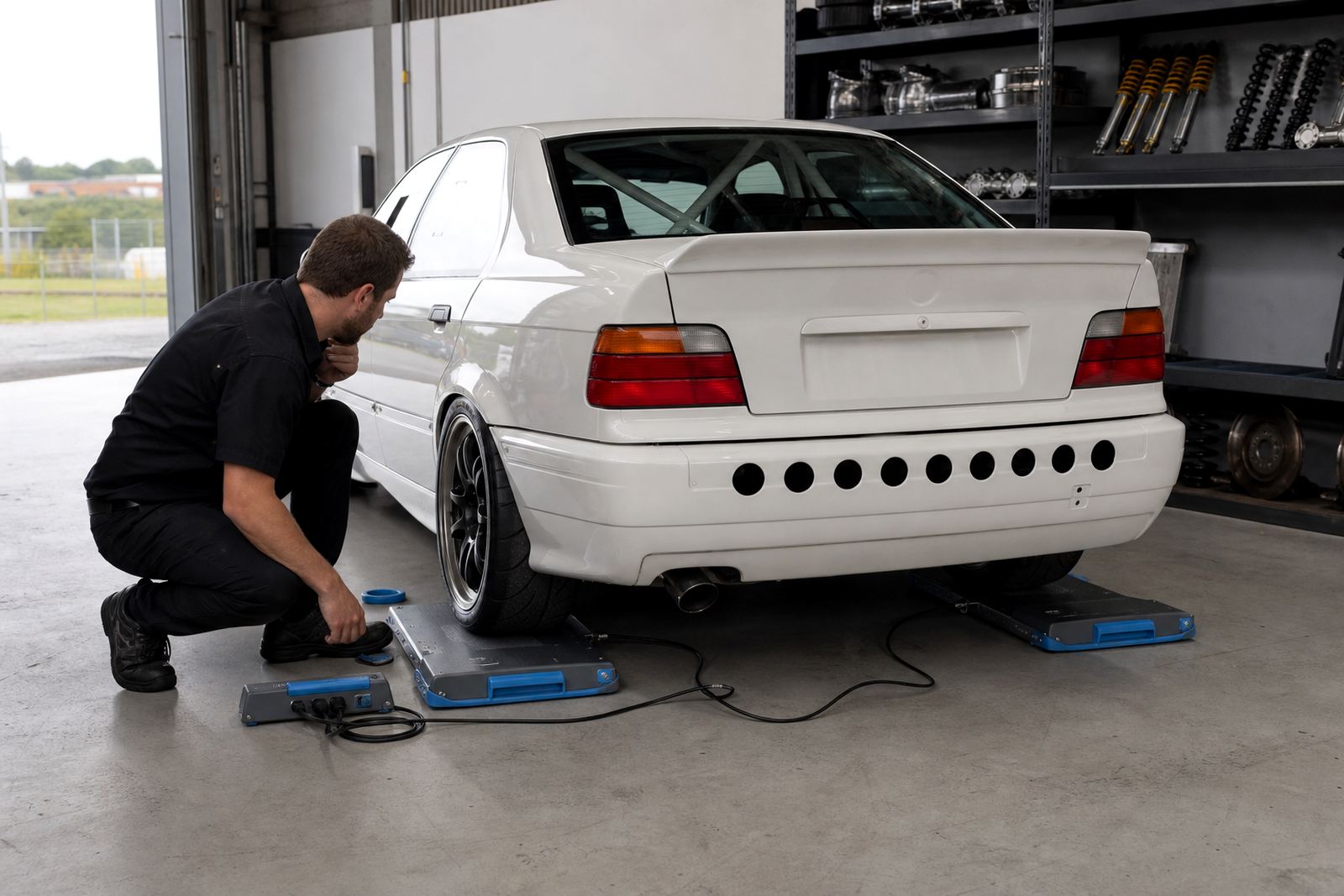
The quote approach is straightforward: we look at the vehicle, the current suspension hardware and the level of adjustment required, then price the check around that. If the car needs only a reading and advice, that is treated differently from a car that needs adjustment across both axles. For a race car, that distinction matters, because proper time at the corner-weight pads or alignment rack can save tyre life and improve predictability.
We do not load extra work into the job. If the best next step is a bush replacement, tie-rod service or a suspension refresh before final settings are held, we say so before any follow-up work is booked.
Aftercare that helps the car stay consistent
Once the settings are set, the driver still needs to know what to watch for. A car that changes character after a kerb hit, a transport trip or a suspension repair may need a recheck. New tyres can also change the feel of the car, especially if the previous set was heavily worn on the inside or outside shoulders.
We note the numbers we measured and the direction of any adjustment made, so the car can be compared later if the handling changes. That record helps when a driver is chasing a push on turn-in, rear movement on throttle or a wheel that no longer sits straight on the road section between events.
- Keep a note of the final camber and toe settings
- Watch for steering pull after kerb strikes or hard transport loading
- Check tyre shoulders after the first few sessions
- Report any new vibration, wobble or uneven wear before the next event
Midrand support for racers across Gauteng and beyond
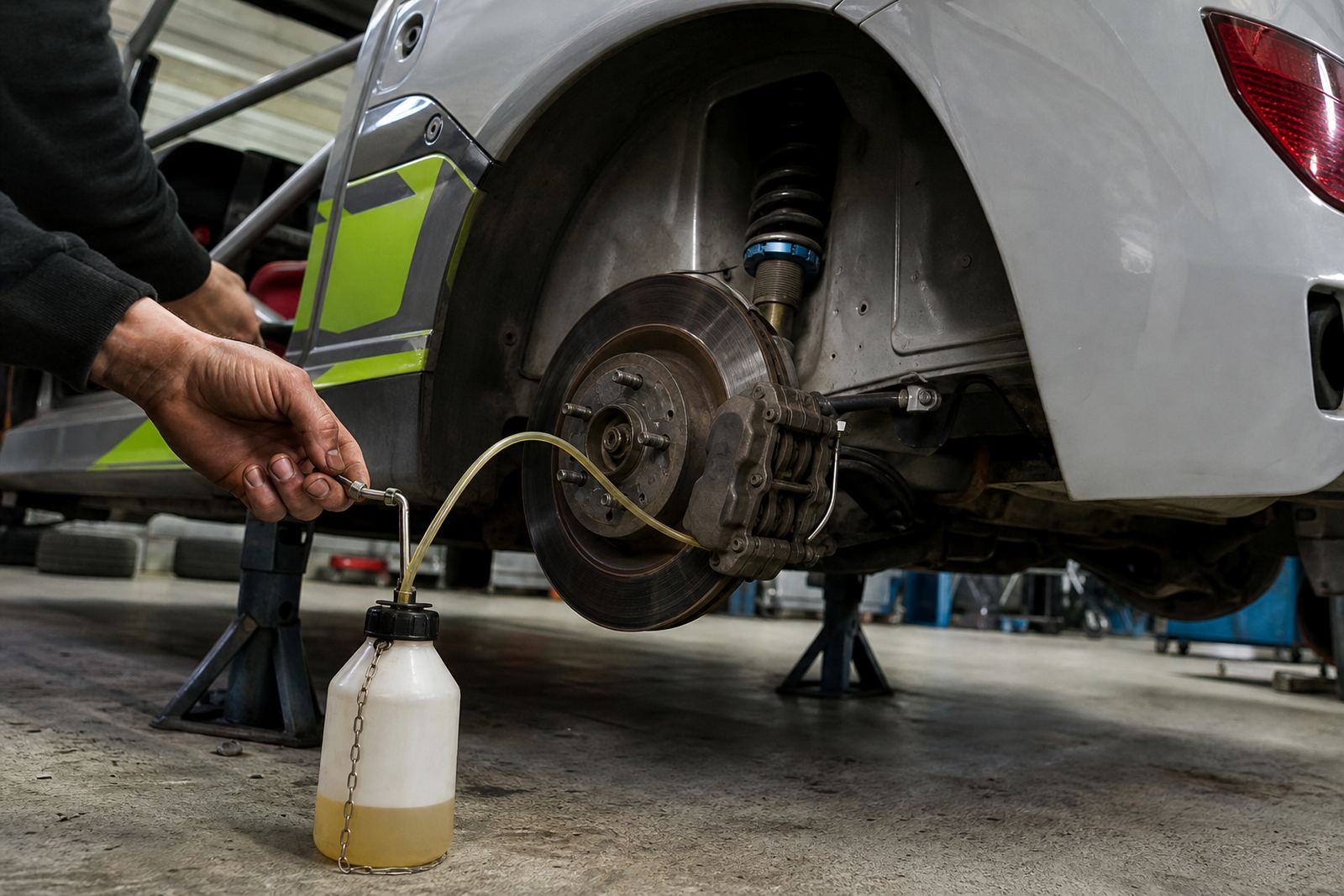
Our Midrand base works with drivers from Johannesburg, Pretoria, Centurion, Kyalami, Durban, Cape Town and Port Elizabeth. Some cars arrive for a quick alignment check after suspension changes, while others are booked in after brake, clutch or cooling upgrades so the full setup can be kept in step. The goal is a car that tracks properly, turns as expected and does not waste tyre life through avoidable toe error.
Alignment work sits naturally alongside coilover setup, corner weighting and brake upgrade planning. When those parts are part of the same build, the numbers make more sense together. A car that sits too low, carries uneven cross-weight or has a tired bush set will never give clean alignment readings for long, so we treat the chassis as a complete system rather than a single measurement point.
If you need the numbers checked before an event or after a suspension change, send the car model, wheel size and the parts already fitted.
Key facts
| Service type | Alignment checks for track, rally and club racing cars |
|---|---|
| Core measurements | Camber, toe and steering-centre position |
| Workshop base | Midrand, Gauteng |
| Areas served | Johannesburg, Pretoria, Kyalami, Centurion, Durban, Cape Town, Port Elizabeth |
| Related services | Coilover Setup, Corner Weighting, Brake Upgrade Planning |
| Typical setup notes | Front and rear axle readings, tyre wear review, adjustment guidance |