
A student car with a serious weekend habit
The car came from Stellenbosch with a clear brief: sharpen the chassis, add safer driver support, and keep the package sensible enough for a young owner running on a budget. It was not about chasing big numbers or building a wild car that only works for one lap. The request was for better confidence under braking, less body roll, and a cockpit that keeps the driver planted when the surface gets rough.
The owner wanted a setup that could handle local club use, some spirited road driving, and the odd trip to a track day without constant fettling. We spent time looking at the way the car sat under load, how the pedals felt on repeated stops, and how much movement there was through the seat and belts. That gave us the first picture of where the real gains would come from.
- Client type: student enthusiast in Stellenbosch
- Use case: track days, club racing and fast road driving
- Main goal: better braking feel and cleaner chassis control
The brief, minus the fluff
The owner asked for brake and suspension work that would suit an entry level motorsport car without turning it into something harsh or awkward. The car already had enough pace for its class, but it needed more repeatability on a hot lap and more clarity through quick direction changes. We also had to work within the limits of a student budget, so every part had to justify its place.
There were a few limits. The car still needed to be usable on the road, the shell was not being cut up for a full race rebuild, and the changes had to fit a practical timeline over a few weeks. That meant choosing parts and settings that could be installed, checked, then refined without stripping the car apart more than once.
- Budget minded, but not bargain hunting for the wrong reasons
- Road usable, with a firmer and more controlled setup
- No full race shell work, only sensible upgrades and setup
Parts and work carried out in Midrand
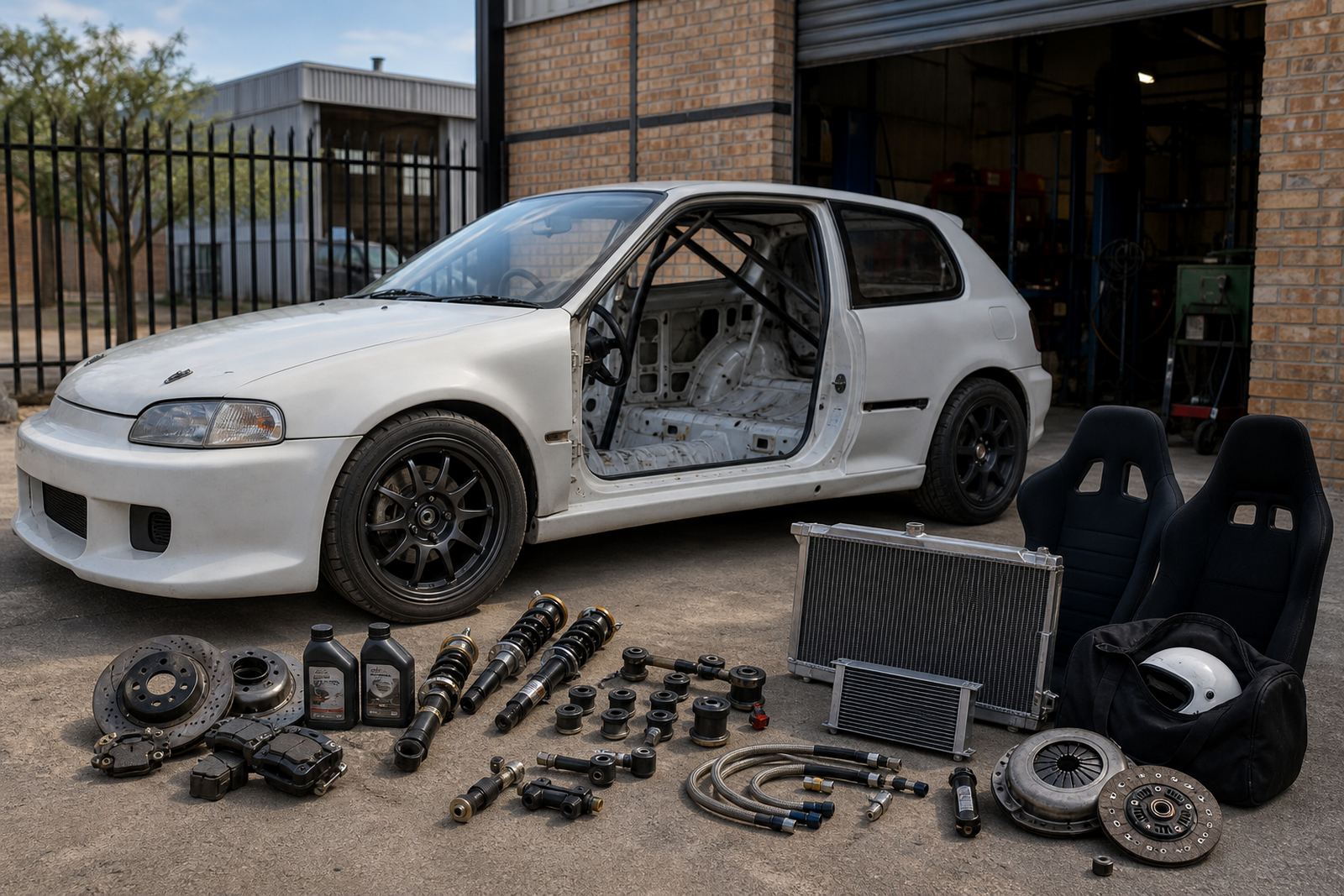
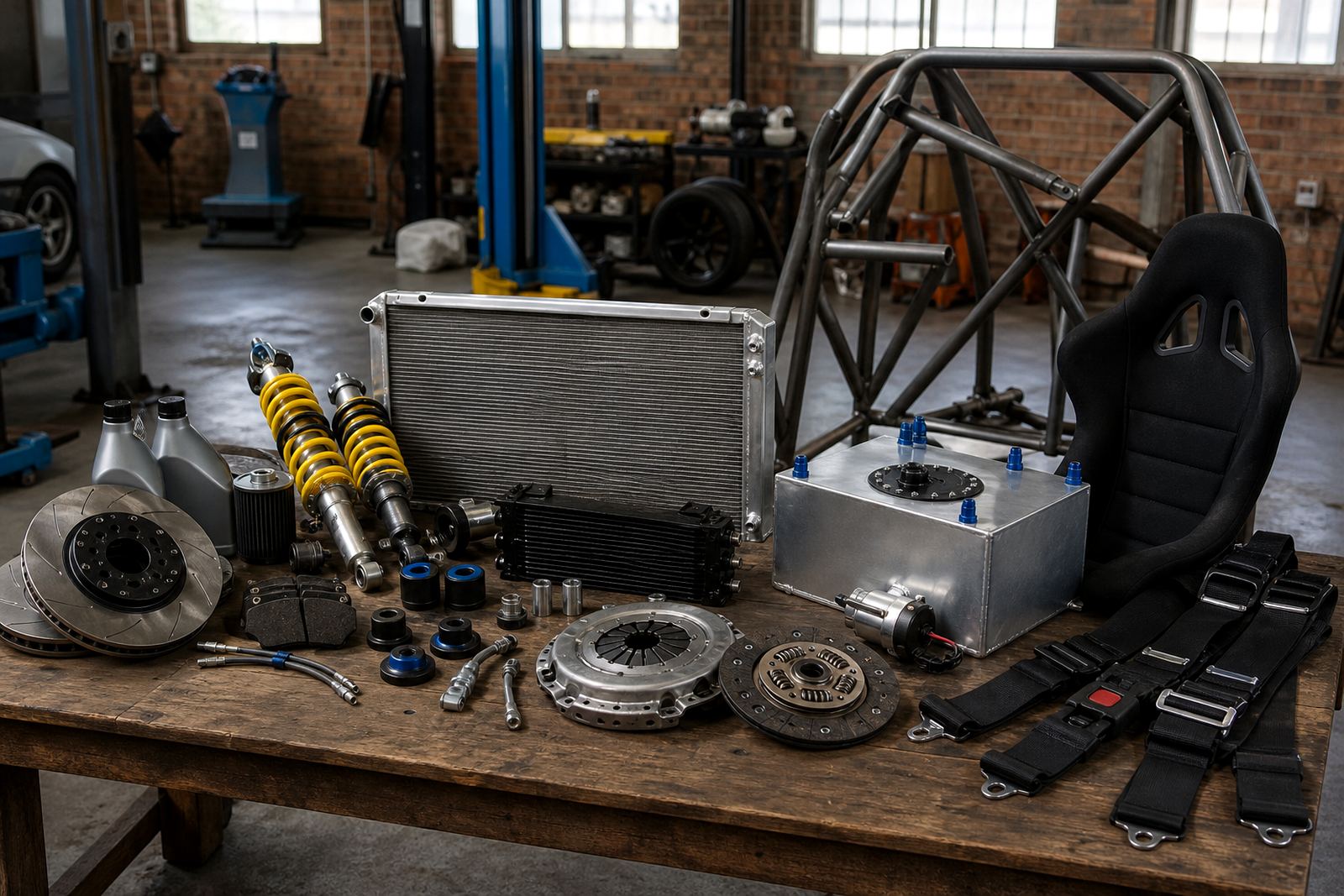
We supplied and fitted a stronger braking package with performance pads, fresh high temperature fluid and a proper bleed. The original stopping feel was softened by heat and age, so the new setup gave a firmer pedal and more stable bite when the brakes were hot. We also checked lines, seals and the general condition of the caliper hardware before setting the car back down.
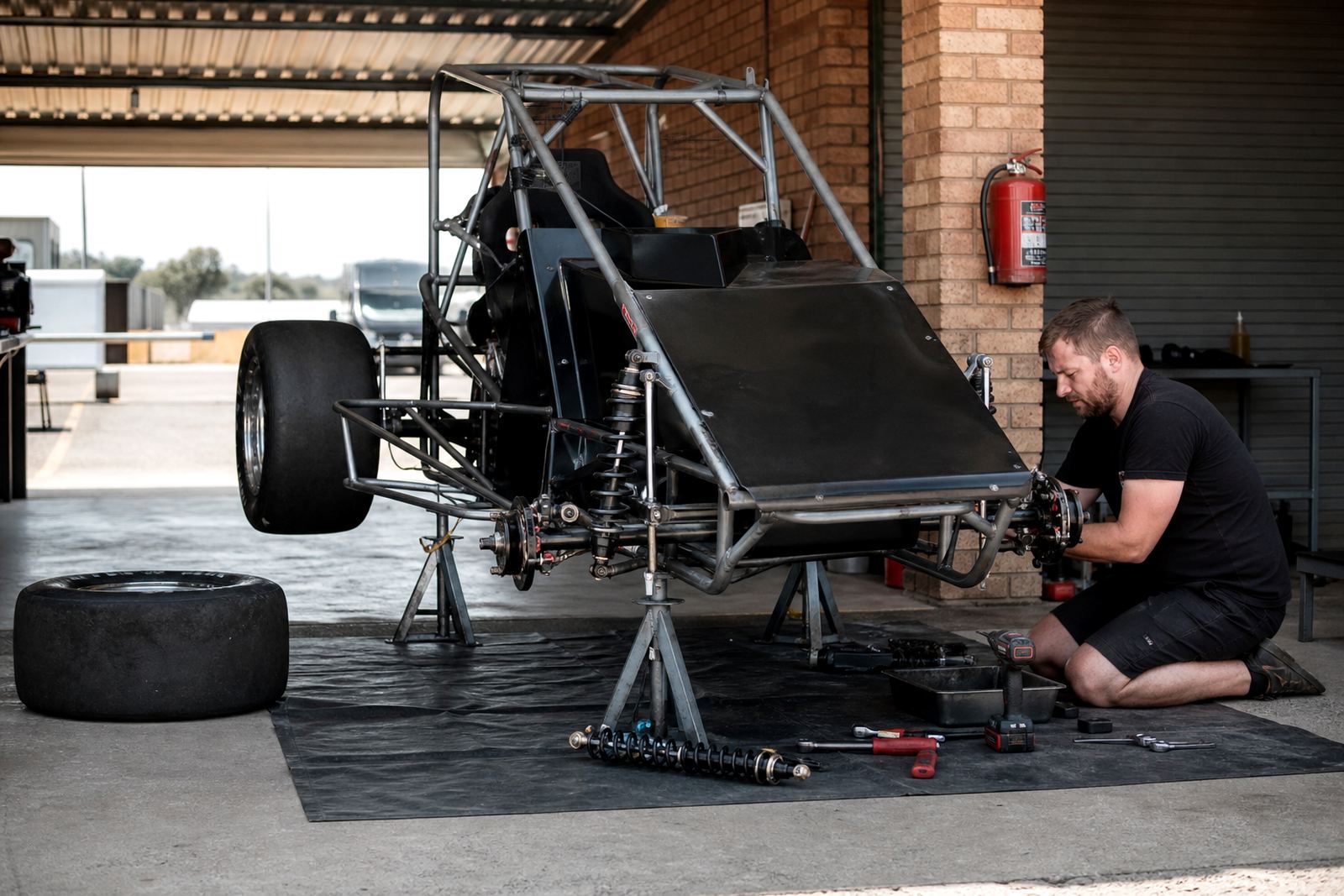
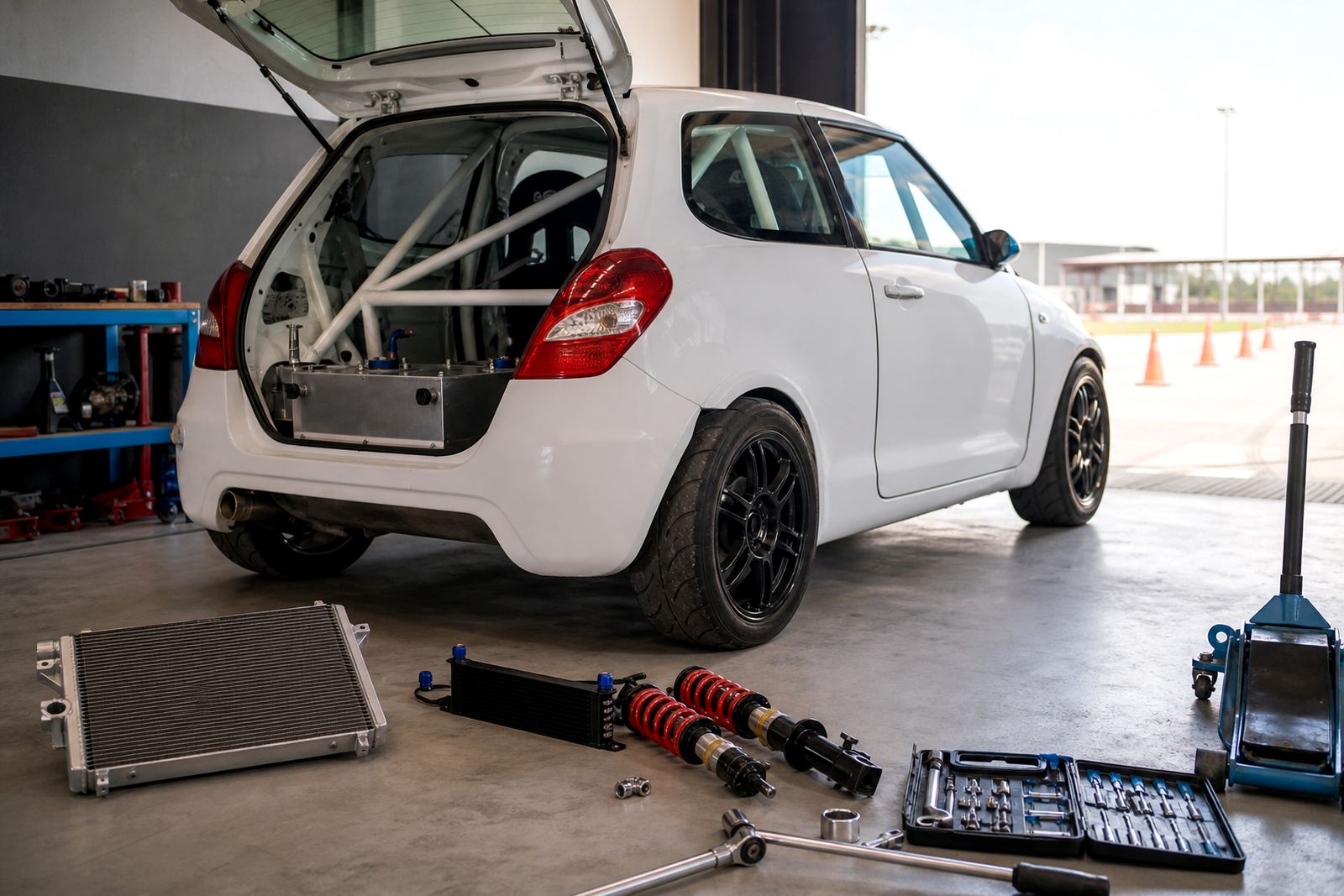
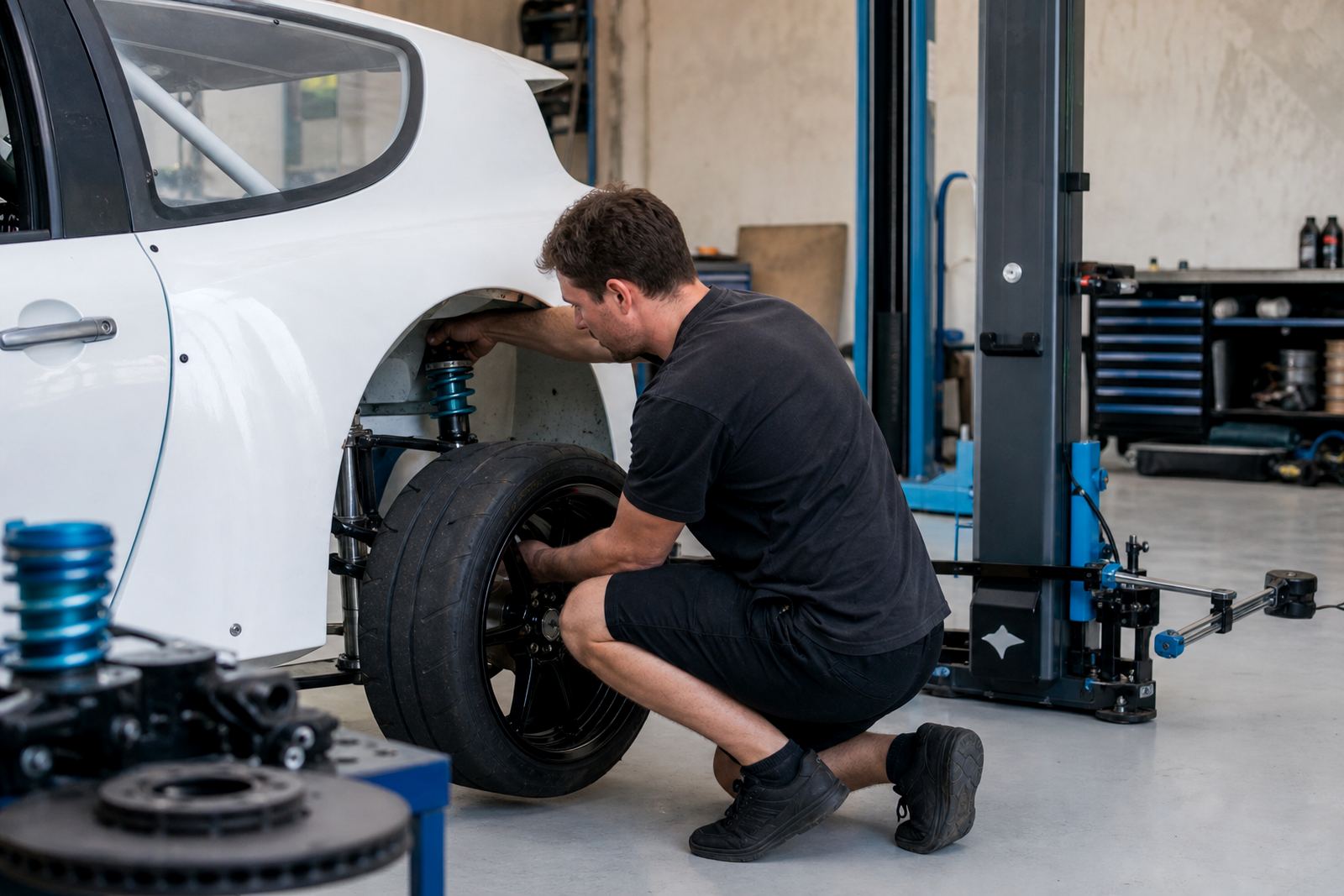
On the suspension side, the car received coilovers matched to the intended use, plus bushes where wear had already started to show. Ride height was set with ground clearance in mind, not just looks, and we worked through alignment checks and corner weighting so the car sat evenly left to right. That made the steering calmer on turn in and reduced the nervous feel that many student builds end up with.
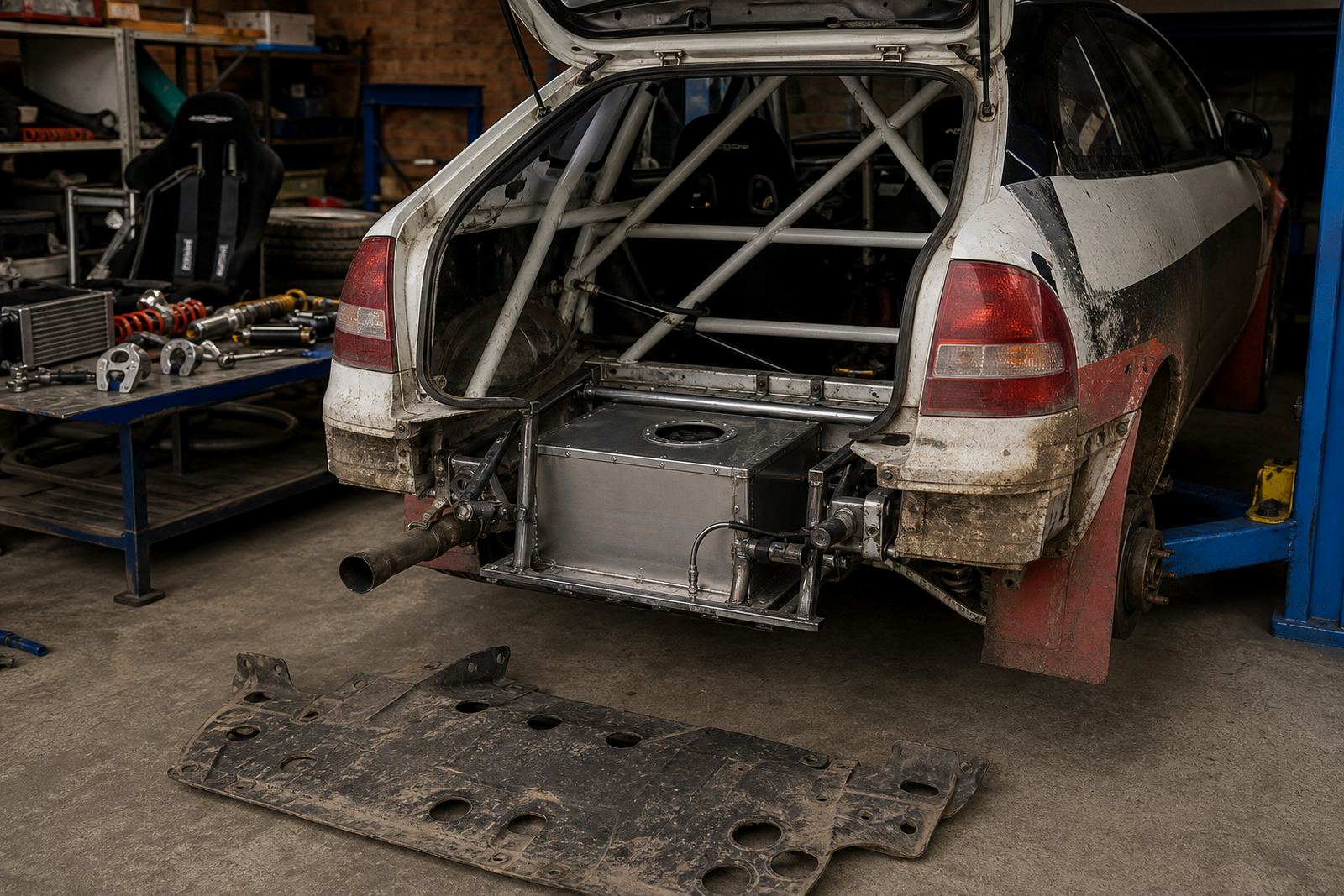
Inside the car, seat positioning and harness fitment checks were part of the job. The seat had to place the driver close enough to the wheel and pedals without forcing an awkward knee angle. We also gave roll cage fit advice for future planning, plus a sensible look at fuel system layout, cooling system checks and clutch and shift setup so the owner could plan the next steps in order, not in panic.
- Brake pads and fresh fluid with a full bleed
- Coilovers set for street and circuit use
- Alignment checks and corner weighting
- Seat position and harness fitment checks
- Cooling, fuel system, clutch and shift planning
Setup days and the small corrections that matter
The work was not finished at fitment. We used setup days to inspect how the car behaved once the parts were on and the driver had a chance to settle into the new position. Small changes in damping, ride height and alignment can alter the whole feel of a car, especially on a light student build where every change is obvious. The point was to make the car predictable, not dramatic.
One round of checks showed that the front end wanted a little more compliance over rough surfaces, while the rear needed a touch more stability under trail braking. The adjustments were not flashy, but they made the car easier to place through longer corners and chicanes. That sort of work is often where a modest build earns its lap time.
- Ride height balanced for circuit use and road clearance
- Damping tuned to calm the car over broken surfaces
- Front and rear balance refined after initial fitting
Timeline in weeks and the result on track
Three weeks passed between the first look at the Stellenbosch car and its last setup run. Week one covered assessment and part selection, week two handled fitting and brake work, and week three was used for alignment, corner weighting and final adjustments. That pace suited the owner because it kept the car moving without rushing the details that affect safety and feel.
By the end, the car was more composed under braking, easier to place into a corner, and less unsettled when weight moved quickly from side to side. The driver could feel the brake pedal stay more consistent, and the seat and harness fit made it easier to focus on driving instead of bracing against the car. For a student enthusiast project, that is the right result: useful, measurable and not overbuilt.
On the longer runs, the cooling and braking checks gave the owner a better idea of what the car would need next season, if the pace keeps climbing. Nothing was pushed beyond the car's limits, and that kept the package honest.
What we’d reuse on another car build
On another build with the same brief, we would start with brakes and seating before chasing extra power. That order keeps the car safer and usually gives the driver more confidence straight away. We would also keep the alignment and corner weighting stage close to the fitting stage, because the car only tells the truth once the suspension is loaded properly.
For a compact track and club car in Stellenbosch, it makes sense to choose parts that can be serviced without drama and can survive wet weather, summer heat and repeated loading. We would keep the same habit of checking the pedal, the seat position and the chassis balance before deciding on any further changes. That is where a sensible build stays useful over time.
Key facts
| Client type | Student enthusiast, Stellenbosch |
|---|---|
| Timeline | 3 weeks |
| Brake package | Performance pads and high temperature brake fluid |
| Suspension package | Coilovers, bushes and alignment checks |
| Setup work | Corner weighting and ride height adjustment |
| Safety and cockpit | Seat positioning, harness fitment checks, roll cage fit advice |