

A Benoni car that needed cleaner hands-on control
The brief came from a Benoni driver running club events and gymkhana sessions on short, technical layouts where every metre matters. The car already had decent pace in a straight line, but it felt lazy on initial turn-in and the brake pedal changed too much when the car was worked hard through back-to-back runs.
The driver wanted a car that would rotate cleanly, stop in a straight line and stay calm when the course got tight. We looked at the whole package rather than chasing one part, because on this kind of layout a small change in ride height, pad choice, alignment or damping can alter the way the car feels in the first three seconds of a run.
- Client type: club racer doing gymkhana and short-course events
- Town: Benoni, Gauteng
- Priority: quick steering response and tidy braking
- Main use: tight cone courses, short sprints and practice days
What had to be kept in check
The car had to remain legal for club use and practical to live with between events, so we did not push it into a stripped-out race-only direction. There was also a real packaging limit under the bonnet and around the wheel arches, which meant cooling, brake clearance and suspension travel all had to work together without rubbing or heat soak becoming a problem.
Benoni roads and venue surfaces can be hard on tyre temperatures and alignment, especially when the run starts with a tight left-right sequence and ends in a hard stop. That made it necessary to check camber, toe and corner balance with care, then set the brakes and cooling package so the car could stay settled after repeated laps.
- Keep enough ground clearance for local roads and paddock movement
- Avoid tyre rub at full lock and under compression
- Preserve brake feel after repeated hot laps
- Improve front-end bite without making the rear nervous
Parts and setup work that changed the feel
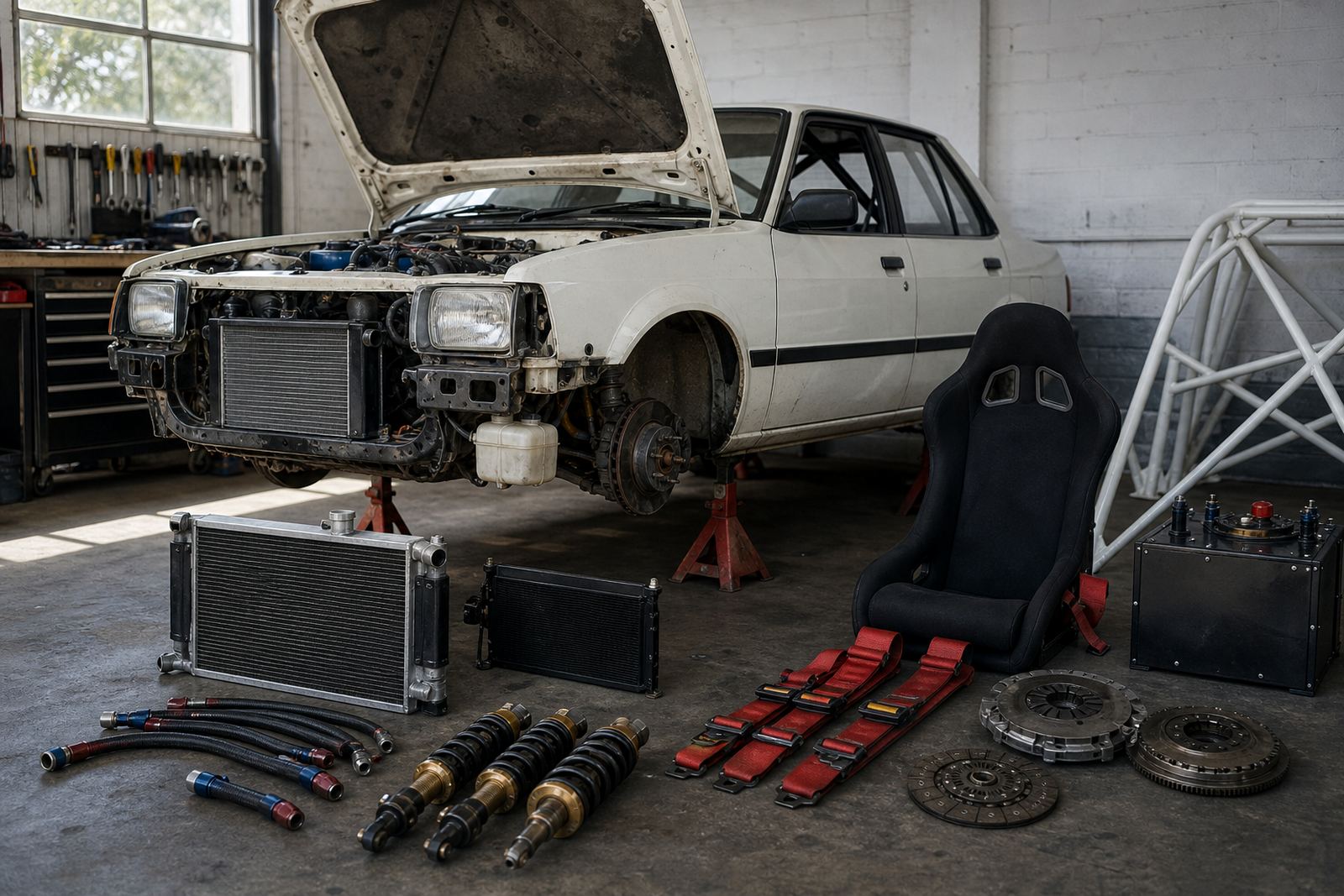
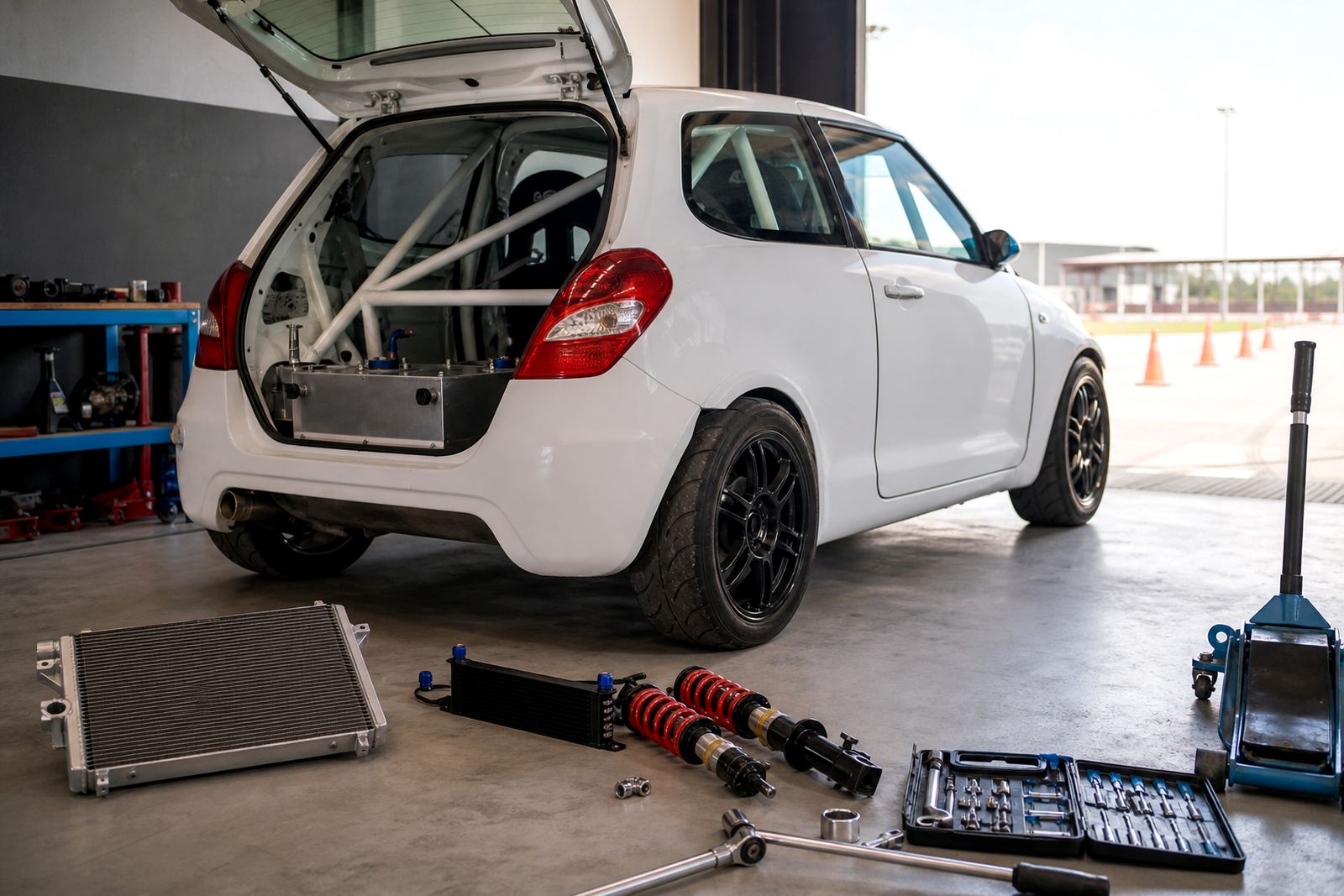
We supplied brake pads with a firmer performance compound, fresh high-temperature fluid, adjustable coilovers, revised bushes, and a cooling package built around a radiator upgrade and oil cooler. The brake side focused on bite and fade control, while the suspension side focused on sharper transient response and more controlled weight transfer into and out of corners.
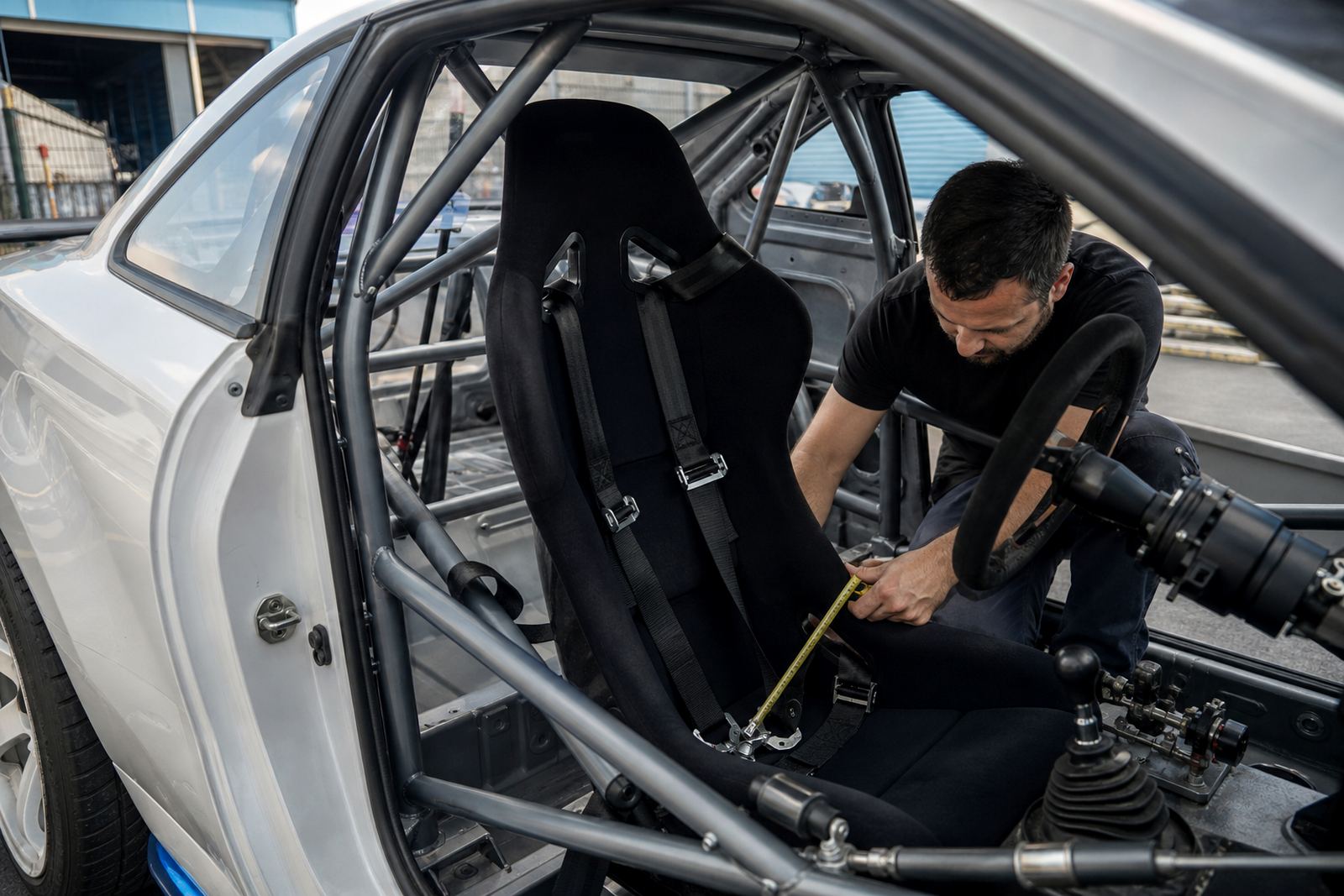
Seat positioning and harness fitment checks were part of the job as well, because the driver needs to sit squarely when the car snaps into a quick transition. If the body moves too much in the seat, the steering inputs get messy and the driver starts fighting the car instead of guiding it.
- Brake pads and fluid selected for repeated hot stops
- Coilovers set for turn-in without harsh bounce
- Fresh bushes to tighten up steering feel
- Radiator and oil cooler checked for airflow and mounting security
- Seat position adjusted for clearer hand and pedal control
- Harness fitment checked for stable driver support
The work on the workshop floor
The build moved through brake prep, suspension setting, alignment checks and corner weighting, then finished with a track-style shakedown to verify the balance. Johan handled the workshop sequence, Morne worked on the suspension side and Lerato checked the technical decisions around brake balance and cooling, while Sibusiso kept the parts flow lined up with the workshop slot.
We did not leave the car with a vague street-style alignment. For gymkhana, the steering needs to start accurately and return cleanly, so we set the toe and camber to favour turn-in and controlled the rear so the car would rotate rather than snap. The brake bleeding was done carefully to remove the soft, uneven pedal feel that often shows up after a car has been pushed hard a few times in a row.
- Brake bleeding with fresh fluid through the system
- Alignment checks after the suspension change
- Corner weighting to reduce cross-pull and lean
- Cooling system checks for hose clearance and secure mounting
- Track setup day used to verify the new balance
Three weeks from first inspection to usable results
The project took three weeks. The first week covered inspection, measurements and parts selection. The second week handled the fitment work and setup changes. The third week was reserved for final checks, road validation and fine-tuning after the driver had felt the car in a proper run.
That sequence mattered because a gymkhana car is judged by the small moments: the first steering input, the first brake squeeze, and the way the chassis settles before the next change of direction. After the work, the car felt neater in tight transitions and less nervous under braking, with a more consistent pedal and a front end that responded without extra delay.
- Week 1: inspection, measurements and planning
- Week 2: fitment, bleeding and suspension setup
- Week 3: validation, small corrections and driver feedback
Similar Benoni build
On a similar car, we would use the same order of work: braking first, then suspension, then alignment and driver position. That order keeps the feedback honest. If the seat position is wrong or the corner weights are off, the driver may blame the brakes or suspension for a problem that starts elsewhere.
The job also showed how important it is to think about heat, not just lap time. Brake fluid, oil temperature and cooling airflow all matter on short courses where there is little time for the car to recover between pushes. For a Benoni gymkhana build, we would repeat the same practical approach: set the car up so the driver can attack the course with confidence and still know what the car will do at the next cone.
- Start with brake feel and heat control
- Set suspension for quick but manageable response
- Check seat and harness position before final fine-tuning
- Verify the balance with a proper run, not only a static check
Key facts
| Project | Benoni Gymkhana Build |
|---|---|
| Client type | Club racer |
| Town | Benoni, Gauteng |
| Timeline | 3 weeks |
| Key focus | Quick steering response and tidy braking |
| Main work | Brake upgrade planning, coilover setup, alignment checks, corner weighting, brake bleeding, cooling checks |
| Parts fitted | Brake pads, brake fluid, coilovers, bushes, radiator, oil cooler |
| Driver fit | Seat positioning and harness fitment checks |