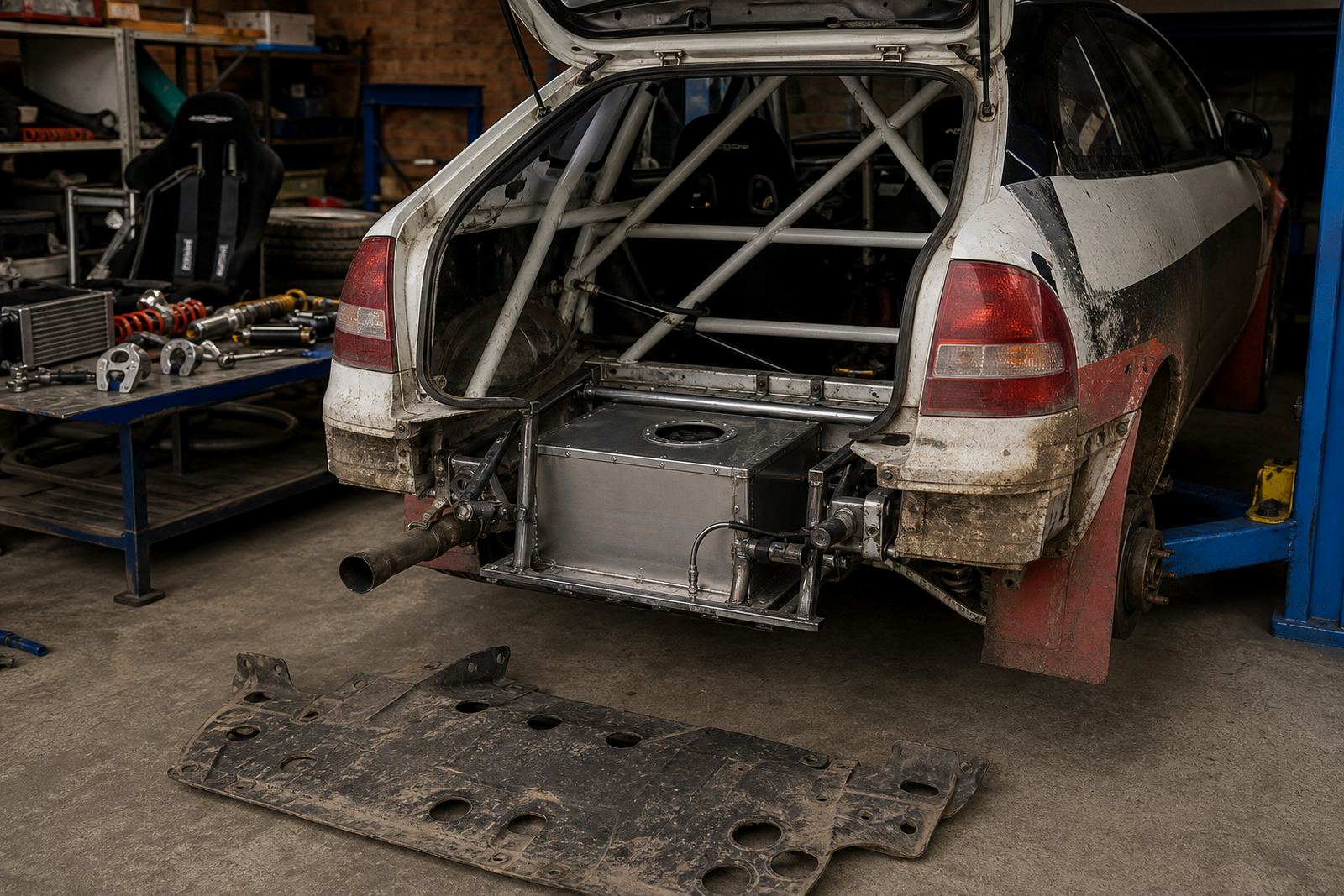


A Club Car That Had To Do More Than One Job
The owner was a Boksburg club racer who wanted a car that could handle track days, club sprints and the odd long weekend of prep without draining the budget. The old setup had mixed wear across the suspension, a brake package that felt fine for short stints but less convincing once temperatures climbed, and cooling parts that made routine checks awkward.
The brief was plain. Keep the car practical, keep the parts easy to inspect, and spend where it mattered most. That meant choosing components that would hold up to repeated heat cycles, kerb strikes and the kind of stop start use that shows up at club level more often than people expect.
- Town: Boksburg
- Build type: club race car with a budget in mind
- Priority areas: bushings, brakes and cooling serviceability
- Use case: track days, club racing and prep work between events
Parts Chosen For Heat, Feel And Easy Checks
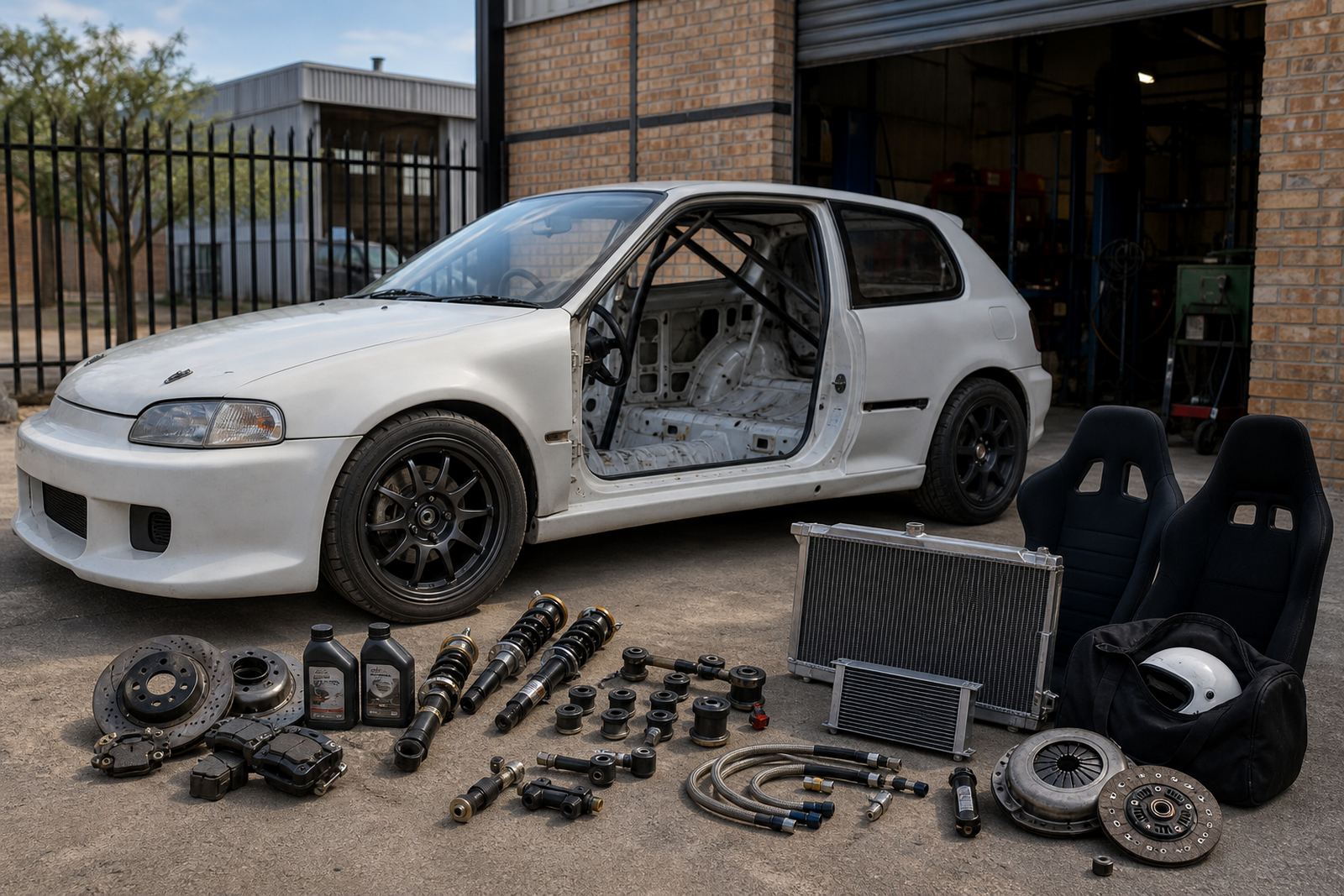
We supplied and fitted a set of performance bushings to replace the tired originals and sharpen the way the car loaded up through corners. On the brake side, the package moved to stronger pads and fresh high-temperature fluid, with the pedal feel and heat control treated as part of the same job rather than separate problems.
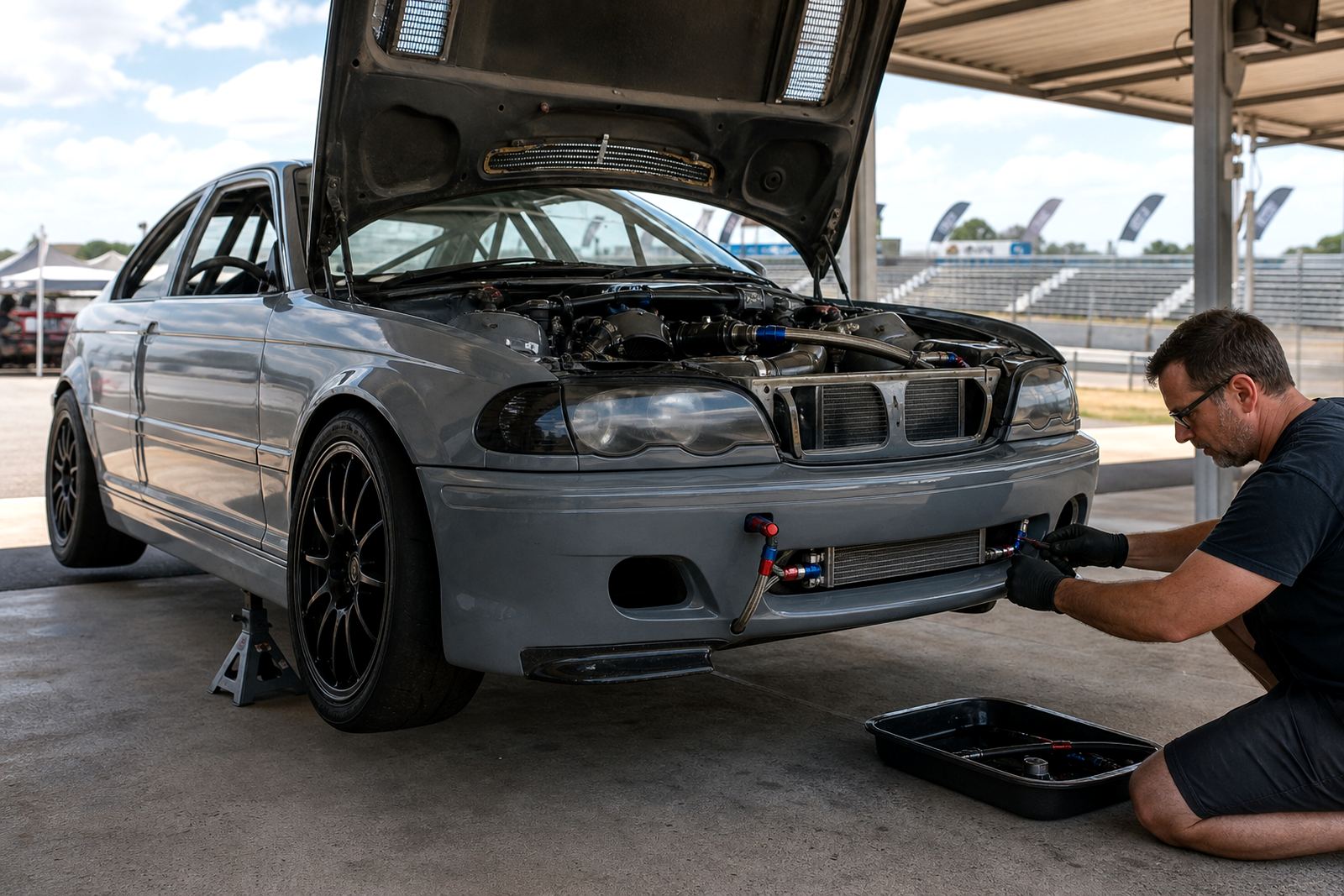
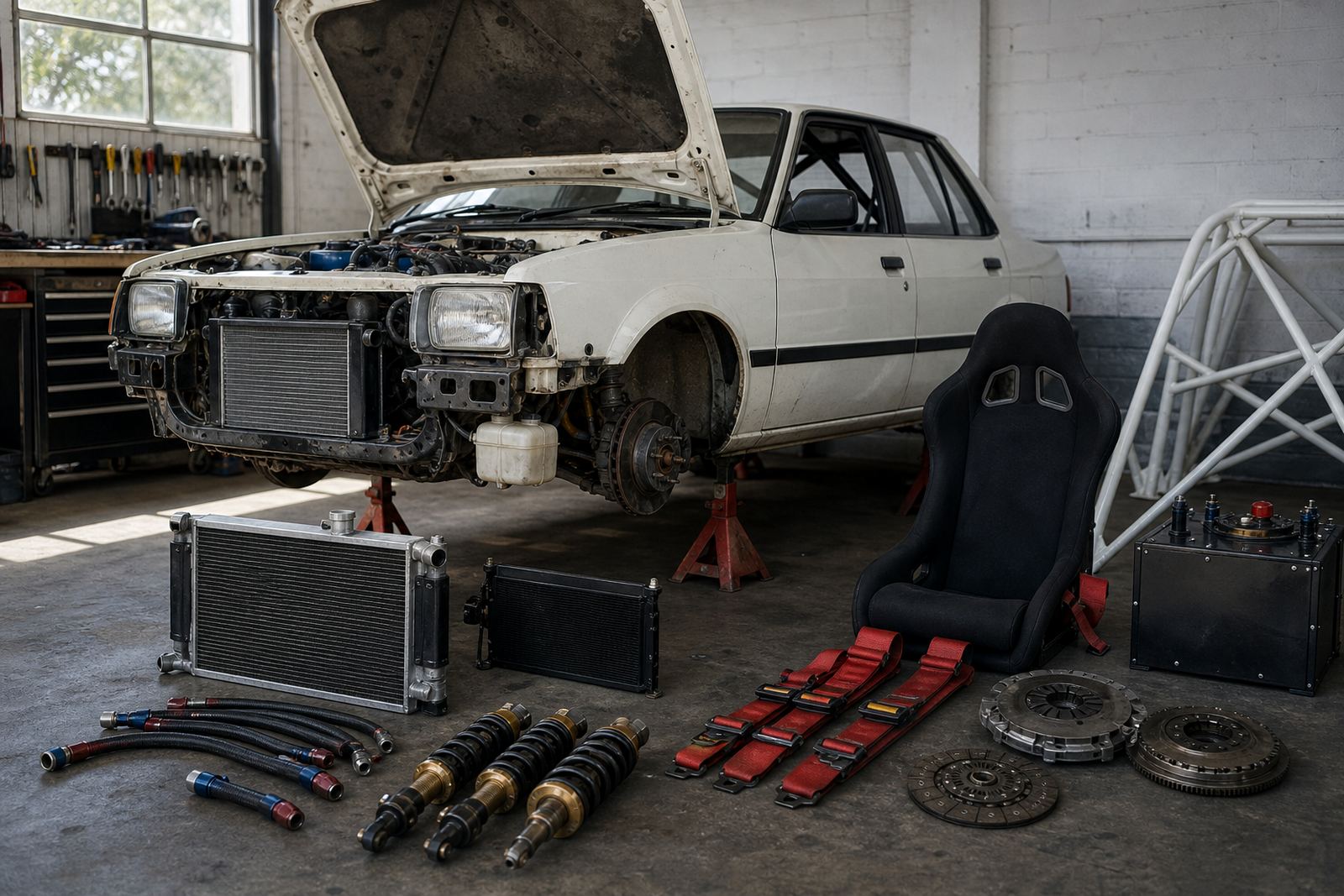
Cooling got equal attention. The radiator and oil cooler layout were arranged so the front end stayed serviceable, with sensible hose routing and enough access for inspection before an event. That matters when a car is run hard in summer heat, then packed away, then brought out again for another round.
- Performance bushings for better consistency under load
- Brake pads chosen for repeated circuit use
- Fresh brake fluid suitable for hotter operating temperatures
- Cooling layout planned for easier inspection and servicing
Workshop Work And Setup Notes That Followed The Build
Once the parts were in place, the car went through setup checks so the owner would not have to chase the balance later at the track. We carried out alignment checks, corner weighting and brake bleeding, then looked at how the suspension sat with the new bushings loaded under real weight. Small changes there can make a large difference to how stable the car feels under braking and turn-in.
Johan handled workshop coordination while Morne worked through the suspension side and Lerato checked the brake and cooling details. The point was not to overcomplicate the car, but to make sure each change fitted the next one. A club build can waste money fast if the setup work is guessed at instead of measured.
- Alignment checks after the suspension changes
- Corner weighting to balance the car for circuit use
- Brake bleeding completed after the fluid change
- Suspension loaded and checked with the new bushings in place
Fitment Details That Kept The Car Easy To Live With
We also looked at the driver contact points, because comfort and control still matter in a club car. Seat positioning was checked so the driver could work the pedals without stretching, and the harness fitment was reviewed for secure routing and sensible buckle access. A good driving position helps with consistency over a stint, especially when the car is moving around more than it did on the old worn parts.
Nothing in the build was treated as a standalone upgrade. The brake package, suspension pieces and cooling service points were planned to work together, which kept the car straightforward for the owner and the workshop alike. That approach usually saves grief later when the next pad change or check-up is due.
- Seat position set for clearer pedal control
- Harness fitment checked for correct routing
- Driver position reviewed for repeatable braking and turn-in
Three Weeks Of Work From Strip To Setup
The project ran over three weeks, moving from inspection to parts fitment and then to the final setup phase. The first stage was a close look at the worn bushings, brake condition and cooling access. After that, the car went into workshop time for the replacement parts and the supporting checks that go with them.
By the last stage, the car was ready for an easy re-check before its next outing. Candice kept the admin side orderly, Sibusiso arranged the parts flow, and Thabo oversaw the full job so the build stayed tied to the original brief. That balance matters on a budget car, because one loose decision can eat the savings made somewhere else.
- Week 1: inspection and build planning
- Week 2: parts fitment and brake service work
- Week 3: alignment, corner weighting and final checks
What Changed On Track And What We Would Carry Forward
After the work, the car felt more settled under braking and less vague as the suspension took a set through quicker corners. The cooling side was easier to inspect between sessions, which helped the owner keep an eye on fluid condition, hose routing and general front end access without pulling half the car apart. That is the kind of gain a club racer notices quickly, because it saves time and keeps the car feeling ready rather than fragile.
If we built that car again, we would keep to the same build order. Start with bushings, then brakes, then cooling serviceability, and only then chase extra changes if the car still needed them. On a budget club build, that sequence gives the best return for the money already spent.
- Better brake feel after the pad and fluid change
- More settled cornering with fresh bushings in place
- Cooling parts easier to reach for regular checks
- Setup work kept the car useful, not overdone
Key facts
| Project | Boksburg club car |
|---|---|
| Work focus | Bushings, brakes and cooling serviceability |
| Fitment work | Brake pads, brake fluid, bushings, radiator and oil cooler checks |
| Setup work | Alignment checks, corner weighting, brake bleeding |
| Timeline | 3 weeks |
| Use case | Track days, club racing and regular prep |
| Region | Boksburg, Gauteng |