

The brief from Pinetown
The car came in with a practical list rather than a full rebuild. The driver wanted better support in the seat, cleaner harness angles, and more confidence in the cooling package before the next run of rally stages. The shell, mounts and core engine parts were staying in place, so the work had to suit what was already there and avoid unnecessary strip-out.
The other constraint was packaging. Rally cars use whatever space the shell gives you, and this one already carried age marks from gravel, vibration and a few past repairs. That meant we had to measure first, then make the seating and safety side sit neatly around the cage, floor and dash structure without forcing awkward bends into belts or brackets.
- Private rally driver from Pinetown
- Stage car used for mixed-surface events
- Existing shell and cage remained in service
- Focus on support, safety angle and cooling
Seat position and harness geometry
We started with the seating position, because everything else hangs off that point. The seat needed to hold the driver lower and more square in the shell, with enough reach to pedals and wheel without stretching the shoulders forward. Once that was right, the harness line could be checked against the shoulder bar height, buckle placement and lap belt path.
The harness fitment check was not just a visual pass. We looked at belt angle, side clearance at the seat shell, and whether the straps would load evenly under braking and on rough roads. A belt that sits a little too high can pull the torso up, while a poor lap angle lets the hips shift when the car lands hard. We corrected those points so the driver sits braced, not cramped.
- Seat mounted for firmer lateral support
- Harness straps checked across the correct shoulder line
- Lap belt path set low over the hips
- Driver position aligned for steering and pedal reach
Cooling work under the bonnet
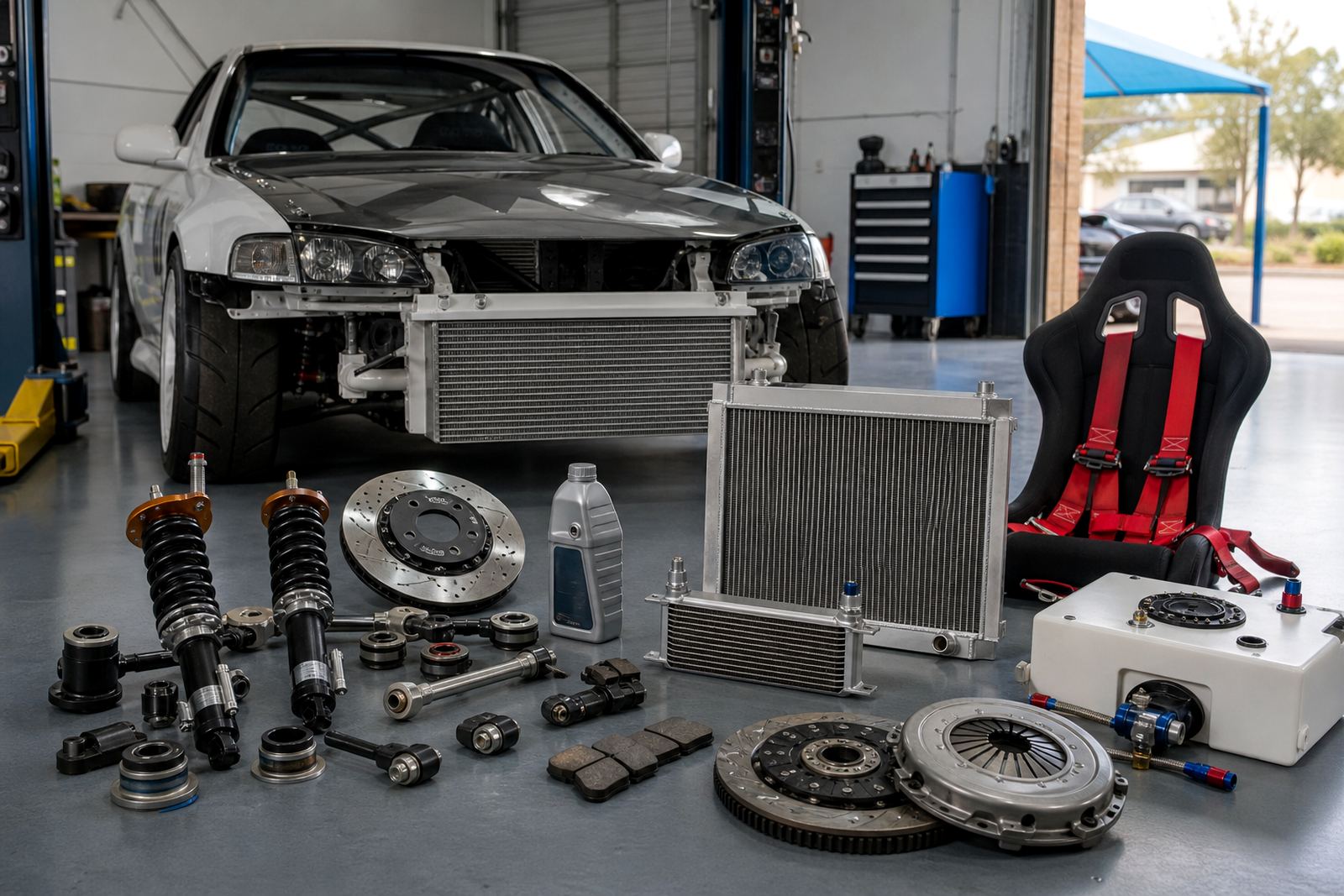
The engine bay needed a cleaner cooling layout, especially for repeated stage use in warmer weather. We checked the radiator placement, hose routing and airflow path through the front end, then added oil cooler attention where heat soak was most likely to build. On rally cars, cooling is never only about one part. It is about whether air can enter, pass through the stack, and leave without sitting trapped behind trim or ducting.
We also looked at the small things that often get ignored. Hose rub points, clamp access, and whether the front end could be serviced without pulling half the nose apart. The result was a neater layout with fewer snags, better access for checks, and more predictable temperature control when the car is under load for longer runs.
- Radiator and oil cooler layout checked together
- Air path reviewed through the front opening
- Hose routing tidied to reduce rub points
- Access kept sensible for service work
What we supplied and fitted
The job called for parts that suit motorsport use rather than road comfort. We supplied and fitted the seating and restraint items, then supported the cooling side with inspection and repositioning where needed. Nothing on the car was chosen for appearance alone. The parts had to suit the shell, the driver and the kind of punishment rally stages put into a chassis.
There was also a broader setup conversation around future service items. Brake pads and fluid, suspension bushes, and clutch feel were all discussed in the context of the next event cycle, because a stage car works best when those basics are watched before they become a problem. That sort of practical review saves a lot of noise in the workshop later.
- Seat support and fitment hardware
- Harness fitment checks and angle correction
- Cooling inspection with radiator and oil cooler focus
- Setup notes on brakes, bushes and clutch feel
Three weeks from booking to handover
The refresh took three weeks. It started with inspection and measurement, then fitment and geometry checks, and finished with a final review once the seating and cooling pieces were in place. That gave space to fix small issues instead of trying to cram everything into one rushed session. On a car like this, a rushed fit shows up later as a loose belt line or a hose that rubs where it should not.
By the end, the driver had a more settled position in the seat, better harness routing, and a cooling arrangement that made more sense for sustained stage work. The car was not turned into a different machine, it was simply made better to live with at speed, which is often the part that matters most.
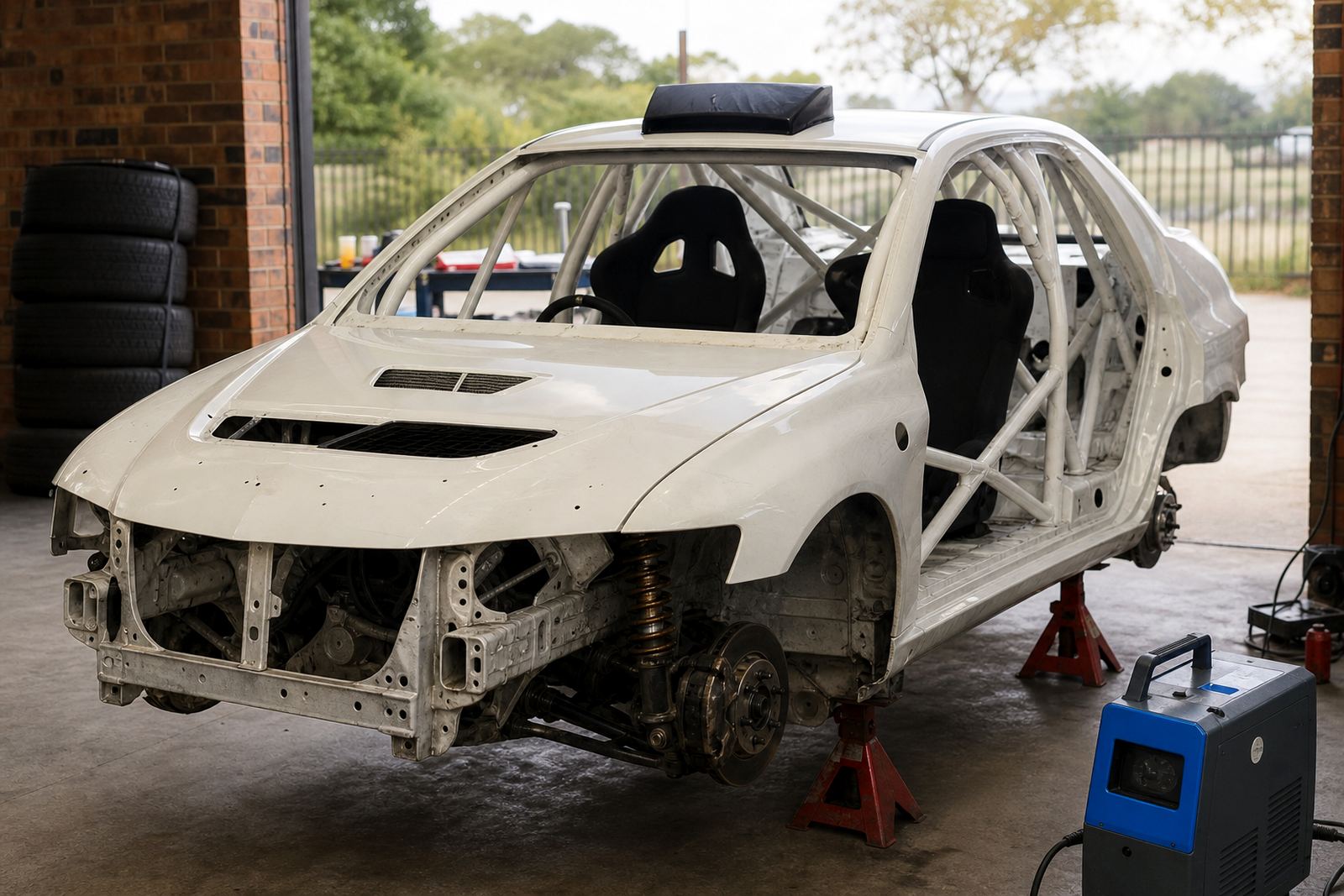
Similar rally shell
We would follow the same order: seating first, restraint geometry next, and cooling once the packaging is clear. That keeps the job grounded and avoids fitting parts to a guess. It also leaves space to spot worn mounts, tired bushes or a bracket that sits in the wrong place before the car goes back into service.
On a similar shell, we would also keep a close eye on the relationship between seat height and belt angle, because that one detail changes how the whole car feels under braking and on rough sections. The wider lesson from this Pinetown car was simple enough. A stage car does not need drama, it needs the right parts sitting in the right place.
Key facts
| Project type | Rally car refresh and safety setup review |
|---|---|
| Client location | Pinetown |
| Work carried out | Seat positioning, harness geometry checks, cooling review |
| Timeline | 3 weeks |
| Vehicle focus | Stage car for mixed-surface rally use |
| Key parts | Seat support, harnesses, radiator and oil cooler layout |