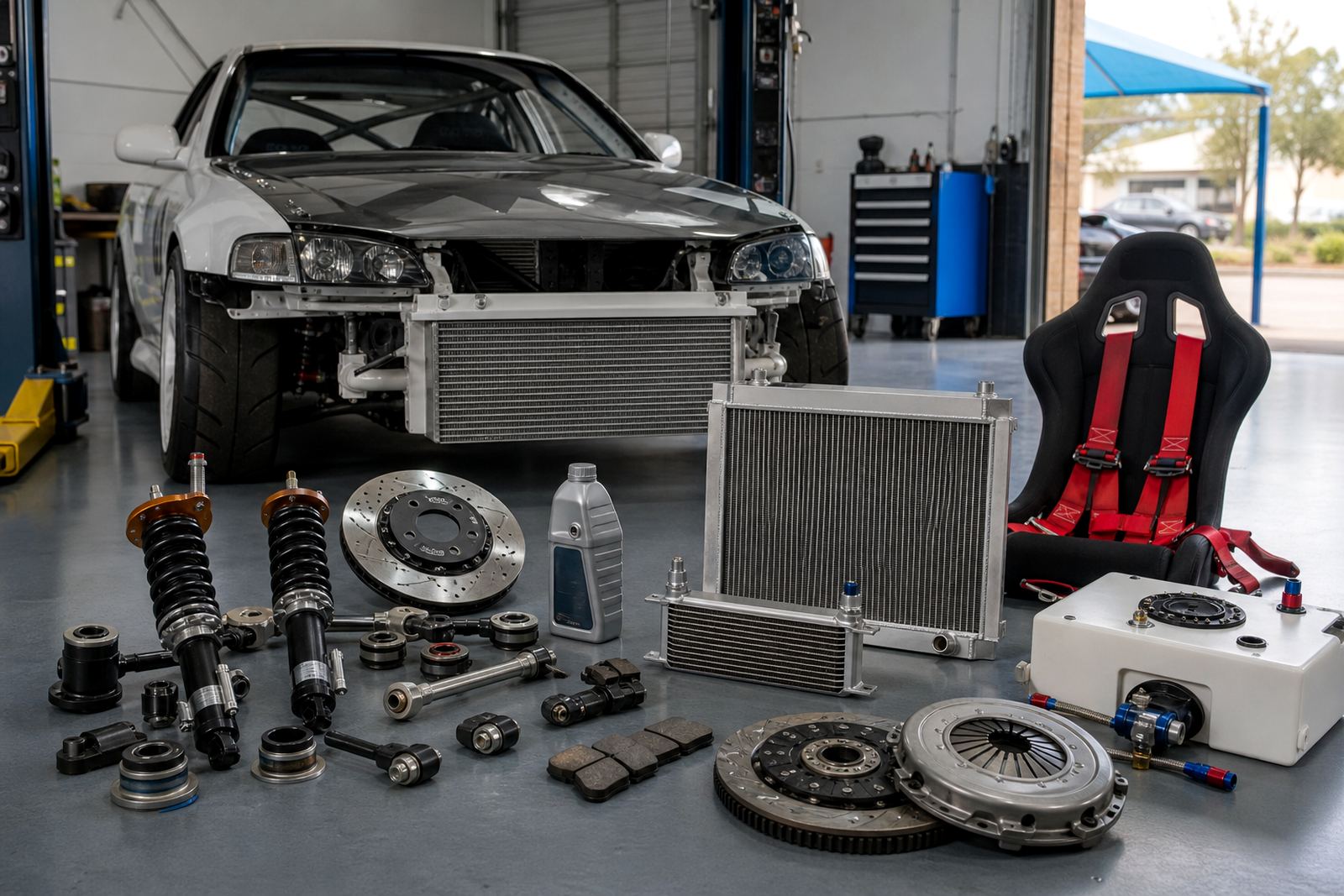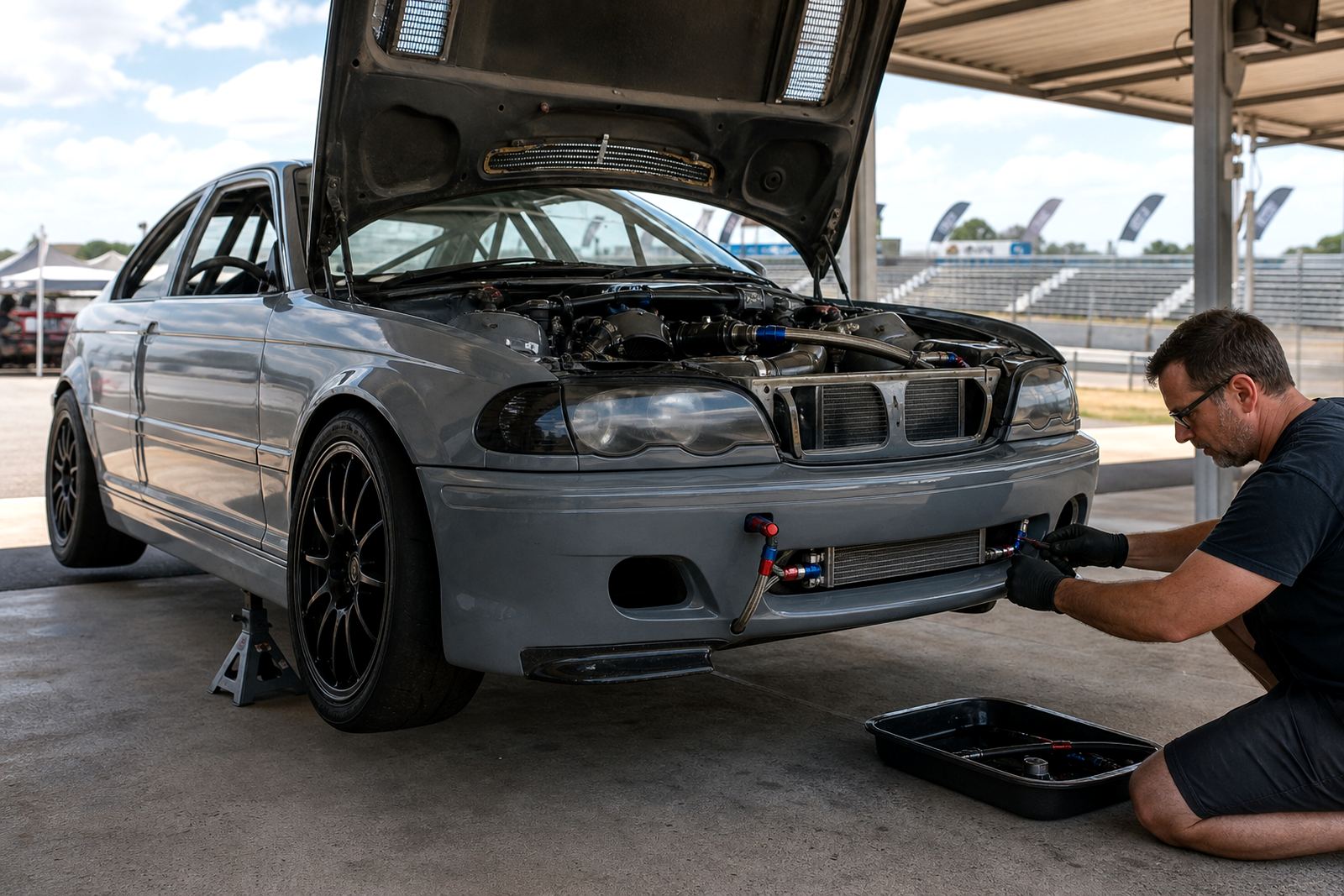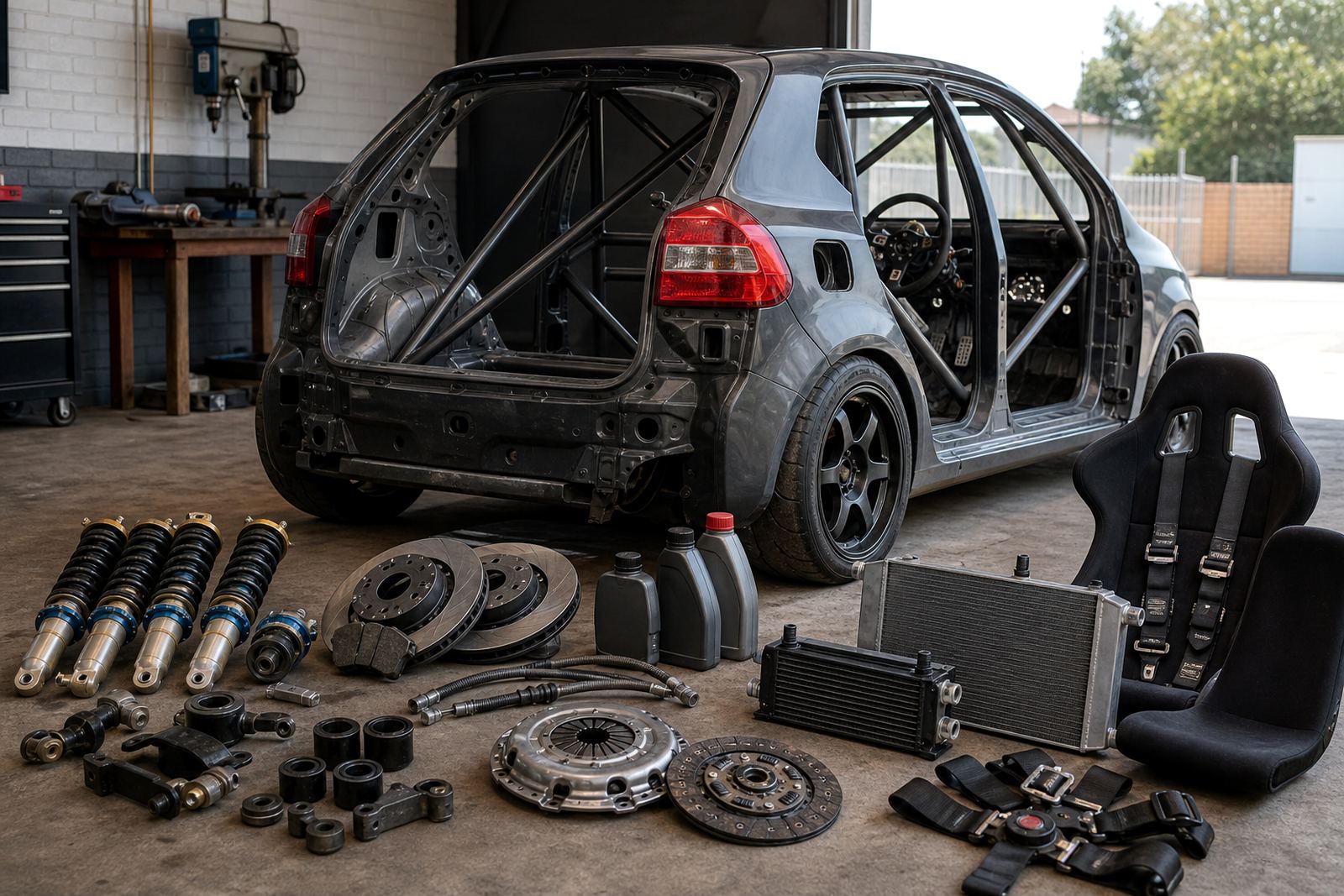

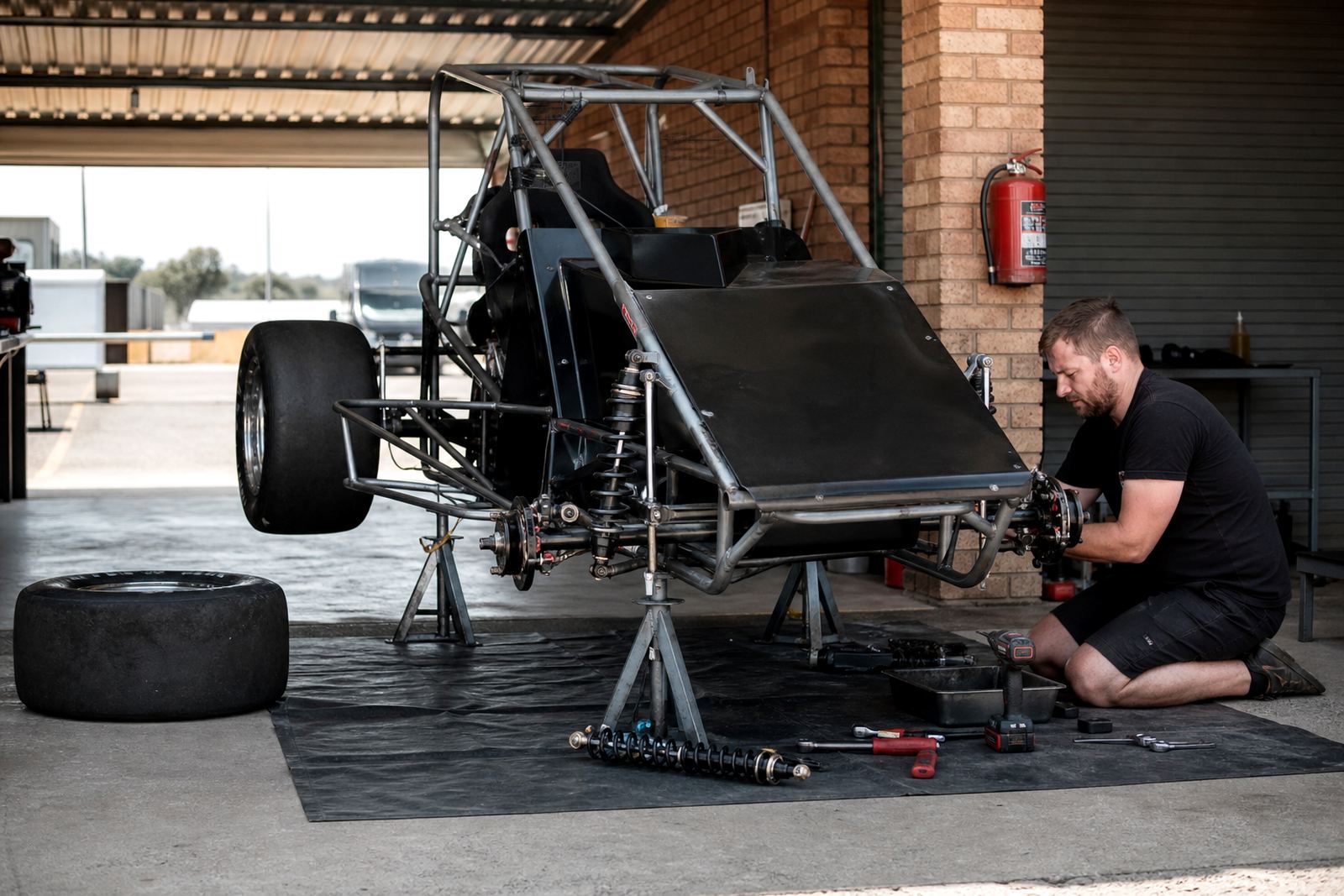
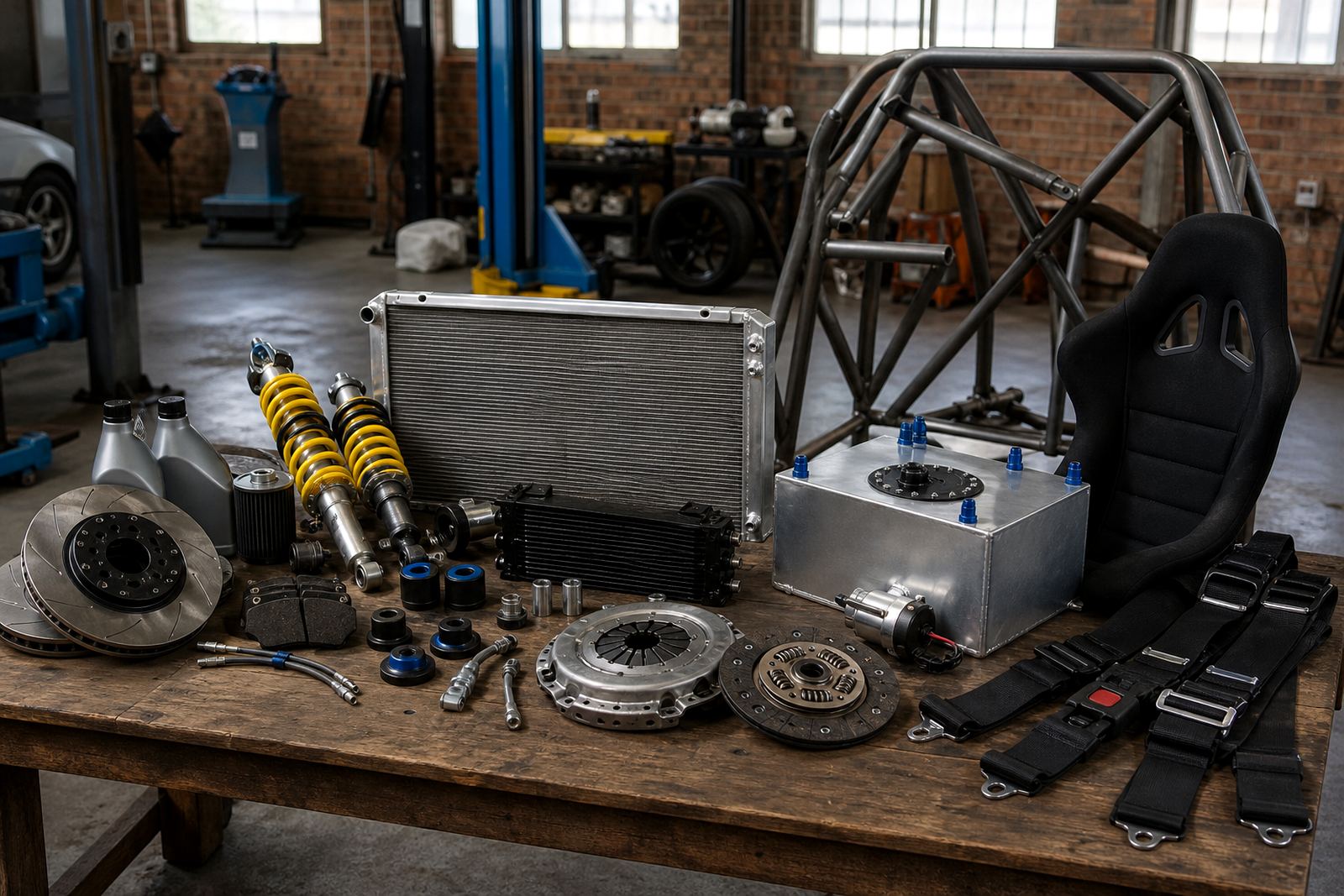
The brief from Centurion, and the parts list it pointed to
The owner was running local sprint meetings and club days in Gauteng, with the car covering short stints, hot restarts and repeated braking from speed. The original package had too much movement at the nose, the pedal feel wandered after a few hard stops, and the cooling path was getting crowded by fitted parts that looked fine on a static check but worked against airflow on track.
The job was not about chasing flashy parts. It was about putting the right pieces in the right places, then setting them so the car could turn in cleanly, stop hard without feeling nervous, and keep stable temperatures when the pace rose. We looked at the whole front end as one system, because on a sprint car the brakes, suspension and cooling all talk to each other.
- Front grip had to arrive earlier in the corner.
- Brake confidence needed a firmer, clearer pedal.
- Cooling had to stay tidy through the nose and exit cleanly.
- Setup changes had to suit both practice and race trim.
What the car was carrying before the reset
The first pass showed tired brake pads, fluid that had seen too many heat cycles and a suspension setup that was leaving too much load transfer to chance. The coilover settings were not matching the track use, the bushes were soft in places that mattered, and the front end was not holding the tyre in the window the driver wanted. The cooling hardware was doing its job in theory, but the layout left little room for air to move through the core and out the back of the nose.
We also checked seating position and harness fit, because a driver who is braced properly can be more precise on the pedal and wheel. Small changes there can alter how the whole car feels. If the seat is off by a few millimetres, the driver starts chasing the car instead of guiding it. That is especially obvious when the track gets busy and the car is asked to brake late, turn in hard and straighten up quickly.
- Brake pads and fluid were selected for repeated heat.
- Coilover setup was reset for sharper front response.
- Worn bushes were replaced where movement was spoiling control.
- The cooling layout was checked for cleaner air entry and exit.
The workshop work we carried out in Midrand
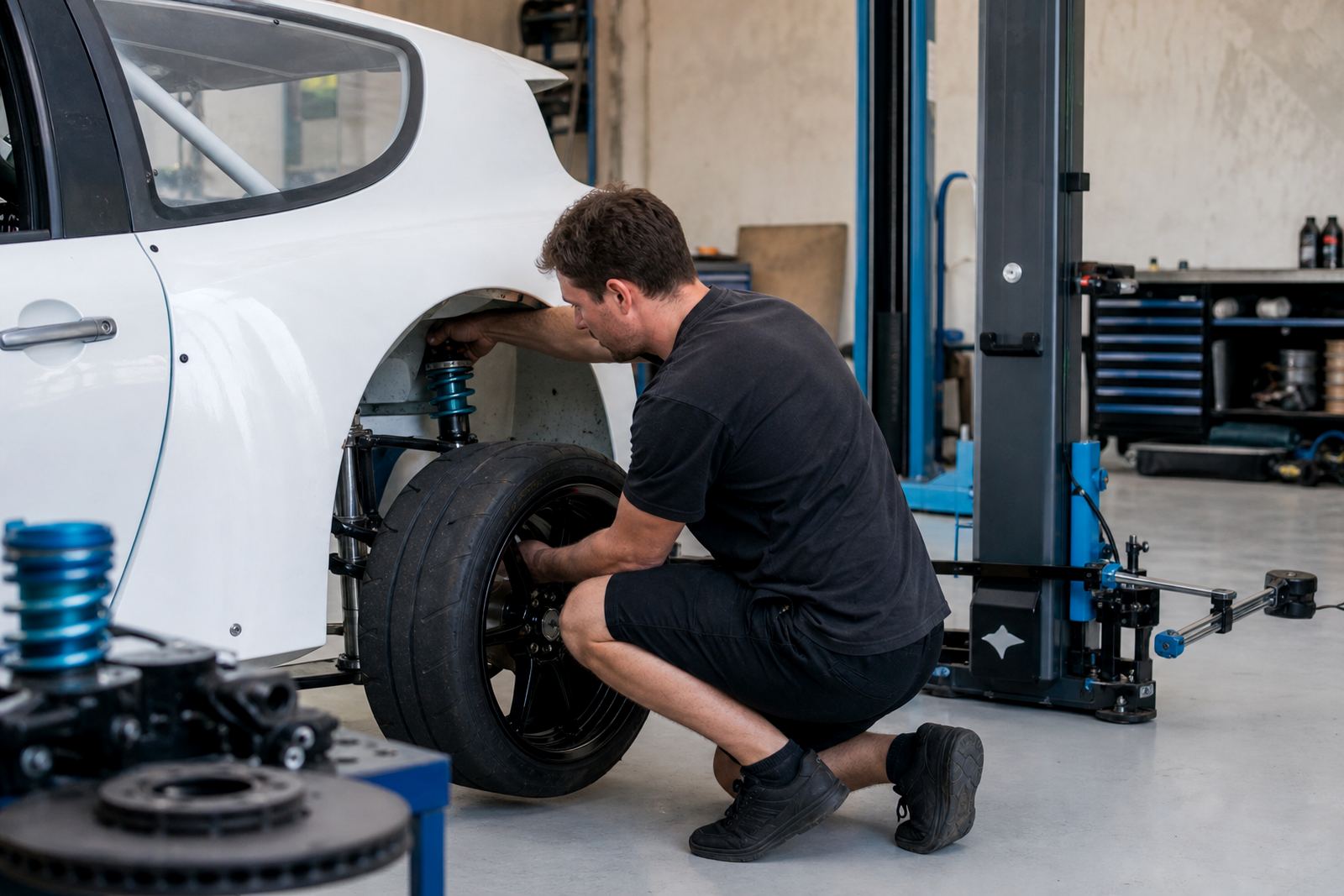
Our workshop team carried out brake bleeding, corner weighting and alignment checks before the final setup pass. The corner weight numbers gave us a better base than guesswork, and the alignment let us keep the front end responsive without making the car nervous under brakes. From there we tuned the coilovers to match the driver’s style and the track surface, then checked the balance again after the first heat cycle.
We paid attention to the brake system hardware as a package, not just as a consumable change. Fluid choice, pad condition and pedal feel all need to work together. The cooling system got the same treatment. We checked duct paths, radiator position and oil cooler clearance, then trimmed the layout where needed so the nose would not fight itself. On a sprint car, tidy airflow often makes the difference between a car that feels busy and one that settles.
- Brake bleeding was completed with fresh fluid suited to track heat.
- Alignment checks set the front end within the target window.
- Corner weighting helped the car sit evenly left to right.
- Cooling clearance was improved around the radiator and oil cooler.
The two week run-in and setup days
The work took two weeks, with the first stage centred on measurements, parts selection and fitment checks. The second stage was spent on the setup day itself, where suspension changes, brake checks and driver position were refined together. That order matters. A race car should not be tuned in pieces while the rest of the package stays untouched. The driver needs a repeatable seat position, the chassis needs a sensible platform and the brakes need enough margin for race pace.
During the setup day we went through seat positioning, harness fitment checks and a full look at the clutch and shift side of the car too, because the driver was missing clean shifts on corner exit. A little extra effort there improved the way the car left slow corners. The owner left with a clearer baseline and a better sense of what to adjust before the next outing. That is often the real value of a good setup session, the car stops being a guessing game.
- Week one covered assessment, parts choice and preparation.
- Week two covered fitment, alignment and driver-focused setup.
- Seat and harness checks supported better pedal control.
- Clutch and shift setup improved the exit phase of the lap.
What changed on track, and what held up
Once the car was back on circuit, the driver reported a cleaner turn-in and a front end that loaded up more predictably. The brake pedal felt steadier through repeated use, and the car no longer drifted into the vague middle ground that can make a sprint car hard work over a session. Cooling remained calmer as the pace built, with the revised layout helping air move through the nose instead of piling up in front of it.
For us, the result was less about a headline number and more about balance. The car was easier to place, easier to stop and less tiring to drive. That is what a well judged setup should do. It should remove small frustrations one by one, then leave the driver free to race the lap rather than manage the machinery. The notes from this project now form a good base if the owner wants to fine tune spring rates, pad choice or rake for a different circuit later on.
- Front grip came in earlier and felt more planted.
- Brake confidence improved through repeated stops.
- Cooling stayed neater under sustained sprint running.
- The car became easier to place at corner entry.
The same sort of package we would build again
For a similar sprint car, we would begin with the same work order: measure the chassis, check the seat and harness, then make the brake and suspension changes around a solid baseline. That process keeps the car honest. It avoids adding parts for the sake of it and keeps the driver’s needs at the centre of the package. For Centurion, that meant a practical focus on grip, pedal feel and heat control rather than on cosmetic extras.
RaceHouse handles motorsport parts and performance upgrades from our Midrand base, with fitting advice and setup days for drivers across South Africa. The team works through the details that matter on a real race car, from brake upgrade planning and brake bleeding to coilover setup, alignment checks, corner weighting, cooling system checks, roll cage fit advice and fuel system layout. If the car is a sprint build, a rally car or a club racer, the shape of the job is similar: make it fit the driver and the circuit, then keep it tidy enough to work when the pace rises.
- Start with measurements before changing parts.
- Set the driver position before final alignment.
- Balance brake bite with usable pedal travel.
- Keep cooling paths open and easy to inspect.
Key facts
| Project | Centurion Sprint Car |
|---|---|
| Town | Centurion, Gauteng |
| Work window | 2 weeks |
| Main focus | Front grip, brake confidence and cooling airflow |
| Services used | Brake bleeding, coilover setup, alignment checks, corner weighting, seat positioning |
| Key parts | Brake pads and fluid, coilovers, bushes, radiator and oil cooler, seat and harness checks |