

The Durban brief, written around heat and humidity
The car was used for track days and club events, mainly around Durban and Pietermaritzburg. The owner wanted sharper braking feel, a calmer front end under load, and a cooling package that could handle stop-start sessions without turning the bonnet area into a heat trap.
The brief also had to stay workable for the team. Any parts we fitted had to make sense on a coastal car that spends time in damp storage, trailer transport and a busy paddock. That meant cleaner routing, fewer exposed joins, and a few installation choices that would age better in salty air.
- Vehicle use: track days, club racing and short test sessions
- Location: Durban, with coast-side storage conditions
- Focus areas: brakes, cooling, seating position and harness fitment
- Main concern: heat soak and corrosion around fixings and lines
The car arrived with mixed signals in the corners
The driver described two problems. First, the brake pedal changed feel after several laps, especially once tyre and rotor temperatures climbed. Second, the chassis felt lively on turn-in, then took a set a little late when the car was pushed hard through medium-speed bends.
We checked the current parts list and found a few mismatches between the hardware on the car and the way it was being driven. The pads suited road use and faded under repeated circuit laps. The suspension was decent in theory, though the setup had been left a touch soft at the rear and a touch busy at the front. It needed proper balance front to rear.
- Brake feel was fading after repeated laps
- Front end response was sharp but not settled
- Existing setup suited mixed road use more than circuit work
- Heat management needed more attention around the front of the car
What we supplied and fitted for the coastal build
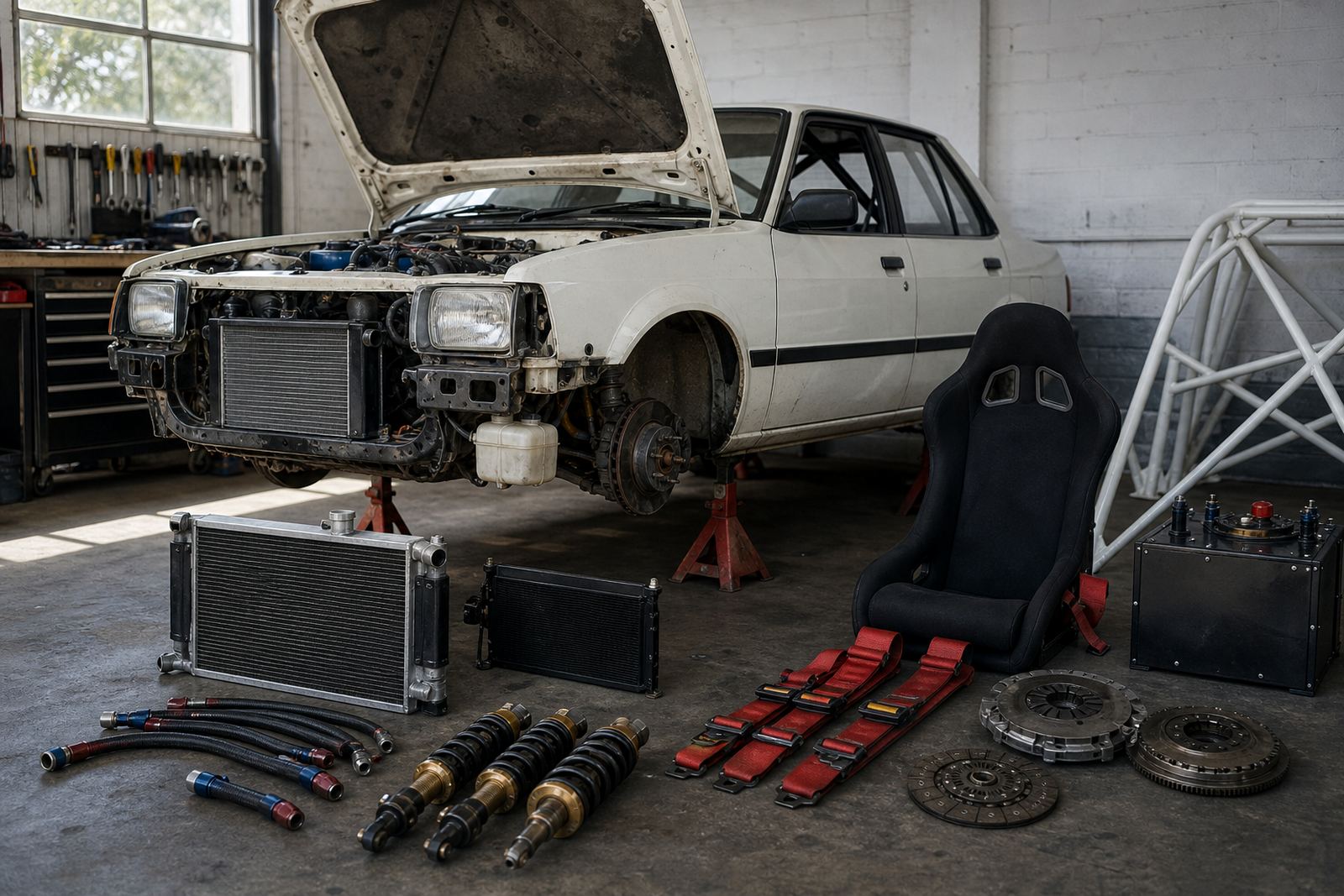
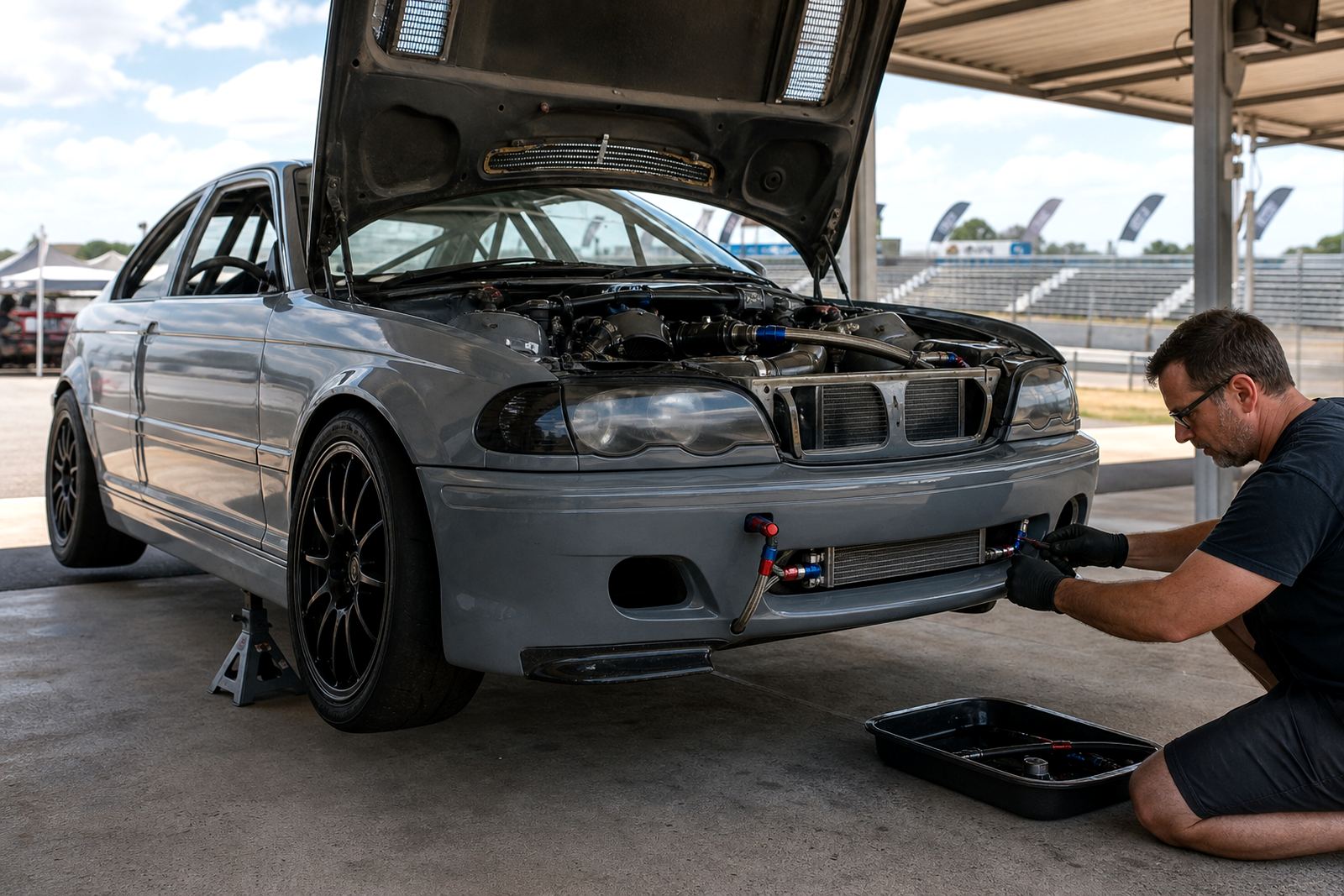
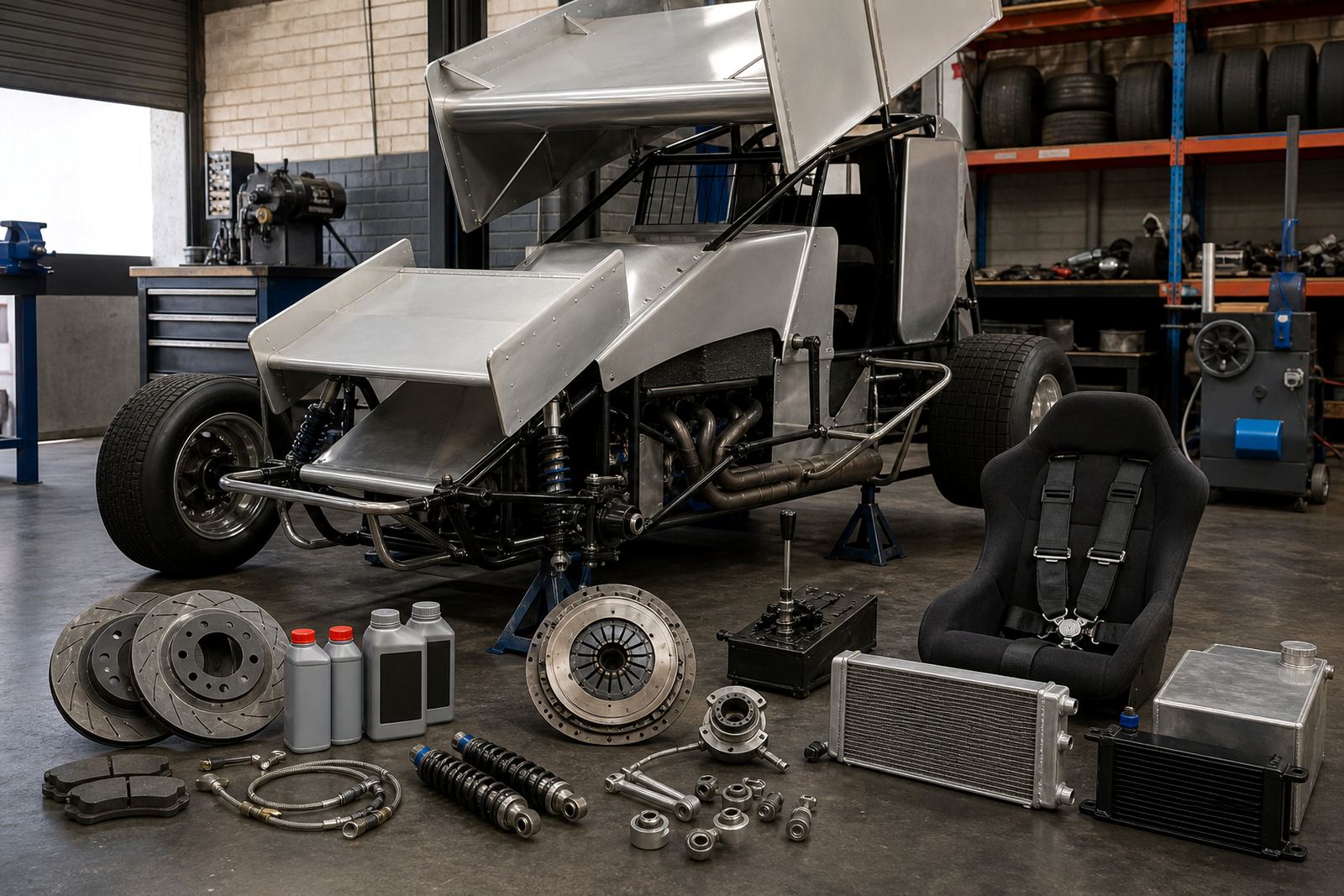
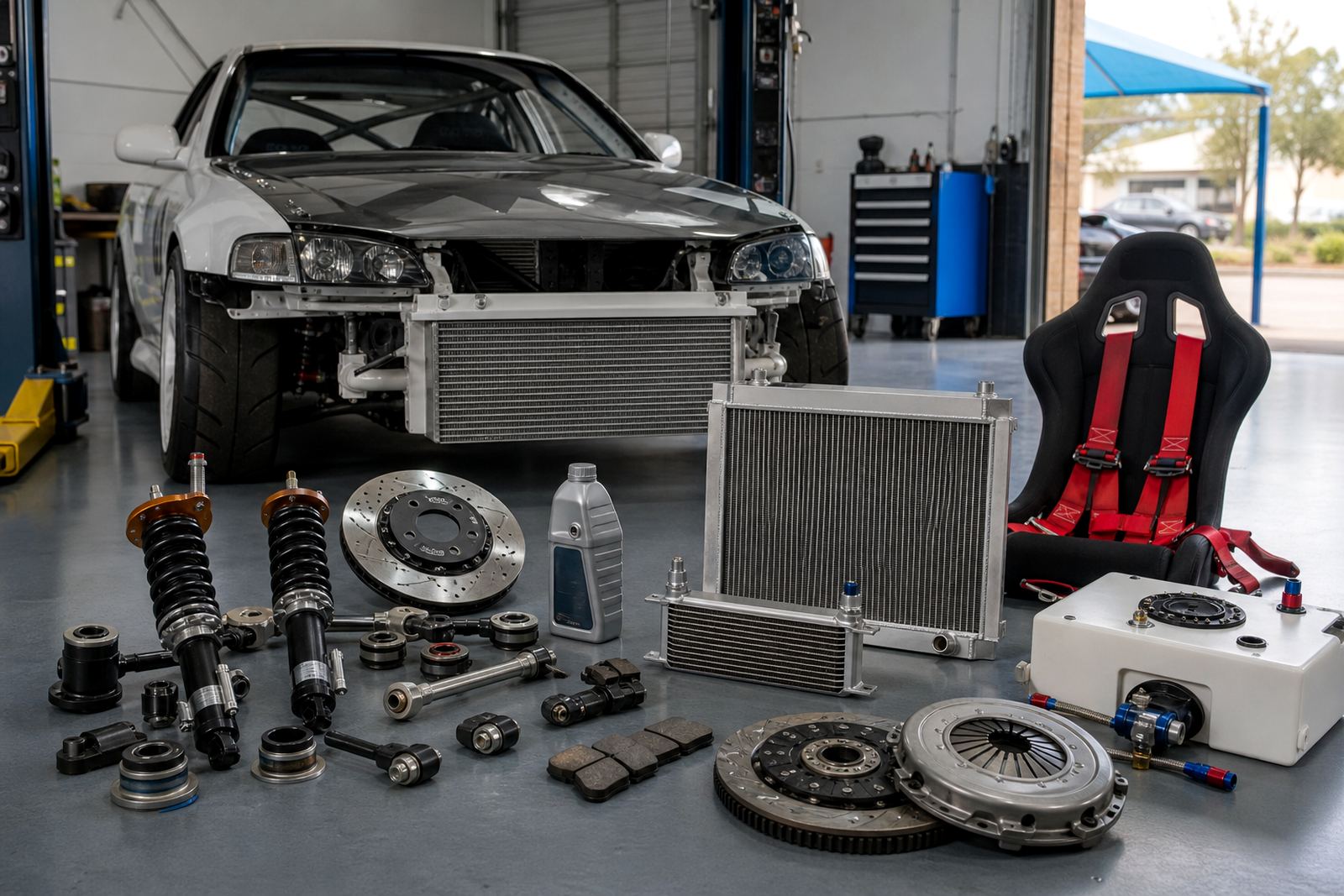
We supplied a matched package of motorsport parts that covered braking, cooling and control. The brake upgrade used performance pads and fresh high-temperature fluid, with careful bleed work to clear out old moisture-heavy fluid. The cooling side included a larger radiator and a properly mounted oil cooler, with hose routing kept tidy and away from sharp edges and hot spots.
For the handling side we fitted coilovers, adjusted ride height and checked corner balance after the first round of changes. We also supplied fresh bushes in key locations where the original rubber had begun to feel vague under load. Inside the car, we checked the seat position and harness angles so the driver could brace properly without fighting the wheel.
- Brake pads selected for repeated circuit heat
- Fresh high-temperature brake fluid and full bleeding
- Coilovers set up for circuit use
- Radiator and oil cooler fitted with sensible airflow in mind
- Seat and harness checks completed before final alignment work
Installation choices that suited Durban weather
Coastal conditions change the job. Salt air and humidity can work on fittings, brackets and exposed metal faster than people expect. We used installation details that reduced the chance of problems later, including cleaner hose runs, better isolation where vibration was obvious, and fastening choices that made future inspection easier.
We also kept an eye on the places where water can sit after a wash or a wet race weekend. The mounting positions for the cooler and the brake lines were planned so they would be easier to inspect and less likely to collect grime in awkward corners. Small things like this matter on a car that lives near the coast, because a neat job is usually the one that stays tidy.
- Corrosion-aware hardware selection around exposed areas
- Hose and line routing kept clear of rubbing points
- Mounting points arranged for easier inspections
- Airflow path protected instead of blocked by loose fittings
Track setup days and the measurements that changed the car
We used a setup day to work through the car in stages. Suspension ride heights were set first, then alignment, then corner weighting, then a final brake bleed and a fresh look at pedal feel. That order matters, because chasing alignment before the car sits correctly only creates extra work.
Once the numbers were settled, the car felt more settled on entry and less nervous through fast direction changes. The steering became easier to read through the middle of the corner, and the driver had better pedal confidence when the laps got longer. We also checked the shift feel and clutch engagement so the drivetrain was not adding avoidable strain during hard use.
- Ride height set before alignment
- Corner weighting completed after the main suspension setup
- Brake bleed repeated after the last hardware adjustment
- Clutch and shift checks done during the final pass
What the car delivered after the final pass
The finished car was not trying to be a road compromise anymore. It felt more composed over a sequence of corners, the brake pedal stayed more consistent, and the cooling package gave the driver less to worry about in warm Durban sessions. The owner could now focus on lines and braking points instead of guessing what the car would do at the end of a stint.
The main result was confidence. The build had enough control for circuit work, but it still had the mechanical honesty needed for club racing. It was tighter in the right places, cooler in the places that mattered, and less likely to complain after a long afternoon of hard laps.
- More stable brake feel over repeated laps
- Better control through fast corner entry
- Cooling package suited to warm coastal running
- Cleaner, easier-to-check installation layout
Choices we would keep for another coastal track car
If another Durban circuit car came through with similar conditions, we would use the same order of work: braking first, then cooling, then suspension, then the seating position and harness geometry. That sequence keeps the car honest and stops small handling errors from hiding inside a bigger heat problem.
We would also keep the corrosion-aware approach on the list. Coastal cars punish shortcuts, and a build that looks tidy on day one should still make sense after a few wet washes, trailer trips and long weekends at the track. On the Durban car, careful fitment took as long as choosing the parts.
- Begin with the systems that run hottest under load
- Use setup work to confirm the parts match the car
- Keep service access in mind during every mounting decision
- Choose materials and fixings that suit coastal running
Key facts
| Project | Durban circuit prep for a coastal club racing car |
|---|---|
| Town | Durban, KwaZulu-Natal |
| Lead time | 3 weeks from first inspection to final setup day |
| Brake package | Performance pads, high-temperature fluid, full bleed |
| Cooling package | Upgraded radiator and oil cooler with tidy hose routing |
| Setup work | Coilover setup, alignment checks, corner weighting, seat and harness fitment checks |