

Bellville Sprint Car, Stripped to the Useful Parts
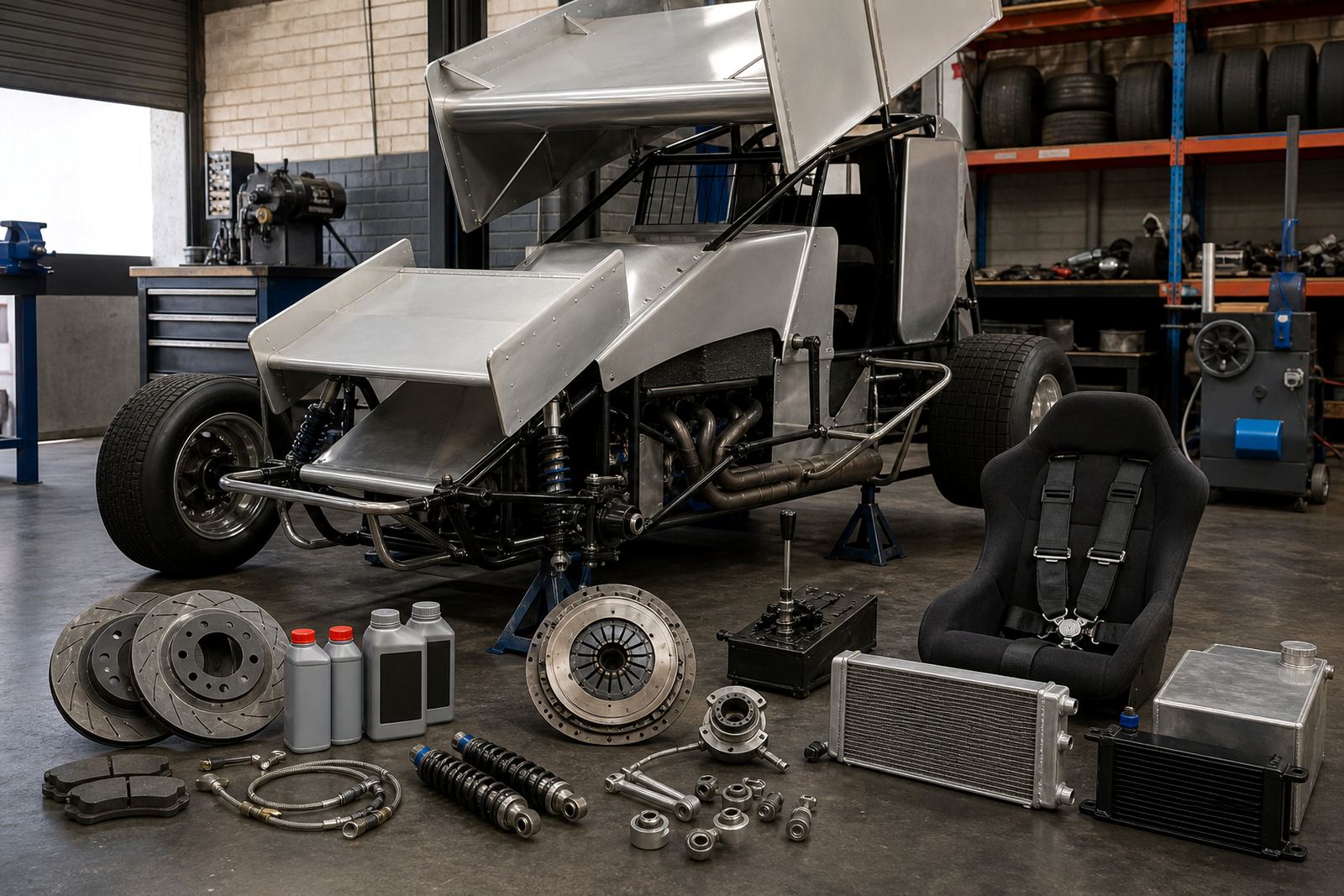
The brief came from a Bellville driver preparing a compact sprint car for local events where repeated braking, fast direction changes and short recovery windows put real pressure on the package. The car was already running, but the driver wanted a tighter feel at the pedal, less heat soak around the front end and a cabin layout that made driving position easier to repeat every outing.
Our main limit was to keep the car usable. It still had to be serviceable in a small workshop space, with parts that could be checked, bled and adjusted without pulling the whole car apart. We kept the approach centred on known service items, clear setup points and hardware that would not make the car awkward to live with between track days.
We worked from the existing shell and running gear, then built around the weaknesses that showed up in early inspection. Brake balance, seat position, harness angles and front-end temperature control all needed attention, and the owner wanted a package that did not chase extra complexity for its own sake.
The Brake and Cooling Package We Put In
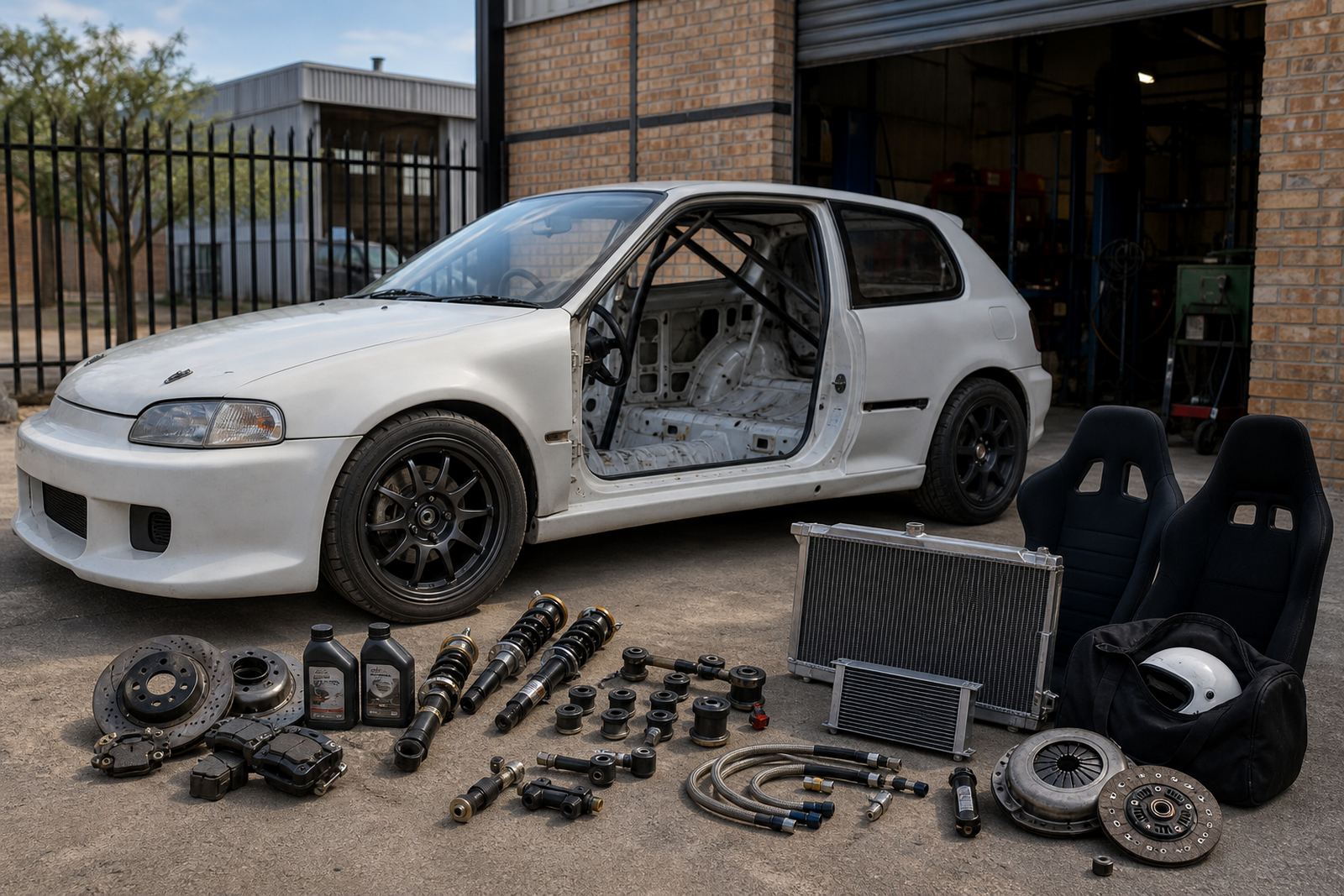
For the braking side, we supplied high-friction brake pads suited to repeated heat cycles, fresh brake fluid with a higher boiling point than a road fill, and a check of the pedal feel through the full system. The aim was not just stronger stopping, but a pedal that stayed predictable after several hard laps.
On the cooling side, we fitted an uprated radiator and oil cooler combination sized for the car’s bay and airflow path. We also checked hose routing, mounting security and the space around the front bodywork so that the extra cooling hardware did not create rattles or contact points once the car started moving hard on rougher surfaces.
- Brake pads selected for sprint use and repeat heat load
- Fresh high-temperature brake fluid
- Radiator and oil cooler layout checked for airflow and clearance
- Mounting points checked for vibration and service access
Suspension Work That Kept the Car Honest
The suspension package centred on coilovers, fresh bushes and a proper geometry check after the new hardware went on. The car needed sharper response without turning nervous on turn-in, so the setup work focused on keeping the front end settled while the rear stayed willing under throttle lift and corner entry.
We set the coilovers to give the driver room to fine-tune spring and damping behaviour between events, then checked ride height against the wheel arch and tyre clearance at full load. After that, alignment checks and corner weighting brought the car closer to a repeatable base line. The owner wanted a setup that could be noted, measured and returned to without guesswork, which mattered more than chasing a flashy number on paper.
Suspension work also had a hands-on side. The car had to remain easy to inspect after a race weekend, so every adjustment point was kept visible and the service items were laid out in a way that made quick checks possible. Morne handled the setup detail, with Johan coordinating the workshop sequence so the job moved in a clean order.
- Coilovers fitted and set to a repeatable starting point
- Alignment checks completed after suspension changes
- Corner weighting used to settle left and right balance
- Fresh bushes fitted where movement had become vague
Cockpit Changes for a Faster, Cleaner Driver Position
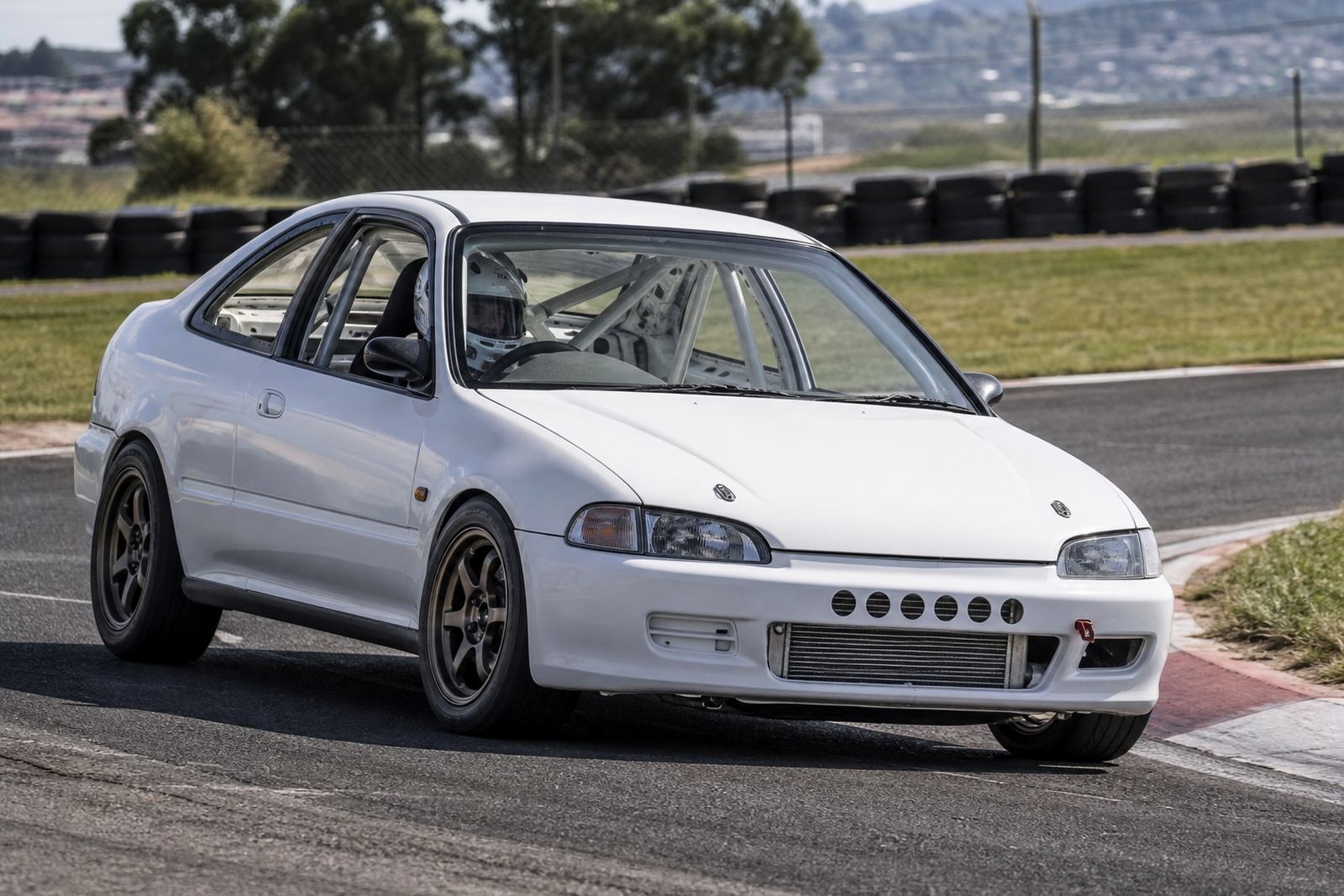
The driver wanted a seat position that felt lower and more planted, with better reach to the wheel and pedals and less movement under load. We positioned the seat, checked harness fitment angles and made sure the belts sat correctly across the shoulders and hips. The aim was to hold the driver in place without making entry and exit awkward, which matters in sprint work where the car still needs to be practical.
We also gave the roll cage layout a careful look from a fitment angle, not a compliance claim. The priority was clear access around the seat, enough room for the driver’s helmet and elbows, and no obvious conflict points where the harness or seat frame would rub during hard cornering. Sibusiso and Candice handled the coordination around parts and collection, while Lerato checked the technical side of the cabin layout before final fitment.
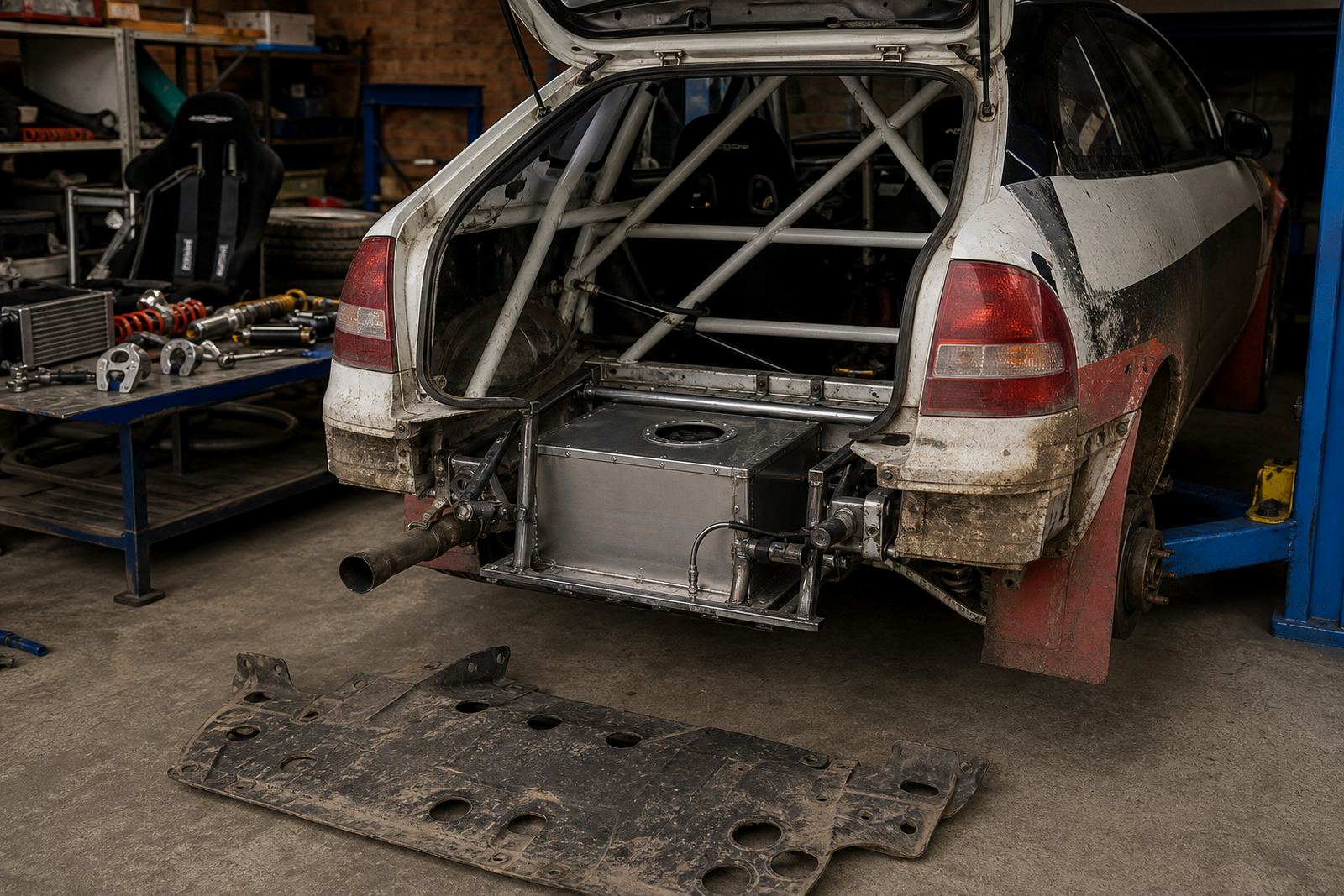
Fuel system layout and clutch and shift setup were part of the same cabin-focused work. The driver wanted straightforward reach, a confident gear change and no clutter around the working area. The result was a cockpit that felt trimmed for the job instead of overloaded with hardware that only looked serious from outside.
How the Job Ran Across Four Weeks
The build moved over four weeks, with the first week spent on inspection, part selection and stripping the car down to the items that needed attention. The second week covered the major fitment work, including brakes, cooling and the suspension changes. The third week was for geometry, cockpit set-up and finishing checks. The final week was reserved for track preparation, bleed checks and a measured setup day before the car went back out.
We kept the sequence practical because short-format racing punishes rushed work. If the brakes are right but the seat is not, the driver cannot repeat inputs cleanly. If the suspension is close but the cooling is marginal, the car loses its shape later in the session. Brakes, seat, suspension and cooling were planned together so each one suited the others.
- Week 1: inspection and part planning
- Week 2: brake, cooling and suspension fitment
- Week 3: geometry, seat and harness setup
- Week 4: track checks and final adjustment day
What Changed On Track And In The Paddock
After the build, the car felt more settled under braking and more direct through the wheel. The driver reported a cleaner pedal, steadier front-end control and better confidence holding a line through quick transitions. The cockpit changes also made the car easier to drive for longer runs because the seating and harness position stopped the small body movements that used to build up over a session.
In the paddock, the practical side mattered just as much. The brake system was simpler to inspect, the cooling hardware was easier to monitor and the suspension settings could be checked without a long reset process. That matters in a sprint car, where the gap between sessions can be short and the next run often starts with a quick look over the hardware, not a workshop reset.
We would tackle the same steps again on a similar Bellville build: start with brake confidence, set the driver position, then build suspension and cooling around those basics. It is a plain order, but it keeps the car honest when the day gets busy and the driver needs the machine to feel the same every time it rolls out.
Key facts
| Project type | Short-format sprint build for a Bellville club racer |
|---|---|
| Core parts | Brake pads, brake fluid, coilovers, bushes, radiator, oil cooler |
| Cockpit work | Seat positioning, harness fitment checks, roll cage fit advice |
| Setup services | Brake bleeding, alignment checks, corner weighting, track setup day |
| Timeline | Four weeks from inspection to final track preparation |
| Outcome | Sharper brake feel, steadier cooling and a more repeatable driver position |