

The brief that landed on the workshop floor
The owner wanted a car that felt tidy on the throttle, stopped cleanly from speed, and stayed predictable when the surface changed mid-run. The build was for hillclimb use rather than circuit laps, so the parts list leaned toward fast response, low mass, and consistency over a longer race distance. There was no room for heavy add-ons or soft street habits that blur the pedal and slow the car down.
The client came from Edenvale and wanted a practical package for short stage-style runs, with enough comfort in the cabin to let the driver focus. We kept the conversation around the basics that matter on a hill, brake feel, corner balance, cooling stability, and a driving position that lets the hands and feet work without strain. The car was not being rebuilt for show. It had to work on the day and hold that shape through repeated use.
- Short-run hillclimb use with repeated hard braking
- Weight-conscious parts selection for quicker response
- Direct pedal feel and clear driver feedback
- Setup that could be checked and adjusted in stages
Parts chosen for direct control, not bulk
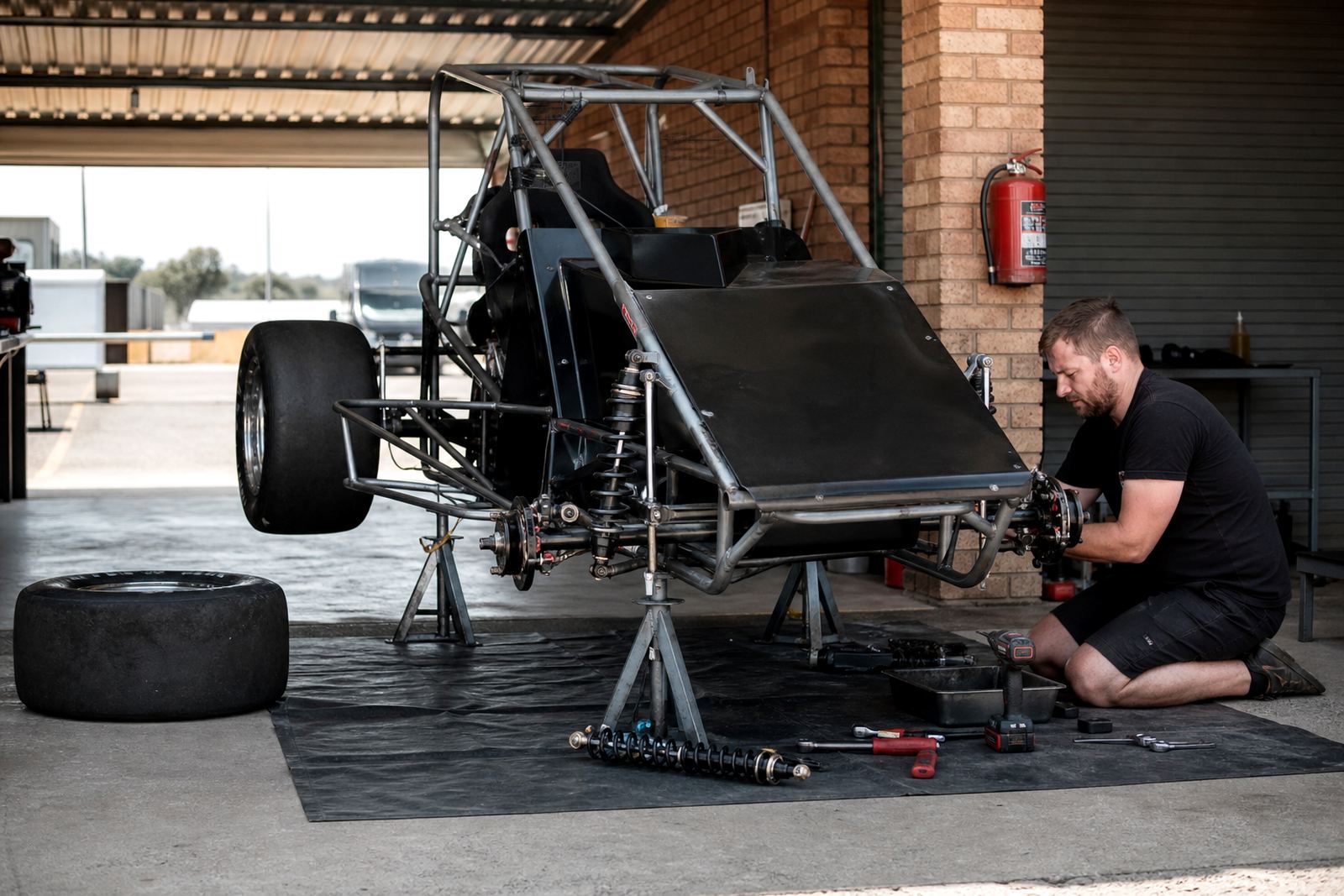
We supplied a brake package built around performance pads, fresh high-temperature fluid, and a setup that would hold a firm pedal under repeated heat cycles. Suspension work used adjustable coilovers, new bushes, and a geometry approach that helped the tyres stay honest through the corner. That meant more precise turn-in and less wandering when the car loaded up on the climb.
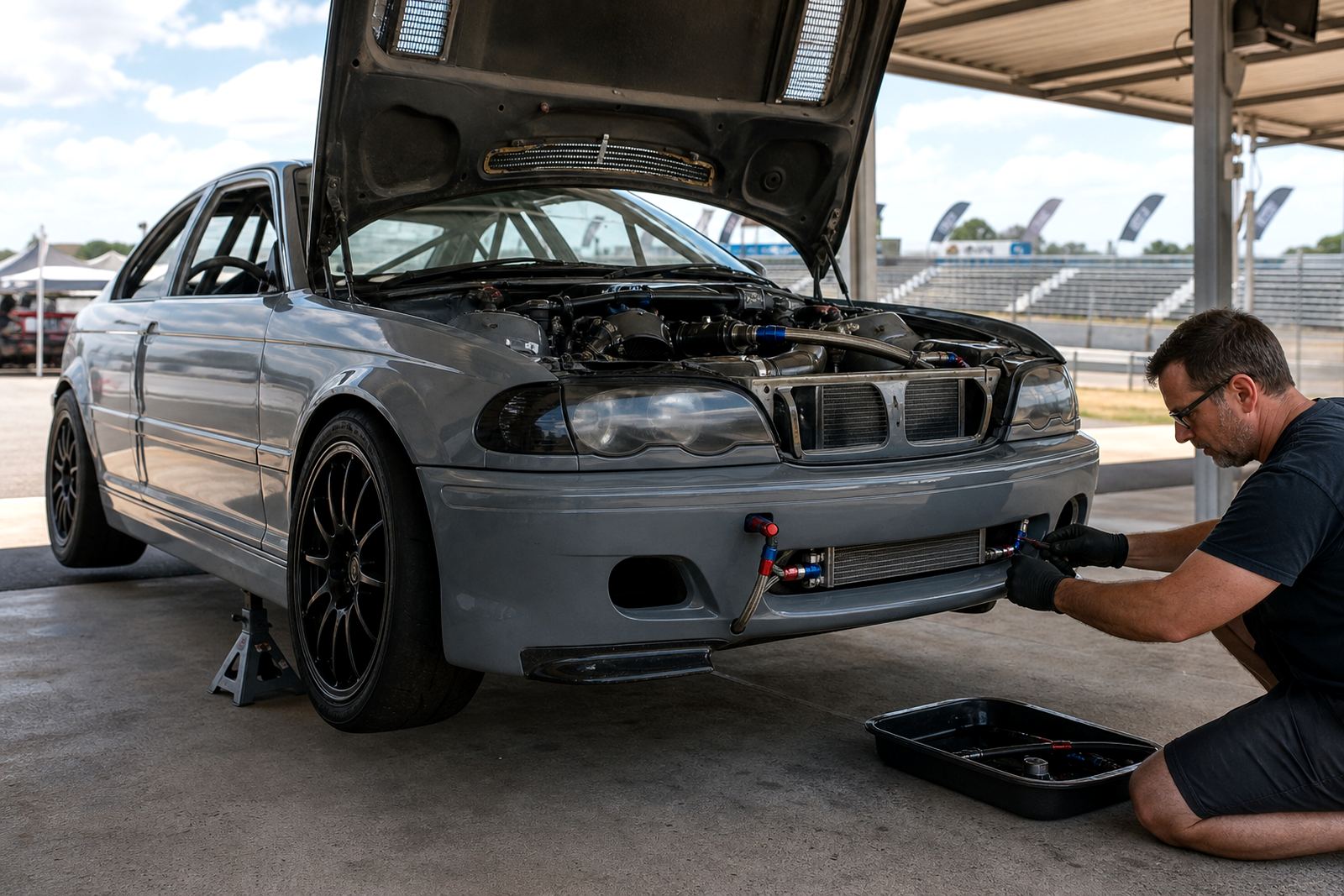
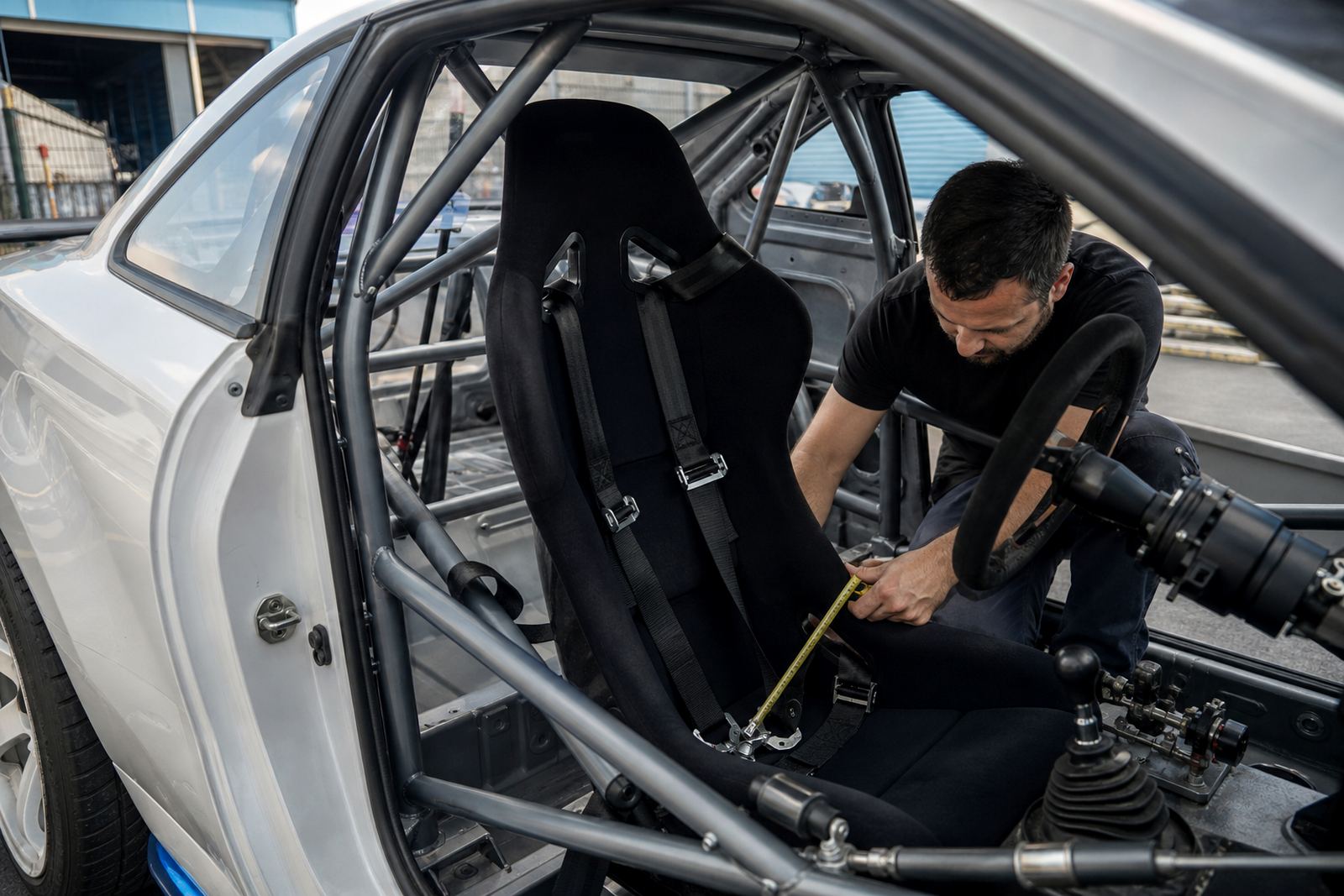
Cooling got proper attention as well. A lighter hillclimb car still needs stable temperatures, especially when it is pushed in short bursts with little time to recover between runs. We fitted cooling parts suited to the car's layout, and we checked the routing so the engine bay did not become cluttered or difficult to service. The safety list included seat positioning, harness fitment checks, and roll cage advice that matched the cockpit space rather than forcing a one-size answer.
- Brake pads and fluid chosen for heat resistance
- Adjustable coilovers for ride height and balance
- Fresh bushes to remove slack in the chassis
- Cooling parts sized for repeated hard use
- Seat and harness position set for cleaner body control
The Edenvale build, week by week
The build spanned four weeks, starting with the first fitment and ending with final checks. The early part of the job was stripping out unnecessary mass, then placing the key parts in the right order so the car could be aligned only after the suspension had settled. That matters on a hillclimb car because a small change in ride height can alter the steering feel more than people expect.
Once the main components were in, Johan and Morne worked through coilover setup, corner weighting, and alignment checks. The brake system was bled again after the first heat cycle, then rechecked with the driver seated in the normal racing position. We also looked at the fuel system layout and clutch and shift setup so the car would stay neat under quick changes and hard launches.
- Week 1: strip, inspection, planning and parts fitment order
- Week 2: suspension installation and ride height setting
- Week 3: brake bleeding, seat placement, harness checks
- Week 4: corner weighting, alignment, test adjustments and final sign-off
Setup notes from the track day work
The useful part of this build was not only the hardware, it was the way the car was set up around the driver. During the setup day we checked steering response, brake bite, and how the car settled under trail braking. The aim was to give the driver a front end that reacted quickly without making the rear nervous on rougher sections or at the top of the climb.
Lerato and Morne worked through the balance points until the car stopped falling onto one corner and started settling evenly. The end result was a firmer brake pedal, a calmer chassis, and better confidence through the first turn-in. The car was easier to place on the road, which is exactly what a hillclimb build needs when the margins are tight and every second of motion counts.
- Alignment checks matched to the tyre load pattern
- Corner weighting helped the car sit evenly on the scales
- Brake feel stayed consistent after repeated pulls
- Cabin position gave the driver clearer foot movement
What changed once the car was shaken down
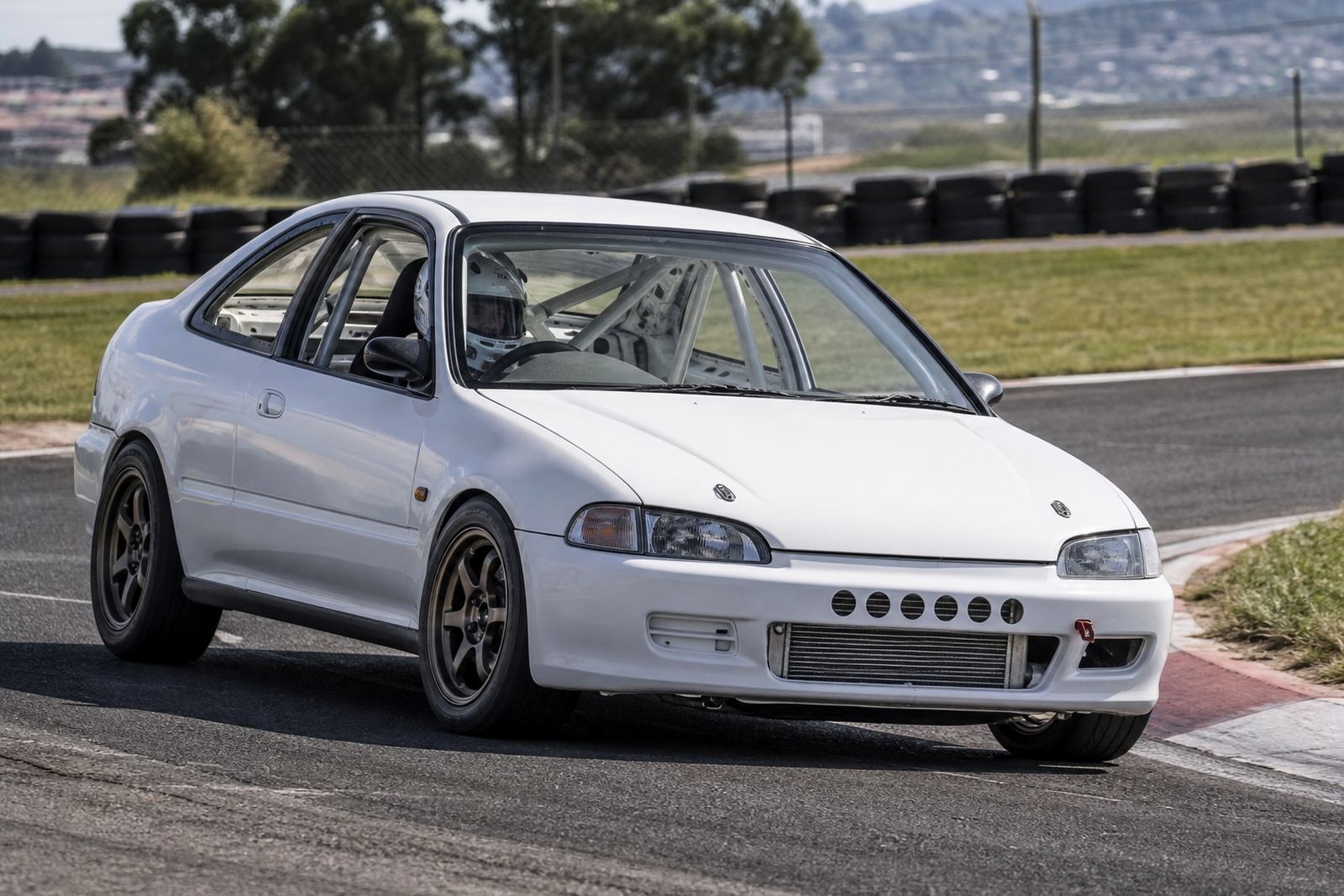
After the first proper shakedown, the owner had a car that felt lighter on its feet and more settled under braking. The steering no longer needed the extra correction that often comes from worn bushes or an untidy spring and damper combination. Cooling stayed controlled during back-to-back runs, and the driver could lean on the car without wondering if the pedal would go long.
There were still small tuning choices left for later testing, because hillclimb cars always reward patient changes rather than one large swing. Even so, the first version of the build already showed the direction clearly. The car was sharper off the line, more confident into braking zones, and easier to place on narrow sections where a loose line would cost time.
- Sharper pedal response under repeated braking
- Cleaner weight transfer through the chassis
- Better stability in short, hard acceleration bursts
- Less driver correction needed in fast transitions
What would stay on our list for a similar hillclimb car
For another Edenvale-style hillclimb project, we would follow the same work order: remove weight carefully, handle the braking first, then set the suspension around the driver. That order gives a better base than fitting parts in isolation and hoping the car sorts itself out later. A hillclimb build rewards restraint as much as it rewards sharper parts.
We would also keep the cabin layout honest. The seat, harness, and pedal position must let the driver work without stretching, and the shift path should stay clean when the car is under load. When those details are right, the rest of the package makes more sense. The car feels less busy, and the driver gets a clearer read on grip, braking and exit speed.
- Brake upgrade planning before chasing extra power
- Suspension setup after all major mass changes
- Driver position checked before final alignment
- Cooling parts matched to short-run heat cycles
Key facts
| Project | Edenvale Hillclimb Car |
|---|---|
| Client type | Private hillclimb entrant from Edenvale |
| Build duration | 4 weeks |
| Main focus | Weight-conscious parts and direct pedal control |
| Key services | Brake Upgrade Planning, Coilover Setup, Corner Weighting, Alignment Checks |
| Core parts | Brake pads and fluid, coilovers, bushes, cooling parts, seat and harness fitment |