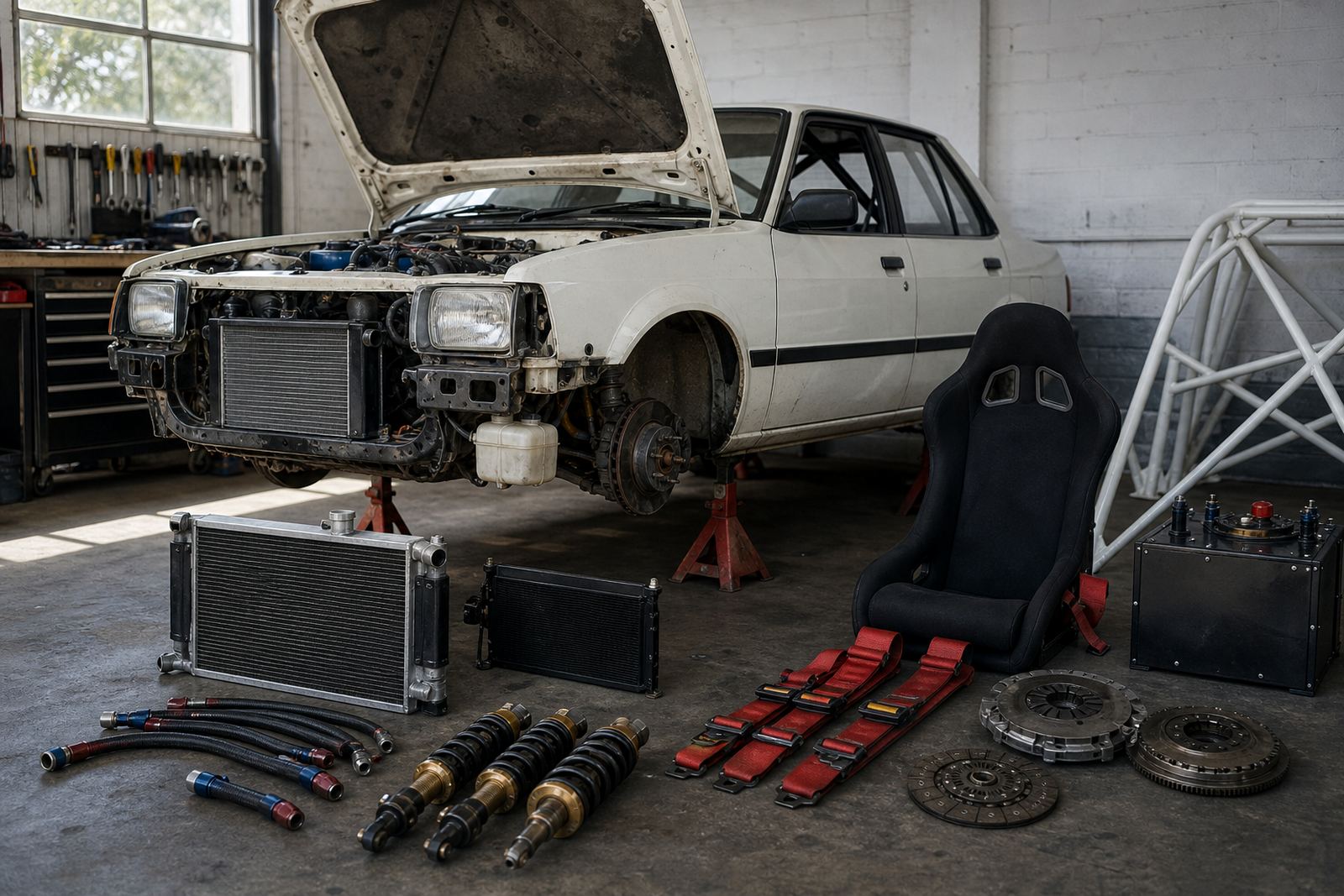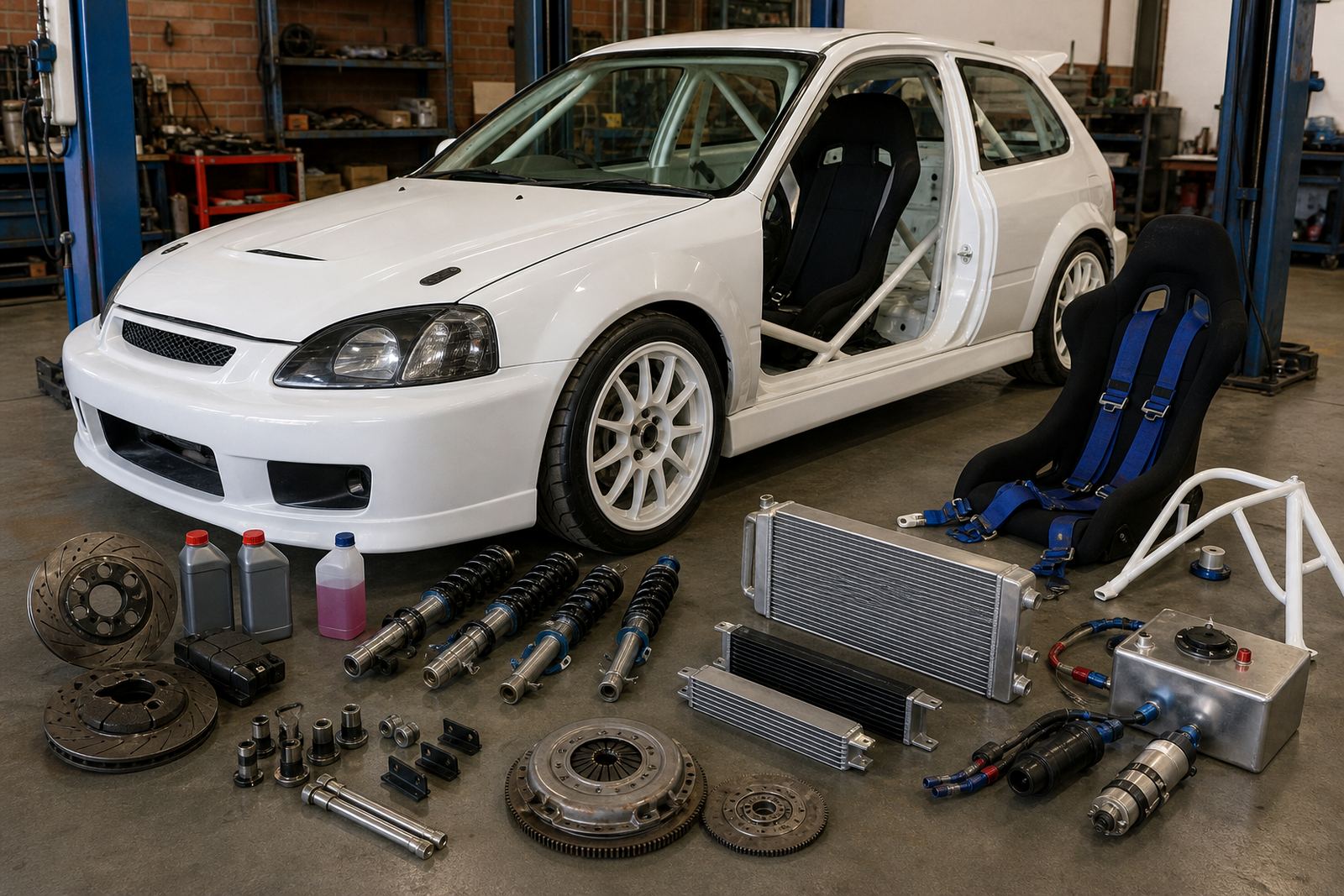


A Midrand hatch that was honest about its limits
The owner was a club racer from Midrand who had already done a few track days and knew where the car was falling short. The front end would fade after repeated laps, the cabin position was awkward for heel-and-toe work, and the cooling system was coping until ambient temperatures climbed and the pace stayed high for too long.
The brief was direct. Keep the car suitable for club events, improve stopping confidence, make the driver sit lower and more securely, and avoid chasing parts that add noise without adding control. That meant working with the car as it was, not stripping it into something awkward for normal use.
We also had to keep the build sensible for South African roads around Midrand and Johannesburg, where a track car still has to deal with potholes, speed humps and the odd heavy rain run home. The setup needed to be tidy, serviceable and easy to inspect between events.
Brake work that gave the pedal some proper shape
The first job was brake planning. We checked pad compound choice, fluid condition, hose condition and the overall balance of the system before making changes. The car had enough hardware on paper, but repeated hard stops were pulling the pedal long and muddying the driver’s feel on turn-in.
We supplied upgraded brake pads suited to repeated high-temperature use and changed the fluid to a fresh high-boiling-point formula. The bleeding process mattered here, because small air pockets can hide in a system and only show up after a few hard laps. We also inspected the calipers and cleaned the sliding points so the front end would release cleanly after each stop.
- Brake pads selected for repeated heat cycles
- Fresh brake fluid for firmer pedal feel
- Bleeding carried out with attention to trapped air
- Calipers checked for free movement and even wear
The result was a pedal that stayed more consistent through a session, with better confidence into the braking zone. It did not make the car dramatic, just easier to read lap after lap.
Cooling support for longer runs in warmer weather
Cooling was the other weak point. The owner wanted to run longer sessions without watching temperatures climb too far, especially when the air was warm and the car was working harder out of slower corners. We inspected the radiator, cap condition, hose routing and the oil cooler position before deciding what needed attention.
The package included a better matched radiator and an oil cooler arrangement that could move heat away without blocking airflow more than necessary. We checked that the ducting and mounting were not fighting each other, because a neat install only helps if air can actually pass through the core. A lot of cars look busy at the nose and still struggle to shed heat.
We also looked at hose clearance near moving parts and made sure the system was easy to service. On a track car, a tidy cooling layout matters because leaks and rubbing lines become expensive later, and they tend to show up when the car is already hot.
Seats, harnesses and a position the driver could work from
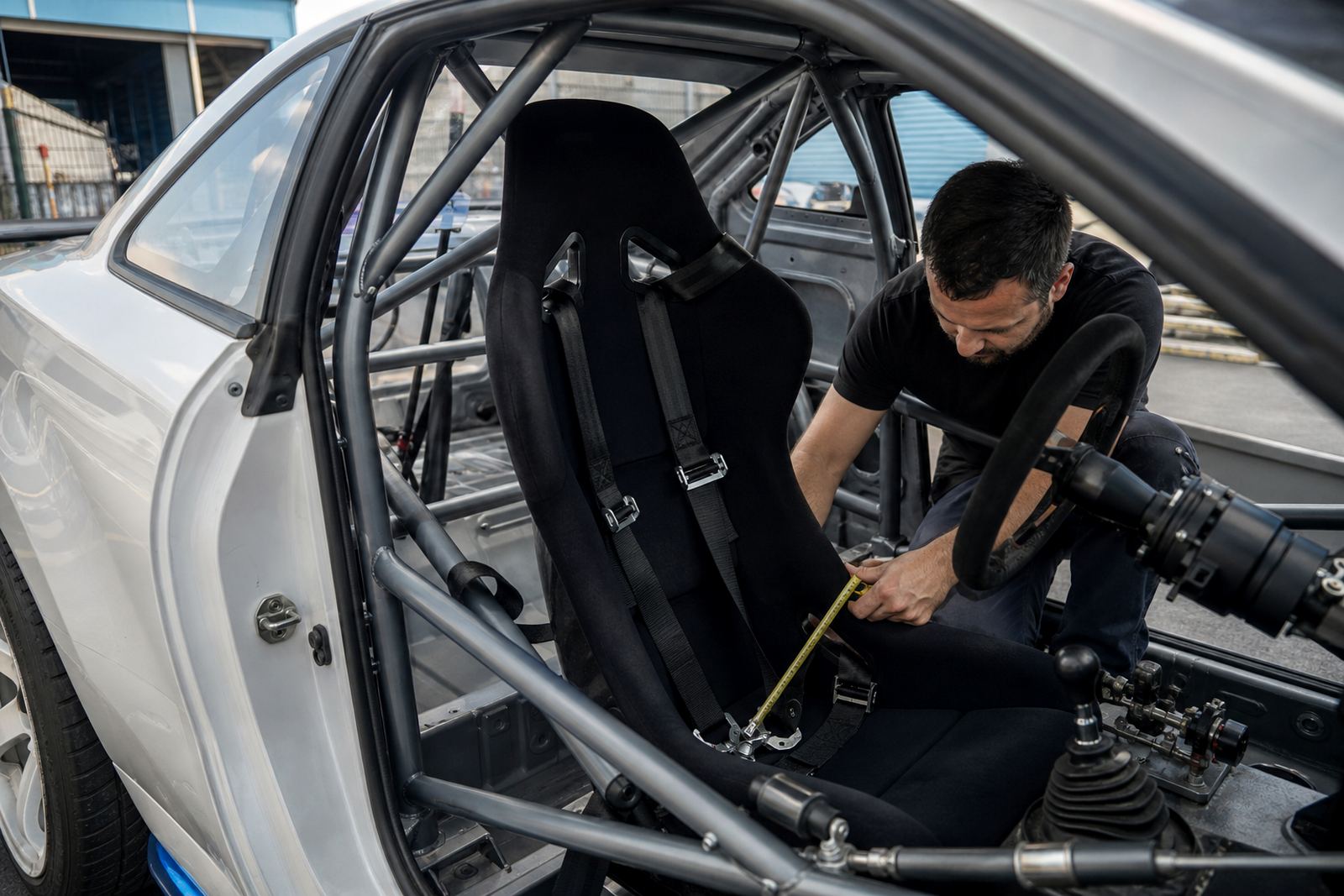
The seating position changed the whole feel of the car. The driver needed to sit lower, stay braced in faster direction changes, and reach the wheel and pedals without stretching. We carried out seat positioning work first, then checked harness fitment and the angle of the belts against the seat shell.
That part of the build was not cosmetic. If the driver is sliding under braking or sitting too upright, the whole body works harder and the hands start doing jobs the seat should be doing. A correct setup helps the driver focus on braking points, steering input and throttle timing instead of holding themselves in place.
- Seat position lowered for better headroom and feel
- Harness angle checked against the seat and mounting points
- Driving reach measured for wheel and pedal control
- Final fitment checked with the driver seated in race kit
The cabin ended up feeling calmer. The driver could brace properly through corners and use the pedals with more precision, which made the rest of the car easier to judge.
Alignment, corner weighting and the numbers under the car
Once the major parts were in place we moved to setup. Coilover settings were checked, the alignment was adjusted, and corner weighting was used to settle the car into a more balanced stance. This is where the car starts to speak clearly, because the steering response and body control reveal whether the hardware and geometry are working together.
We made small, practical changes rather than chasing a showpiece figure. The suspension had to suit club racing, not just one perfect lap. Bushes were inspected for play, and the front end was checked for any movement that could upset braking stability or turn-in accuracy.
The final setup gave the car a neater attitude through direction changes and a better sense of consistency from left to right. The driver was not fighting the chassis as much, which is usually the clearest sign that the setup is heading in the right direction.
Three weeks, a cleaner car and a clearer driving job
The work ran over three weeks from assessment to final checks, with the car being returned in stages so the driver could understand what changed and why. That helped keep the project grounded. The aim was not to overload the car with parts, but to fix the weak points that were limiting pace and confidence.
By the end of the project the brakes felt more predictable, the cooling package was better prepared for hard use, and the seating position allowed the driver to work the car properly. The car was still recognisable as a street-based club racer, just one with fewer excuses when the lap time mattered.
We would keep the order of work unchanged: brake parts first, cooling next, then seating and final fitment. That sequence keeps the build grounded, because each stage supports the one after it rather than hiding a weak point elsewhere.
Key facts
| Project type | Midrand club racer build |
|---|---|
| Main focus | Brakes, cooling and safe seating position |
| Work carried out | Brake Upgrade Planning, Brake Bleeding, Seat Positioning, Harness Fitment Checks, Cooling System Checks, Coilover Setup, Alignment Checks, Corner Weighting |
| Parts supplied | Brake pads, brake fluid, radiator, oil cooler, seat mounting hardware, harness hardware |
| Timeline | 3 weeks |
| Area served | Built in Midrand, tested at Kyalami |