

Kyalami lap pace needed a calmer car, not louder parts
The owner was a Gauteng privateer running club and time attack sessions at Kyalami, with the usual mix of stop-start traffic, long loaded corners and hot afternoons that punish weak cooling. The brief was plain: keep the car consistent over repeated laps, trim brake fade, settle the chassis and give the driver a position that made steering and pedal work easier under pressure.
Some limits on the build were fixed from day one. The car had to stay usable for trailer loading and moving between road and circuit, so we stayed careful on ride height, exhaust clearance and wheel-arch space. The driver wanted firmer control without turning the car into something nervous that was difficult to place through quick direction changes.
- Target use: Kyalami time attack and club track days
- Main issue: heat build-up through brakes and cooling
- Secondary issue: inconsistent balance through fast corners
Brake feel first, because Kyalami exposes weak stopping zones
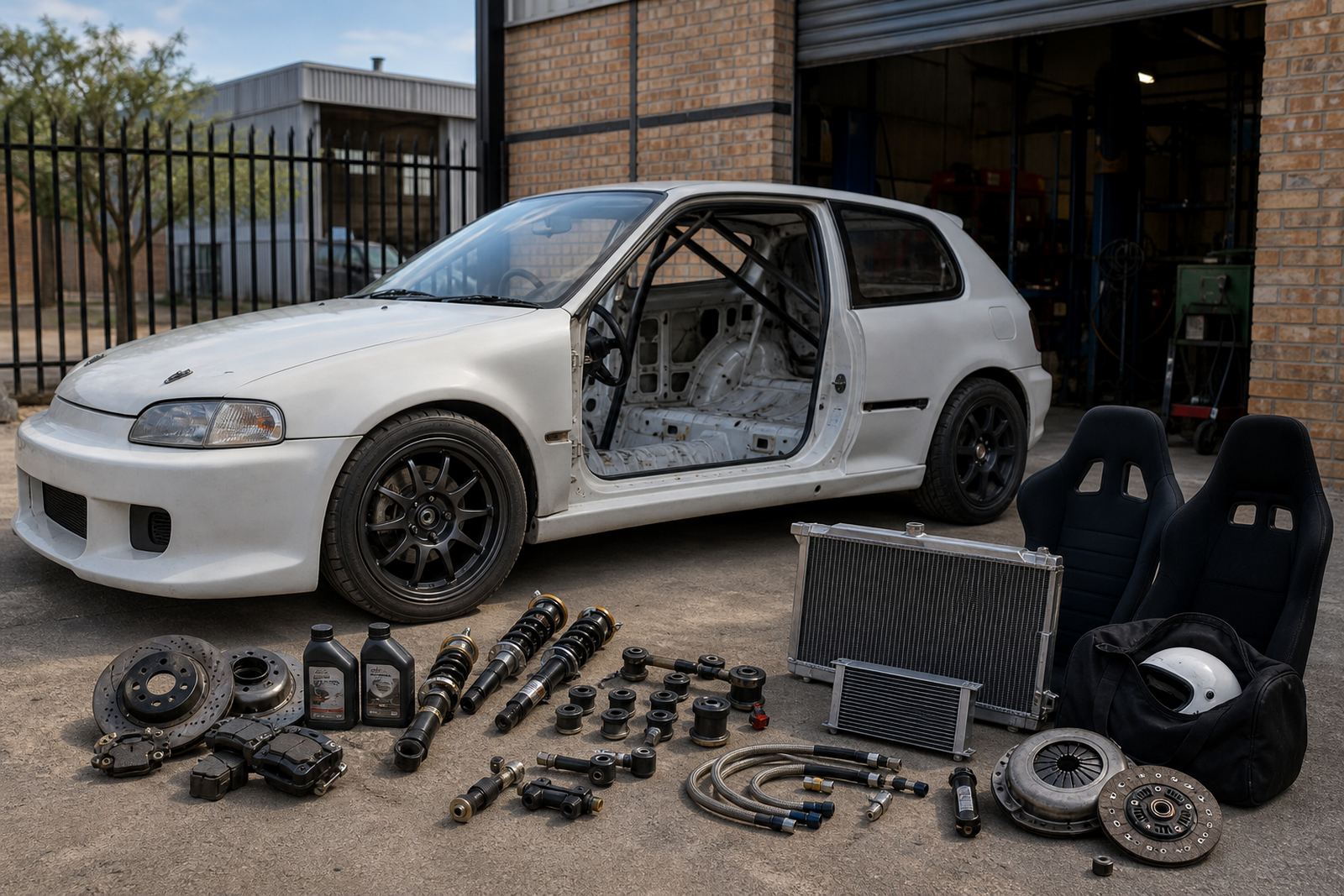
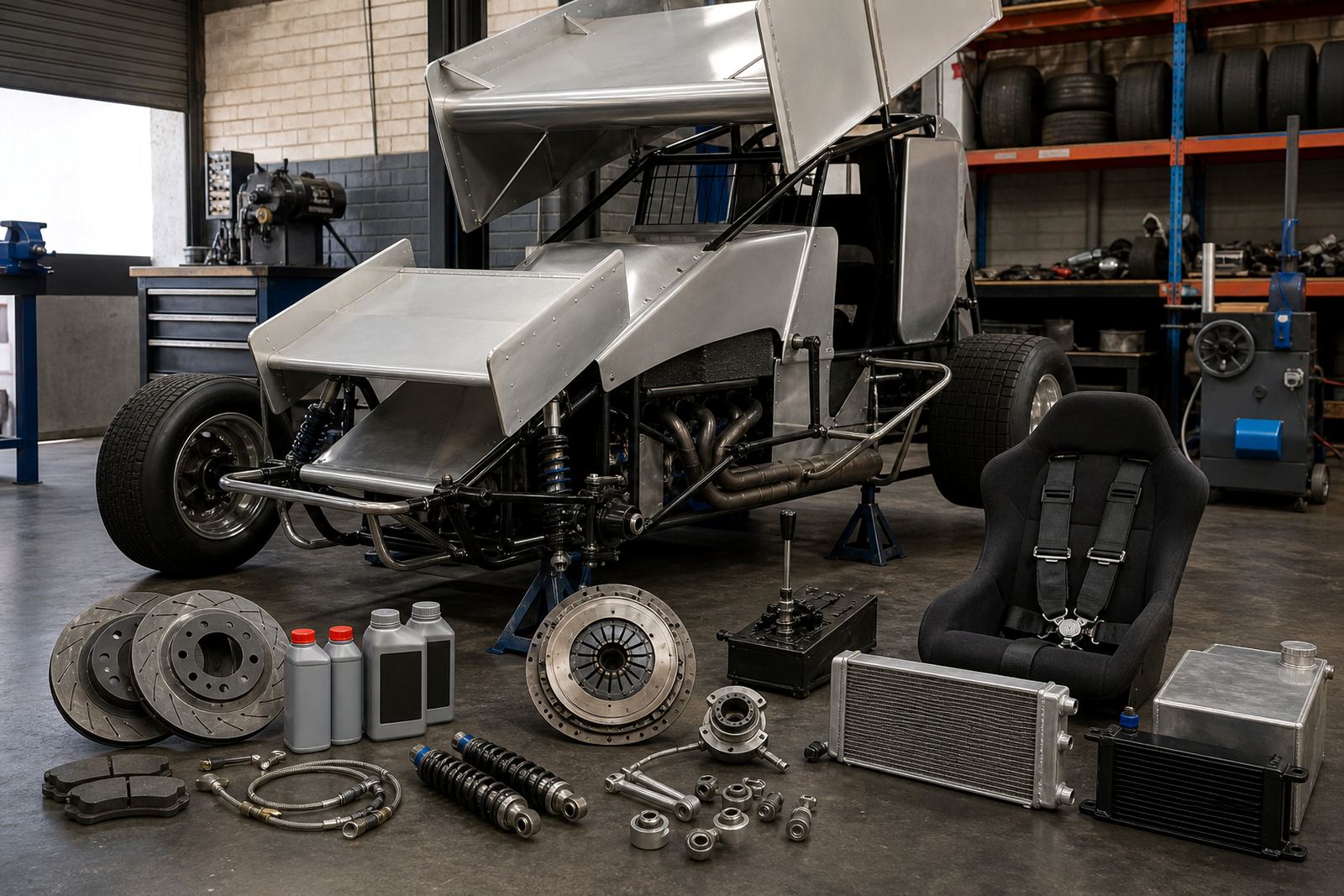
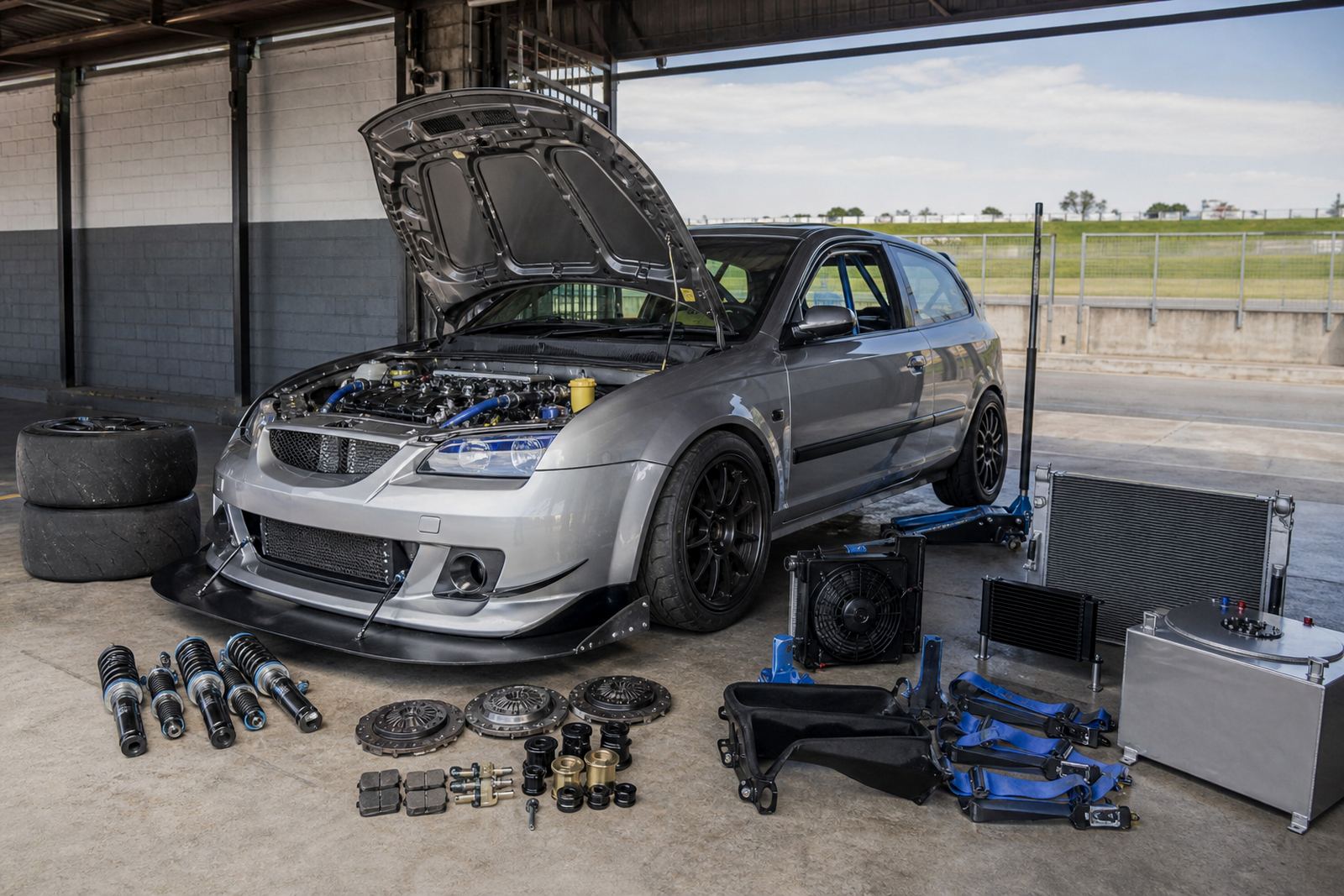
We started with the braking package, since the circuit asks for repeated hard stops into heavy load corners and clear modulation at the pedal. Brake upgrade planning focused on pad compound choice, fresh high-temperature fluid, careful bleeding and a pedal that stayed predictable after several hot laps. The point was not just short stopping distances, but a pedal the driver could trust when the brakes were already warm.
We also checked the balance between front and rear bias through the hardware choices and the way the car transferred weight under braking. That helped avoid a nose-heavy feel that can make the rear too light on entry, especially when the car is already working hard over kerbs and through fast transitions. The result was calmer approach speed control and better confidence in late braking zones.
- Brake bleeding carried out with fresh high-temperature fluid
- Pad choice aimed at track heat rather than street comfort
- Pedal feel checked after heat cycling, not only in the workshop
Suspension work that kept the platform honest
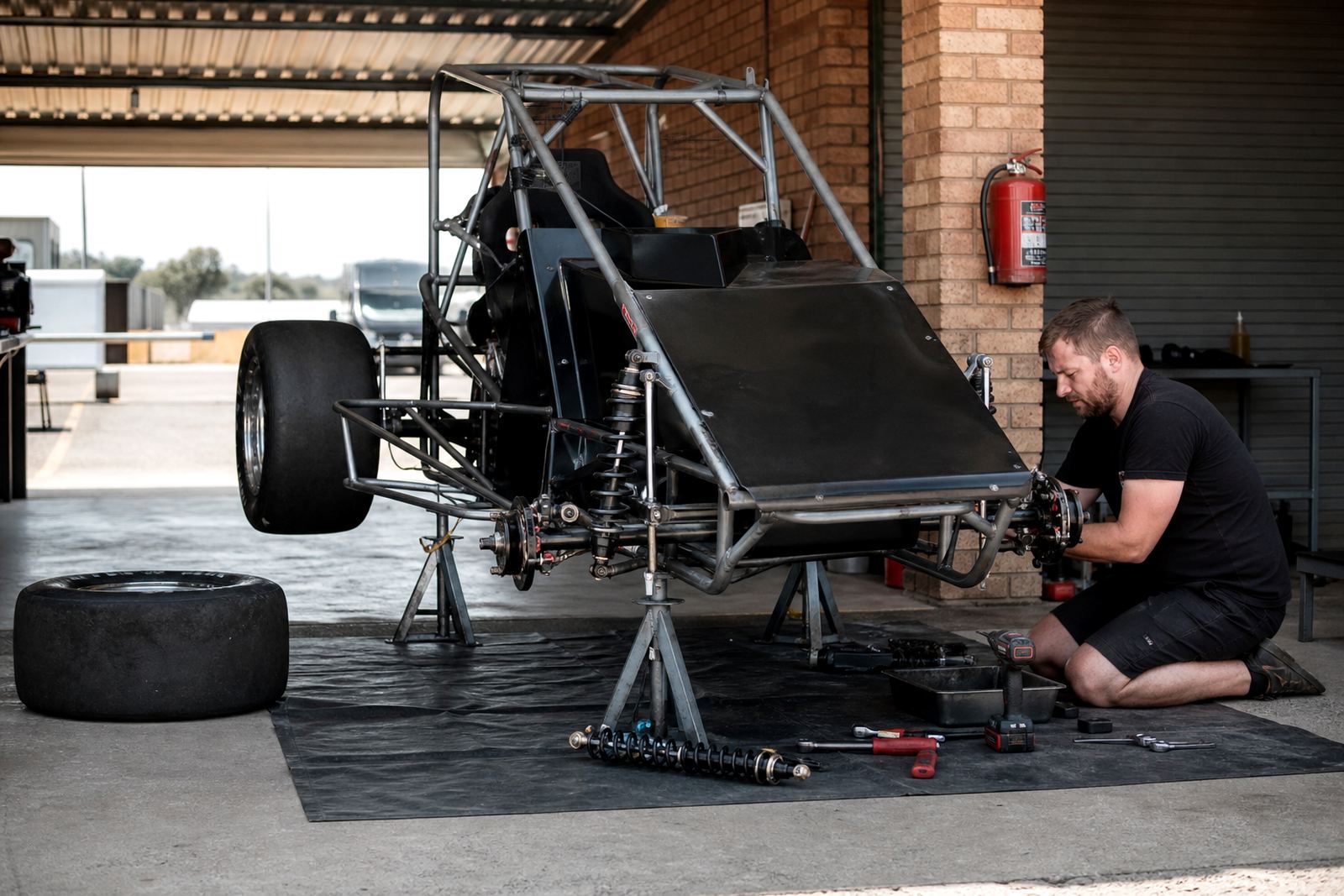
For the chassis, we fitted and set up coilovers with a firmer but usable baseline, then worked through alignment checks and corner weighting. Morne paid close attention to how the car sat cross-corner, because small changes there can alter turn-in, mid-corner stability and how quickly the tyres pick up temperature. We were after a car that rotated cleanly without snapping into oversteer when the driver lifted or turned in sharply.
Worn bushes were replaced where needed, which cleaned up the vague feeling that had been hiding small steering inputs. That mattered more than it sounds, because a time attack car needs the front axle to respond the same way every lap. Once the platform was stable, the driver had a much better sense of where the limit sat on turn-in and exit.
- Coilover setup matched to track use and tyre behaviour
- Corner weighting used to level the car side to side
- Alignment checks completed after the height and preload changes
Heat control for repeated laps, not one quick run
Kyalami can punish cooling systems, especially when the car spends long periods at high throttle and then sits in slower traffic between sessions. We checked the radiator, hoses, cap condition and airflow path, then added oil cooling support to keep temperatures from climbing too sharply on longer runs. This was a practical fix, not a glamour item, because the car had to hold its pace lap after lap.
We also looked at ducting and the way air entered and left the engine bay, since trapped heat often hangs around long after the car has returned to the pits. The goal was to reduce heat soak around the front end and keep the oil in a range that did not force the driver to back off early. That helped the whole package feel more settled once the session opened up.
- Radiator condition checked for blockage and ageing fins
- Oil cooler added to improve temperature control
- Airflow path reviewed for better heat escape after laps
Driver position and safety gear had to work together
The cabin setup mattered because a fast lap still depends on the driver being planted, visible and free to work the wheel. Seat position was adjusted for better reach to the pedals and a straighter shoulder line, then harness fitment checks were done so the belts sat correctly under braking and in fast sweepers. The aim was less body movement, cleaner steering and fewer corrections mid-corner.
We also gave roll cage fit advice around clearance, entry points and how the structure would affect the driver’s elbow room and helmet line. The cage layout had to suit the chassis without making the car awkward for regular use at events. With the seat, harness and cage all considered together, the driver could stay still in the seat and focus on throttle timing rather than fighting the cabin.
- Seat position set for pedal reach and steering control
- Harness routing checked for shoulder and lap fit
- Roll cage advice focused on clearance and practical access
What the setup day changed once the car hit the circuit
The full project ran over three weeks, from inspection and parts planning through workshop fitting and a final setup day at the track. On the day, we worked through the chassis balance, brake feel and cooling behaviour while the driver gave feedback after each session. Small changes in tyre pressure, damping and alignment made the car more settled through the quick left-right sections and less nervous under load.
The result was a car that held its pace with less fade and less driver fatigue. Brake response stayed clearer as the laps stacked up, and the temperature control gave more room to push without the car feeling strained. The driver could keep a steadier rhythm, which matters more in time attack than one heroic lap that cannot be repeated.
- Project duration: 3 weeks from intake to track setup
- Focus: repeatable pace, stable braking and better heat control
- Outcome: cleaner feedback through fast corners and braking zones
The bits we would fit again on the next Kyalami car
For a similar job, we would keep the same work sequence: brakes first, then suspension, then cooling, then driver position. That sequence lets each change support the next one instead of masking problems. It also makes it easier to spot whether a handling complaint comes from the chassis, the seating position or the thermal side of the build.
We would also keep the setup day on track, because a workshop setting only shows part of the picture. Kyalami tells the truth when the car is hot, loaded and moving through the corners at pace. That is where the useful fine-tuning happens, and it is where the driver can say whether the car feels calm, sharp or too busy.
- Do the brake package before chasing lap-time handling
- Use track feedback to finalise damping and alignment
- Keep cooling changes tied to actual session temperatures
Key facts
| Project | Kyalami Time Attack |
|---|---|
| Location | Kyalami, Gauteng |
| Vehicle focus | Track-ready circuit car |
| Main brief | Repeatable lap pace and improved heat management |
| Work carried out | Brake bleeding, coilover setup, alignment checks, corner weighting, cooling checks, seat and harness fitment |
| Timeline | 3 weeks |