

Cape Town cars and the conditions they face
Cape Town club cars see a mix that asks more of the hardware than a casual weekend road build. Salt in the air, traffic on the N1 and N2, and hotter summer sessions at Killarney or regional test days can expose weak brake fluid, tired bushes and suspension that never quite settled after the last alignment.
That is why the Cape Town brief usually starts with what the car does on track, not with a parts list. A front-heavy hatch, a rear-drive coupe or a stripped sedan all need different pad compounds, different damping and different ride heights if the driver wants a car that settles on entry and puts power down cleanly on exit.
- Brake pads and high temperature brake fluid for repeated stops
- Coilovers, springs and helper parts for ride height and damping control
- Suspension bushes, top mounts and alignment hardware
- Cooling support for water and oil temperatures under sustained load
What we cover for Cape Town race builds
We cover the parts that usually make the biggest difference once the car is asked to work hard for longer than a road car ever should. That means brake upgrades, cooling pieces, seat and harness checks, clutch and shift setup, and the small fixings that keep a race car legal and tidy in the paddock.
For Cape Town customers, the common pattern is a seasonal refresh before the first event or before a class change. Some cars need a cleaner pedal feel with better bleeding and fresh lines, while others need a suspension rethink because the current setup rolls too much through fast corners and loads the outside rear tyre too early.
- Brake upgrade planning for pad choice, fluid condition and pedal feel
- Brake bleeding and basic line checks
- Seat positioning and harness fitment checks
- Roll cage fit advice for club and track use
- Fuel system layout guidance for motorsport use
Travelling parts, setup days and practical timing
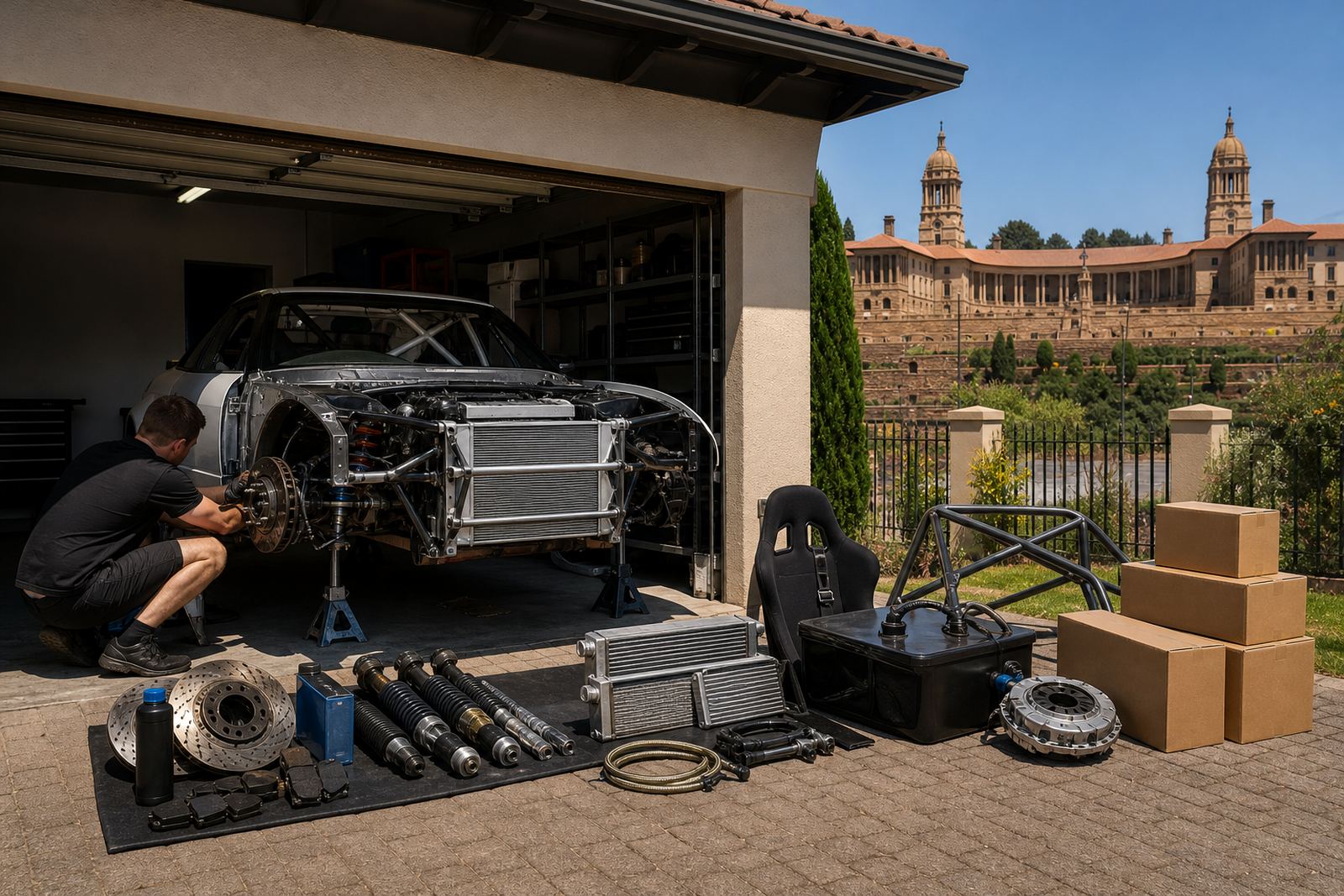
Cape Town clients often want parts grouped properly before a car is booked into the workshop, because a split order can leave the job half-finished and the car sitting on stands. We support that by planning around the whole package: the wear items, the setup pieces and the fitment advice needed to make one job flow into the next.
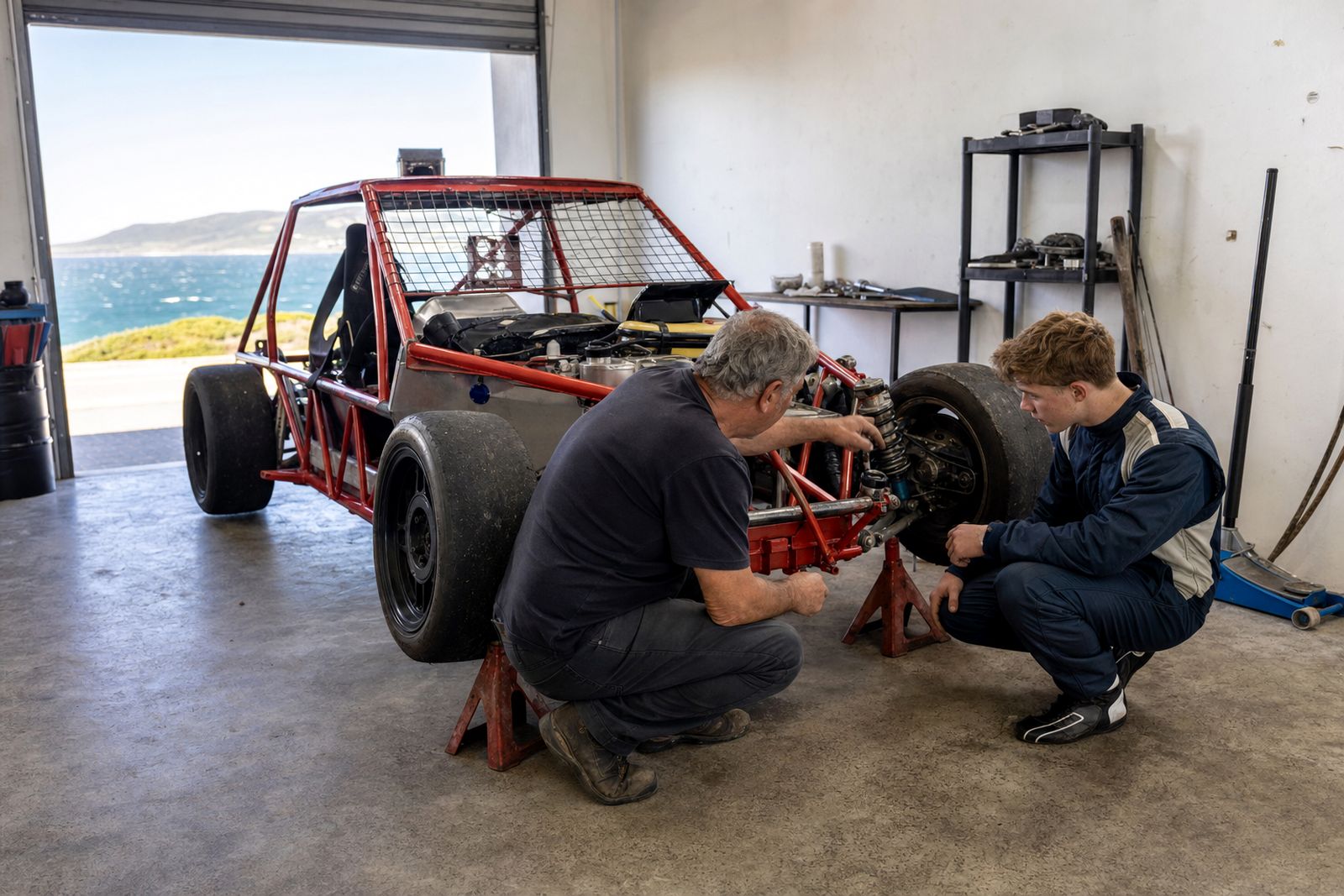
Track setup days suit drivers who want measured changes rather than guesswork. That can include corner weighting, alignment checks, seat placement, and a review of how the car sits when the driver is strapped in with fuel aboard and the usual race weight in the cabin.
For Cape Town and nearby areas, the usual supply pattern includes:
- Parts dispatched from Midrand once the order is confirmed
- Stock support for club racing, track day and rally-style builds
- Workshop guidance for installation planning and final checks
- Coordination for drivers travelling from the city, the northern suburbs and the Winelands side
The setups Cape Town drivers usually ask about
Different cars need different attention, but the questions tend to sound familiar. A hot hatch may need stronger front braking and a better rear balance. A sedan on coilovers may need help with spring rates and rebound. A club car with a cage and fixed seat may need harness angles checked so the driver can sit lower and stay centred under braking.
We also see a lot of interest in cooling and drivetrain feel. An oil cooler can help on longer sessions, while a fresh clutch setup and cleaner shift action can remove the sloppy feel that makes the car harder to place through quick direction changes. None of that is about chasing a flashy parts list, it is about getting the car to work in the right order.
- Radiators and oil coolers for temperature control
- Clutches and shift parts for cleaner engagement
- Seat mounts and harness angles for driver placement
- Suspension bushes and alignment pieces for predictable steering
Areas we regularly support from Midrand to the coast
RaceHouse works from Midrand, but Cape Town remains part of the regular supply route for motorsport customers who are planning ahead for a race calendar or a car build. That includes the city bowl, the northern suburbs, the Atlantic side, and drivers who move between the Cape and other racing centres during the year.
The local conditions matter when we talk through the order. Sea air can be hard on exposed metal, so mounting points and fasteners need proper care. Fast road sections into the circuit also reward a car that has stable geometry, because a loose rear end or inconsistent brake bite only creates more work for the driver.
Where the car is used more often, we look at what should be refreshed together so the setup stays sensible rather than patchy.
Enquiries for Cape Town builds and seasonal upgrades
Most Cape Town enquiries start with the car, the class and the kind of driving planned for the season. From there we can talk through brake pad choice, fluid, coilover setup, cooling support, safety gear and the fitment side of the job without mixing road habits into a race package.
Cape Town drivers can send the car details to Midrand through the contact form. That suits a proper brief, especially when the car has already been caged, lowered or stripped and needs a set of linked parts instead of one isolated item. If the build is headed toward a track day, rally stage or club grid, the same approach still applies: get the core parts right, then set the car up to match.
Typical Cape Town support includes planning, parts supply and workshop guidance for the following:
- Brake bleeding and pedal feel checks
- Corner weighting and alignment checks
- Cooling system checks for repeated hot laps
- Seat positioning and harness fitment checks